Your First-Floor Windows Need Faux Wood Blinds Top Down Bottom Up
I remember sitting on my velvet sofa last November, frozen mid-sip of tea because a neighbor’s golden retriever—and its owner—were staring directly at me through the glass. Living on a busy street means you are constantly negotiating with your own windows. I tried the 'dark cave' approach with heavy drapes, but I missed that 4 PM golden hour that turns my white oak floors into honey. I finally found my sanity in faux wood blinds top down bottom up.
- Privacy at eye level without losing the sky view.
- Architectural presence that matches heavy crown molding and trim.
- Durability that handles steam and humidity better than real timber.
- Strategic light control that stops glare on your TV while feeding your fiddle leaf fig.
The Ground-Floor Fishbowl Dilemma
If you live on a first floor, you know the struggle. You want the natural light, but you don't want to be the evening entertainment for every dog walker in the zip code. Standard blinds are an all-or-nothing game. You either pull them up and feel exposed, or drop them and live by the glow of a floor lamp at noon.
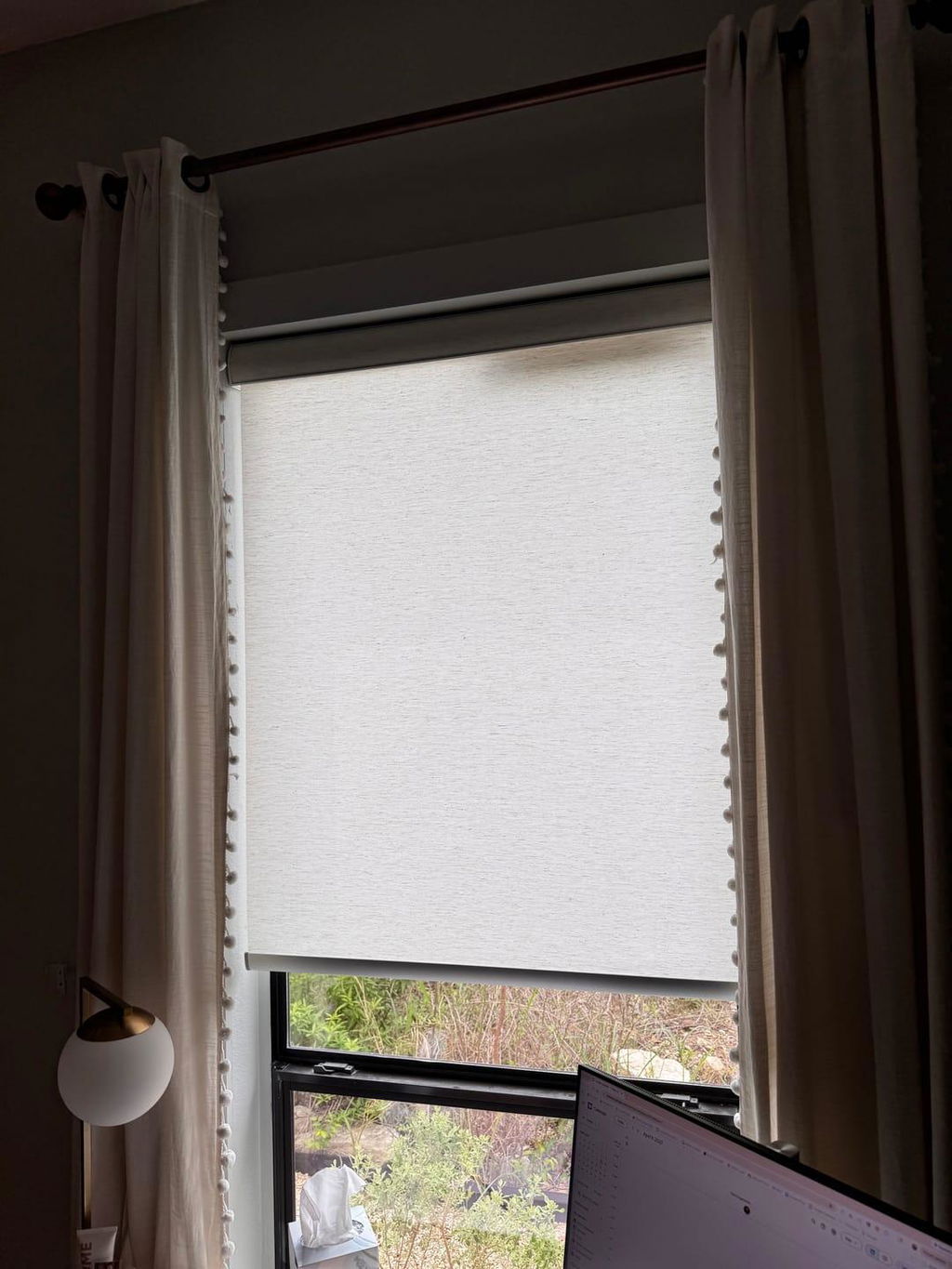
The fishbowl effect is real and it's draining. I spent months twitching the corner of a curtain every time a car slowed down. You need a solution that blocks the 'human height' sightline while leaving the top third of the window open to the clouds and the trees. It changes the entire energy of a room when you can see the sky but the sidewalk can't see you.
Why I Chose Slats Over Standard Privacy Shades
Most designers will point you toward honeycomb or cellular shades for this specific top-down function. They are lightweight and disappear when retracted. But in a room with 5-inch baseboards and substantial furniture, cellular shades can look a bit... flimsy. They lack the architectural 'oomph' that a window needs to feel finished.
I wanted the look of a traditional shutter but the versatility of a modern shade. Faux wood slats provide a rhythmic, linear look that grounds a room. When I swapped cellulars for top down bottom up wood blinds, the windows suddenly felt like part of the home's bones rather than just a fabric cover-up. The 2-inch slats have a weight to them that feels intentional and high-end.
The Mechanics: How Top Down Faux Wood Blinds Actually Work
Let's talk shop. Faux wood is essentially a high-grade PVC or composite. It is heavy. Because of that weight, the mechanics of top down faux wood blinds are more robust than your average hardware store find. You have two sets of controls: one to lower the top rail and one to raise the bottom.
The internal cord system is designed to keep those slats perfectly level, even when they are suspended in the middle of the window casing. If you are worried about the weight, you can always look into a motorized blinds top down bottom up setup. It saves your shoulders the effort and keeps the tension even on the lift strings, which is usually where manual blinds eventually fail after years of daily use.
How to Style the 'Dropped' Look Without It Feeling Weird
Floating a blind in the middle of a window can look a bit clinical if you don't frame it correctly. I follow the golden ratio: I usually drop the top rail about one-third of the way down. This obscures the view of anyone standing on the sidewalk but lets the maximum amount of daylight hit the ceiling and bounce deep into the room.
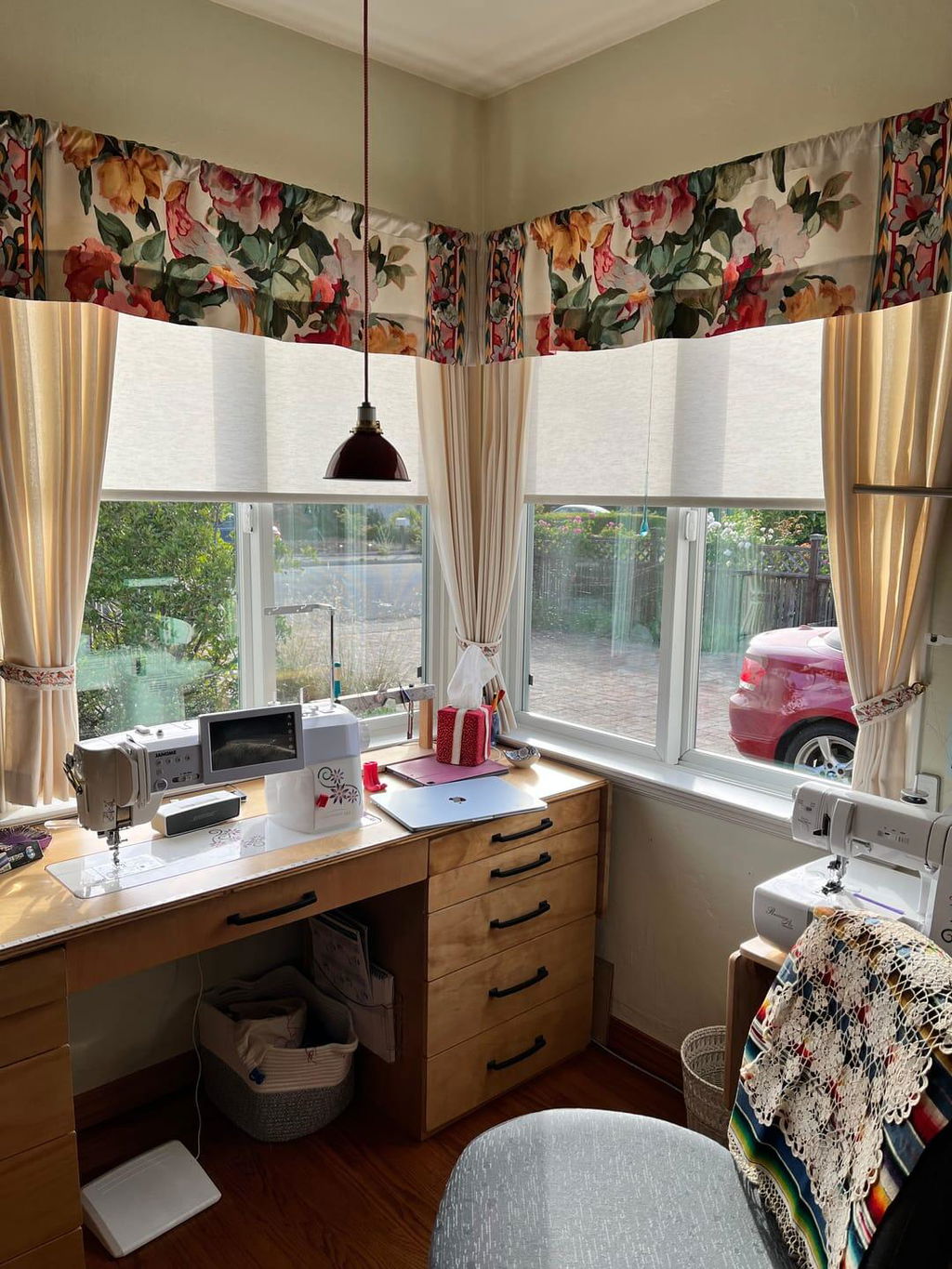
To soften the exposed hardware and the gaps at the edge of the glass, I always layer. I use 96-inch linen-blend panels hung high and wide—about 6 inches above the frame and 8 inches past the sides. This masks the mechanical nature of the blinds. If you are looking for a more integrated solution, you might even consider day night shades for other rooms, but for the living room, the wood-and-linen combo is the gold standard for a layered, textured look.
The Mounting Depth Warning You Can't Ignore
Before you click 'order,' grab your tape measure. Because these blinds have an extra rail to allow for the top-down movement, the headrail is deeper than a standard blind. You typically need at least 2.5 inches of flat mounting depth for an inside mount, and closer to 3.25 inches if you want them to sit flush with your trim.
If your window casings are shallow, these will protrude. In that case, you're better off with an outside mount, but make sure you order the 'returns' (the little L-shaped pieces of valance) to hide the hardware from the side. Nothing ruins the vibe faster than seeing a chunky plastic bracket sticking out from the wall.
Is the top-down function hard to level?
Not if you buy quality. High-end versions have a 'clutch' system that prevents one side from sagging. If it does get wonky, you usually just pull it all the way down and back up to reset the tension.
Do these get dusty?
Yes, they are horizontal slats, so they are dust magnets. But unlike real wood, you can hit faux wood with a damp microfiber cloth and a mild soap without worrying about warping the finish.
Can I install these myself?
Absolutely. It is a three-bracket job for most standard windows. Just make sure you use a level. If the headrail is even 1/8th of an inch off, the 'floating' middle rail will look crooked every time you drop it.
What went wrong in my house?
I’ll be honest: the first time I installed these, I didn't account for the 'stack' height. Faux wood slats are thick. When you pull the bottom all the way up to clean the windows, that stack of slats can be 6 to 8 inches tall. It blocked more of my view than I expected when fully open. Now, I just leave them in the 'top down' position most of the time anyway, so it's a trade-off I can live with.