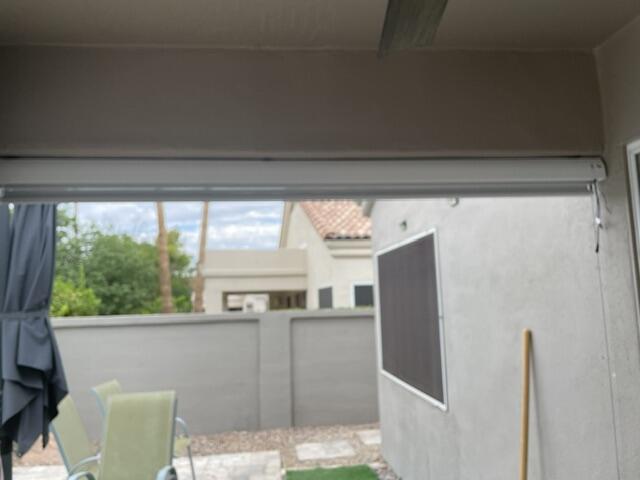
Why Your Sliding Glass Door Blinds Curtains Combo Looks Messy
I still remember the first time I tried to 'fix' a rental slider. I bought the heaviest velvet panels I could find, thinking they’d hide those clacking plastic vertical blinds. Instead, I created a structural disaster. Every time I wanted to step onto the patio for a morning coffee, I had to fight through four inches of dusty fabric and a tangled mess of wands and cords. It was a sliding glass door blinds curtains setup that functioned more like a barricade than a window treatment.
The truth is, layering drapes over blinds on a wide opening is an architectural challenge, not just a decor choice. You’re dealing with a high-traffic exit, not a static window. If you don’t account for the physical space that hardware occupies, you end up with a bulky, lopsided mess that makes your living room feel smaller and your life harder. Here is how I learned to stop the clutter and start styling with actual logic.
- Swap vertical slats for low-profile roller shades to save depth.
- Extend your curtain rod at least 12 inches past the frame on each side.
- Use 100% linen or medium-weight cotton (approx 200-250 gsm) for better drape.
- Opt for a one-way draw if your door only opens from one side.
The Problem With the Double-Layer Slider Setup
Most homeowners approach sliding door curtains blinds by simply adding more on top of what is already there. The result is what I call 'the bulge.' You have a blind mechanism that sticks out three inches from the wall, and then you mount a curtain rod that sticks out another five. Suddenly, your window treatment is encroaching eight inches into your living space, making the walkway feel cramped and the door look like it belongs in a basement apartment.
Visually, this creates a heavy physical bottleneck. When the curtains are open, they bunch up into a thick mass of fabric that partially blocks the glass, cutting off your view and making the door feel narrower than it actually is. It is a classic case of trying to solve a privacy issue while accidentally creating a floor-plan problem. To fix it, we have to rethink the 'stack'—the physical space the treatments occupy when they are fully retracted. If your fabric is fighting your hardware, the fabric always loses.
I have seen so many people get frustrated because their drapes won't close properly over the blind wand. Or worse, the fabric gets caught in the sliding door track because there is just too much going on in a six-inch space. We need to slim down the base layer before we can even think about the pretty top layer.
Rule 1: Ditch the Plastic for a Sleeker Base Layer
If you are still rocking those 1990s-era PVC vertical slats, no amount of high-end drapery will save the room. They are too deep, they clack whenever the AC kicks on, and they ruin the silhouette of any outer panels you hang. To make glass door curtains blinds work, you need a base layer that sits as close to the glass as humanly possible. This isn't just about style; it is about the physics of the rod projection.
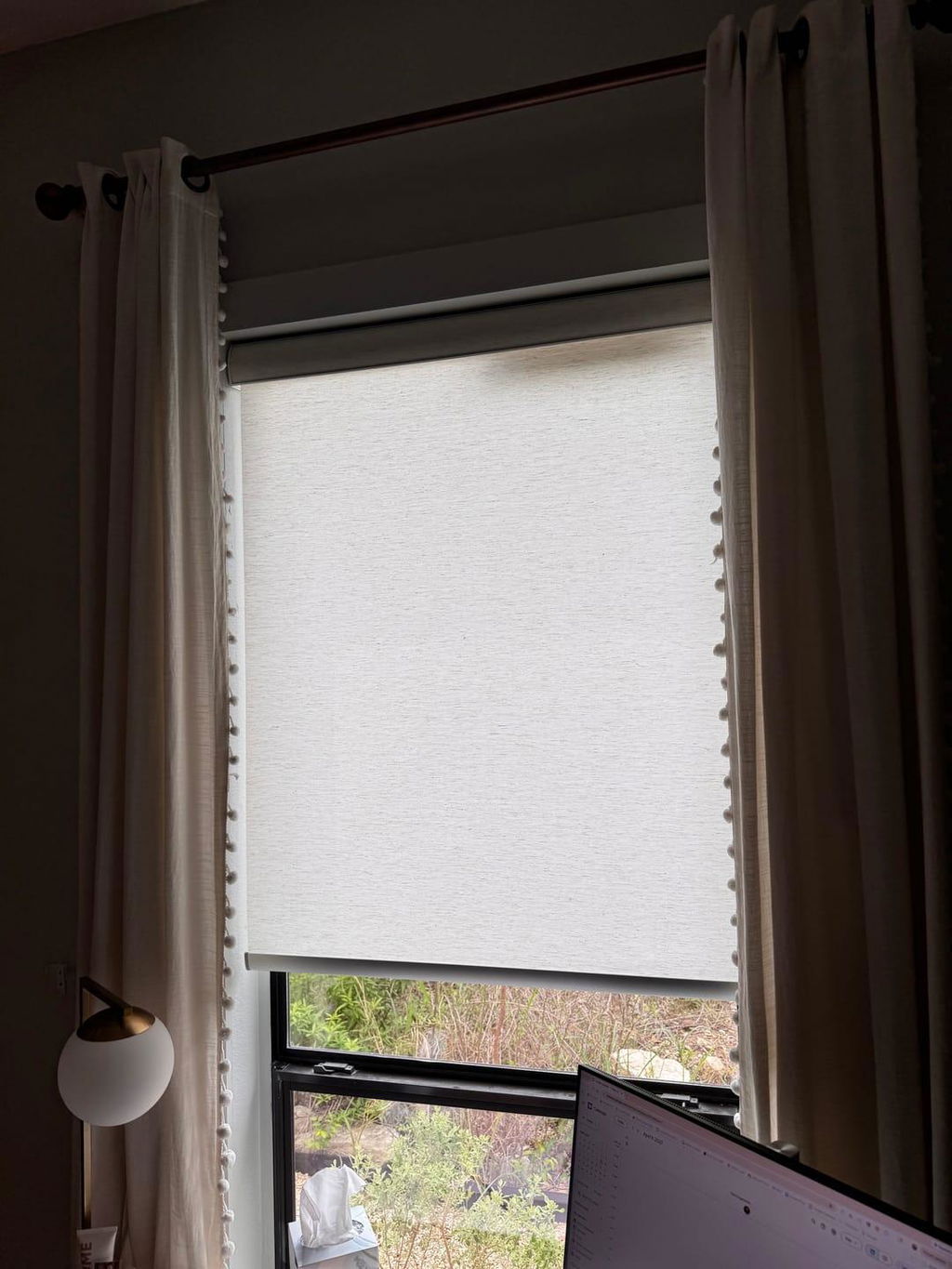
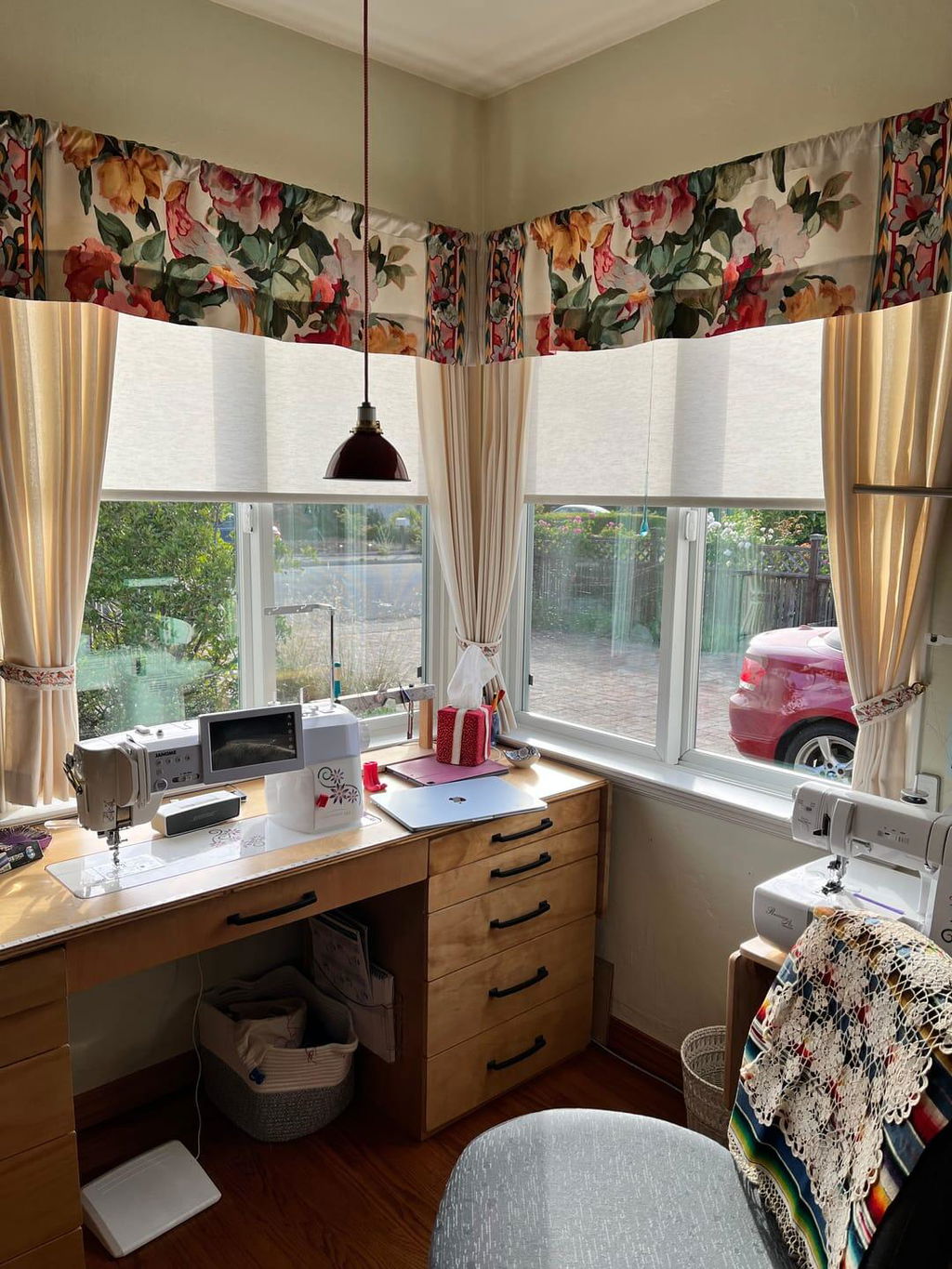
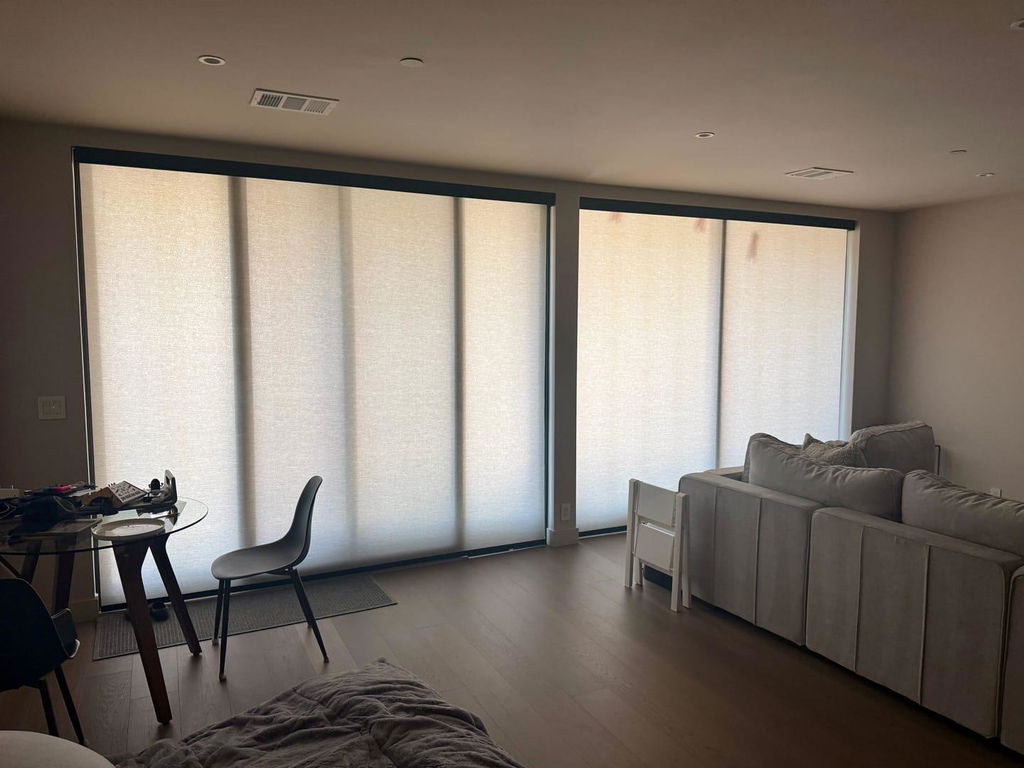
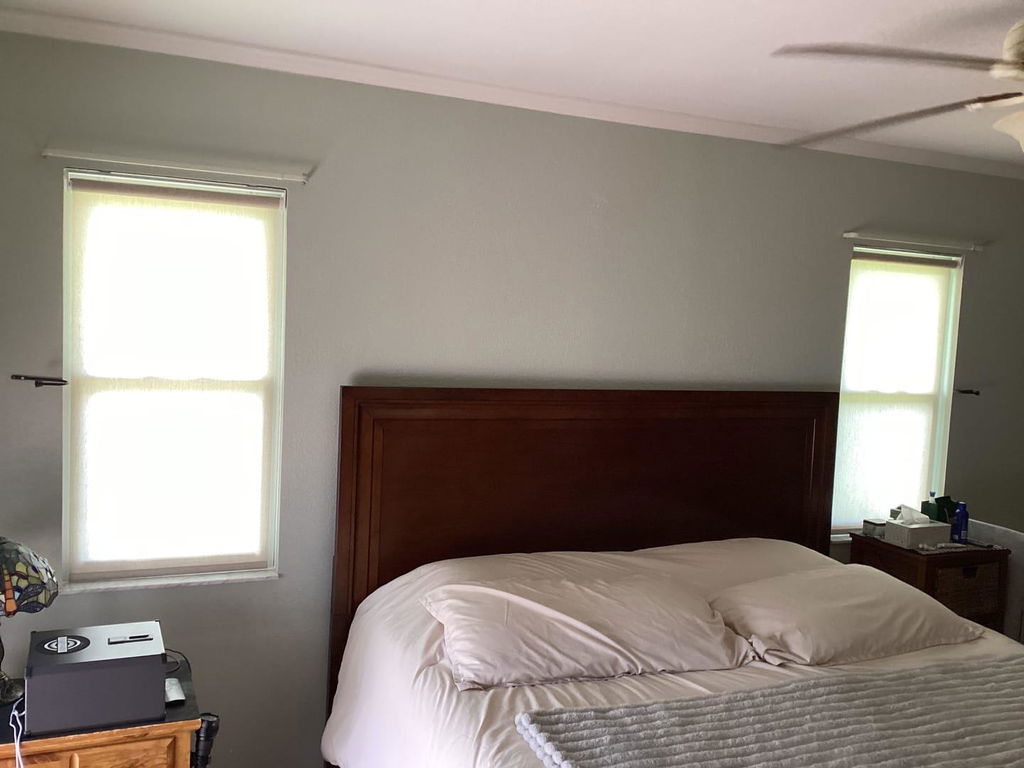
I almost always recommend switching to sleek roller shades. These shades disappear into a tiny, low-profile roll at the top when not in use, allowing your curtains to hang straight down without being pushed outward by bulky slats. For a truly high-end, cord-free look, I have used the Canisteo Motorized Dual Roller Shades in several projects. Because they are motorized, you do not have to fish around behind heavy drapes for a pull-cord every time you want to let the dog out. It keeps the aesthetic clean and the operation effortless.
When you reduce the depth of your blinds, you allow the curtains to hang closer to the wall. This 'hugs' the architecture of the room rather than protruding into it. If you can mount your shades inside the door frame (an inside mount), you save even more space, leaving the entire wall surface free for your curtain rod brackets.
Rule 2: The Stackback Secret for Outer Drapes
This is where most people fail: they buy a curtain rod that is the exact width of the door. When you are hanging curtains for patio doors with blinds, your rod needs to be significantly wider than the door frame. I am talking 12 to 18 inches of 'extra' rod on each side of the glass. In the design world, we call this the stackback.
The stackback is the space where the fabric 'stacks' when the curtains are open. If your rod is too short, the fabric stays on top of the glass, blocking the light and interfering with the blind mechanism. By extending the rod, you allow the curtain panels to rest against the wall when they are open. This means your curtains for sliding glass door with blinds setup won't get caught in the door handle every time you go outside.
I usually aim for a rod that is about 100 to 110 inches wide for a standard 72-inch slider. This extra width also tricks the eye into thinking the door is massive. It creates a hotel-suite vibe where the fabric frames the view rather than obscuring it. Just make sure you use a center support bracket; a 100-inch span will sag in the middle under the weight of even the lightest linen if it isn't supported properly.
Fabric Physics: What Actually Drapes Well Over Shades?
Do not go for heavy, stiff polyester or thick, foam-backed blackout velvets if you already have a blind underneath. It is too much literal weight for the rod and too much visual weight for the room. When you are layering, the outer fabric needs to be fluid. I prefer a 200 gsm linen or a medium-weight cotton blend with a 2.5x fullness (meaning the fabric is 2.5 times wider than the rod).
Natural fibers have a 'memory' for how they hang; they settle into soft, vertical folds rather than sticking out like a bell. If you are worried about privacy but want to skip the heavy drapes, you might consider Day Night Shades as your base layer. They offer a sheer layer for daytime light filtering and a solid layer for night privacy. This setup often means you only need a decorative, sheerer linen panel on top to soften the room's edges, rather than a heavy blackout curtain.
I once tried to use a heavy 'blackout' linen-look polyester over a set of Roman shades. The fabric was so stiff it looked like two giant pieces of cardboard hanging on the wall. I ended up swapping them for a 100% Belgian linen with a sheer lining. The difference was night and day—the linen moved with the breeze from the door, while the polyester just stood there looking awkward.
Hardware Hacks for a Jam-Free Exit
If your door is a high-traffic zone—kids, dogs, constant grilling—standard rings on a rod are going to drive you crazy. They catch on the rod joins and stutter. Instead, look into traverse rods. These have internal tracks that allow the fabric to glide smoothly across the entire span without hitting the support brackets. It is the only way to do a 'one-way draw' where all the fabric pulls to the left or right, depending on which way your door slides.
Sometimes, though, you have to be honest about the space. If your room is small and the layered look feels like it is swallowing the wall, don't force it. I have written before about Why I Always Put a Roller Shade on Door Glass Instead of Bulky Curtains, and for some high-traffic modern homes, that single, clean line is actually the better design move. Design is as much about what you take away as what you add.
My 2 AM Drapery Disaster
I once spent six hours steaming a pair of 108-inch linen panels for a client's slider, only to realize I’d mounted the rod so close to the wall that the curtains were catching on the massive handle of the sliding door. Every time the door opened, it dragged the curtain into the track, leaving a black grease mark on the hem. I ended up having to take the whole thing down, patch the drywall, and move the brackets out two inches at midnight before the client's party the next day. The lesson? Always measure the 'projection' of your door handle before you buy your brackets. You need that clearance.
FAQ
Can I use a double curtain rod for this?
I generally advise against it. A double rod plus a blind base layer creates too much depth. It will stick out too far into the room and look like a stage curtain. Stick to a single rod for the drapes and mount the blinds inside the door frame if possible.
How high should I hang the rod?
As high as you can. If you have 8-foot ceilings, go about 2 inches below the ceiling or just below the crown molding. It draws the eye up and makes the sliding door feel like an architectural feature rather than just a functional exit.
Do I need weighted hems for sliding door curtains?
Yes. Sliding doors create a lot of draft when they open. Without weights, your curtains will fly around and likely get caught in the door track or the screen. A simple lead weight sewn into the corner of each hem keeps the fabric hanging straight and heavy.