Why an 84 Inch Roller Shade is the Only Way I Treat Sliding Doors
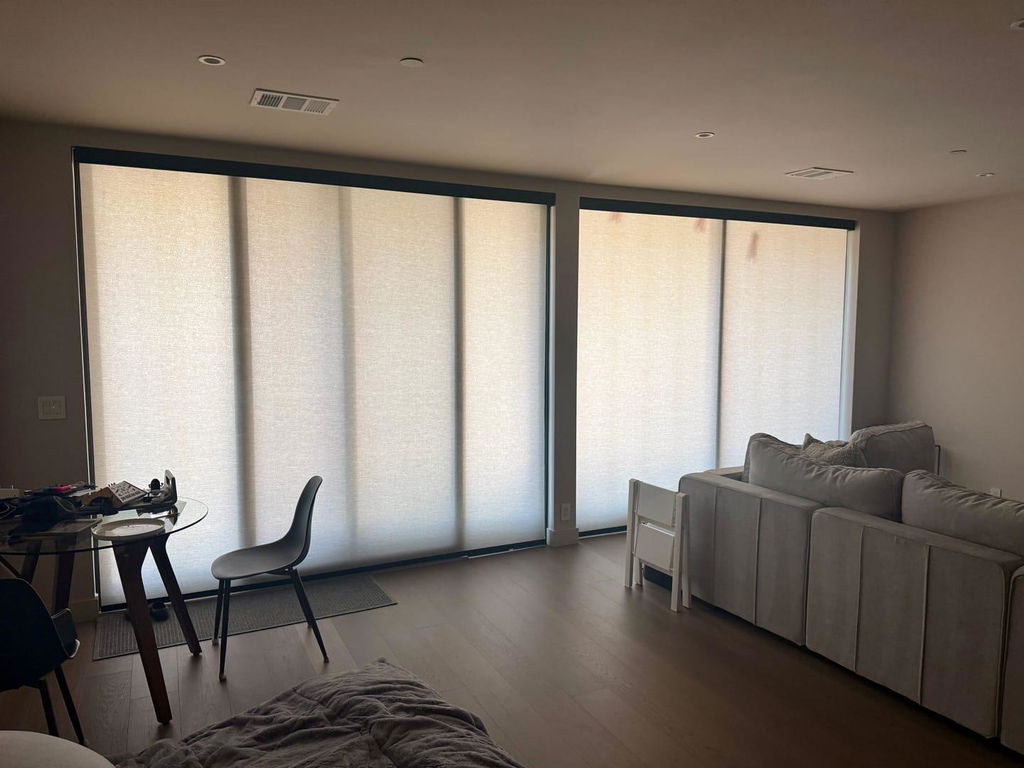
I remember staring at a seven-foot sliding glass door in a mid-century rental, paralyzed by the sheer scale of the glass. The previous tenant had left behind those clacking plastic vertical blinds that sounded like a skeleton falling down stairs every time the cat brushed past. I wanted clean lines, but I was terrified of the weight and the potential for a single 84 inch roller shade to look like a heavy industrial tarp.
I almost chickened out and bought three smaller shades to hang side-by-side. I am so glad I didn't. There is a specific kind of architectural peace that comes from a single, unbroken horizontal line stretching across a wide room. When you get the tension and the fabric right, it doesn't just cover the window; it finishes the wall.
Quick Takeaways
- Stop splitting your treatments; one wide shade eliminates annoying vertical light gaps.
- Demand a reinforced aluminum tube (at least 2 inches) to prevent the dreaded center 'smile' sag.
- Use motorized lifts for 84-inch spans to avoid uneven tension from manual chains.
- Exterior shades need openness—aim for 5% to let the wind pass through without creating a sail.
The Trap of Splitting Blinds Over a 7-Foot Window
The most common mistake I see in open-concept living rooms is the 'triple-split.' Homeowners get nervous about the weight of a wide span, so they install three 28-inch shades across a 7-foot window. It looks cluttered, busy, and frankly, cheap. You end up with these vertical slivers of light that hit you right in the eye while you are trying to watch TV.
By splitting the treatment, you are essentially ruining the view get a 72 inch wide roller shade logic by creating more visual obstacles. A single wide shade maintains the architectural integrity of the sliding door. When it is up, it disappears. When it is down, it acts as a clean, minimalist backdrop rather than a series of disjointed panels.
Why an Extra-Wide Span Demands Serious Hardware
Physics is a cruel mistress when it comes to an 84 roller shade. If you buy a budget version from a big-box store, the tube inside is likely thin-walled aluminum or, god forbid, cardboard. Over a 7-foot stretch, the weight of the fabric will cause that tube to bow in the middle. This creates V-shaped wrinkles in your fabric that no amount of steaming can fix.
When I spec these for clients, I insist on a heavy-duty 2.5-inch tube and a high-torque motor. The weight of a high-quality blackout fabric at this width is significant. I often recommend the Canisteo Motorized Dual Roller Shades Cordless Custom Double Roller Blinds because the motor ensures the fabric rolls up perfectly straight every time. Manual chains on a wide shade often lead to 'telescoping,' where the fabric shifts to one side and starts fraying against the brackets.
Taking It Outside: Taming the Covered Patio
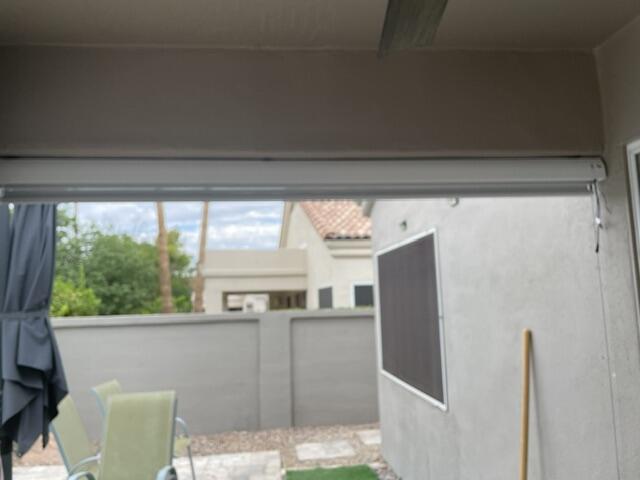
If you are trying to shade a patio or a massive exterior slider, the stakes are even higher. I have seen 84-inch wide outdoor shades become literal sails in a light breeze, ripping brackets right out of the header. You cannot use a solid, wind-blocking vinyl for a span this wide unless you have a professional-grade cable guide system.
I always steer people toward Outdoor Shades 5 Openness. That 5% openness factor is the sweet spot; it cuts the glare and the heat significantly but allows enough airflow that the shade stays stable. I once installed a solid shade on a west-facing porch, and the first summer thunderstorm turned it into a kite that nearly took the trim with it. Lesson learned: let the air move.
Fabric Weight: The Make-or-Break Choice for Wide Shades
Not all fabrics are born to be wide. If you pick a cheap, thin polyester, the edges will eventually 'curl' toward the glass. This is called cupping, and it happens because the internal tension of the weave isn't strong enough to support the weight of the hang. For a 7-foot span, you want a fabric with a fiberglass core or a high-performance engineered textile.
Check out the technical specs in our Roller Shades collection. You are looking for something with dimensional stability. I personally love a charcoal screen fabric for wide windows because it cuts the glare on my laptop screen but still lets me see the oak trees in my backyard. It feels sophisticated, like a high-end hotel, rather than a sterile office building.
Hiding the Hardware on a Massive Roller Tube
An 84-inch roll of fabric is thick. When the shade is fully retracted, that roll can be three or four inches in diameter. Leaving that exposed looks a bit like you are living in a warehouse. Unless you are going for a hardcore industrial loft vibe, you need a way to hide the 'guts' of the operation.
A matching metal fascia or a fabric-wrapped cassette box is worth the extra money. It creates a clean header that mimics the look of a custom soffit. I recently did an install with a matte black square fascia against a white ceiling, and it looked like a sharp, intentional architectural line. It turns the shade from a 'window covering' into a piece of the home's design.
Frequently Asked Questions
Can I install an 84-inch shade by myself?
Technically, yes, but you need a second set of hands. Holding a 7-foot metal tube steady while trying to click it into a bracket is a recipe for a hole in your drywall. Get a friend to hold the other end while you secure the drive side.
Will a wide roller shade sag over time?
Only if the tube diameter is too small for the width. If you use a 2-inch or larger reinforced tube, it will stay straight for a decade. Avoid 1-inch tubes for anything over 60 inches wide.
Is motorization worth it for wide shades?
Yes. The sheer force required to pull an 84-inch shade up manually puts a lot of stress on the mounting brackets. A motor provides a smooth, consistent lift that extends the life of the fabric and the hardware.