The Hardware Trick That Stops a 108 Inch Roller Shade From Bowing
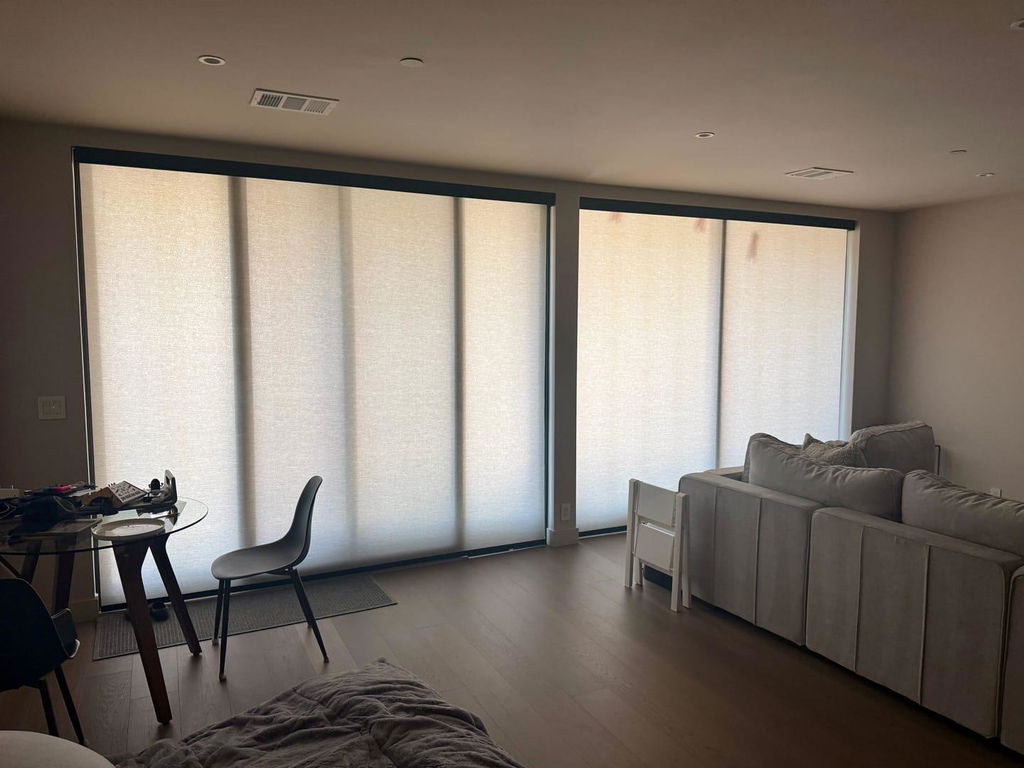
I remember the first time I stood in front of a nine-foot picture window in a mid-century remodel. The view of the canyon was breathtaking, but the client wanted privacy at night. My first instinct was to preserve the architecture at all costs. I refused to split my view so I tracked down a 108 inch roller shade that could handle the span without those ugly vertical light gaps created by multiple smaller blinds.
However, once you cross that eight-foot threshold, gravity stops being a suggestion and starts being a relentless enemy. A 108 inch roller shade is a heavy, architectural beast. If you don't account for the physics of that span, you’ll end up with a 'smile' in the middle of your window—a permanent, sagging bow that ruins the clean lines you were trying to save.
- Standard 1-inch steel tubes will always sag over a 9-foot span.
- Extruded aluminum with a 2.5-inch diameter is the minimum requirement for stability.
- Motorization isn't just a luxury; it protects the mounting brackets from manual pulling tension.
- Heavy blackout fabrics increase the 'deflection' risk compared to lightweight solar sheers.
The Physics of a 9-Foot Window Span
When you are dealing with a 108 inch wide roller shade, you are asking a horizontal tube to support its own weight plus the weight of roughly 30 to 50 square feet of fabric. In the world of window treatments, we call the resulting sag 'deflection.' If the tube isn't rigid enough, the center will dip. This doesn't just look bad; it causes the fabric to ripple and 'V-buckle' as it rolls up, eventually fraying the edges against the brackets.
Most big-box retailers sell shades with thin-walled steel tubes because they are cheap to ship. But steel is surprisingly flexible. At 108 inches, a standard retail tube is at its breaking point. I’ve seen shades that looked perfect on day one develop a noticeable two-inch dip by month six. You want that top line to be as straight as a laser level, and that requires moving away from 'off-the-shelf' hardware and into commercial-grade territory.
Why You Need an Upgraded Extruded Aluminum Tube
The secret to a straight shade isn't just the material; it's the diameter and the wall thickness. When shopping for roller shades that span this wide, you must insist on an extruded aluminum tube. Unlike rolled steel, which is a flat sheet bent into a circle, extruded aluminum is pushed through a mold as a solid piece, making it infinitely more rigid.
For a 108-inch span, I never spec anything less than a 2.5-inch diameter tube. If the fabric is a heavy-duty blackout with a high GSM (grams per square meter), I’ll even jump to a 3-inch tube. Yes, the roll will look thicker at the top, but that’s a small price to pay for a shade that doesn't look like a wet noodle. Remember, the heavier the fabric, the more it pulls on the center of that tube. A 100% polyester blackout fabric is significantly heavier than a 3% openness solar screen, so plan your hardware based on the weight of the textile, not just the width of the window.
Lifting the Beast: Why Motors Win on Massive Spans
Have you ever tried to pull a manual chain on a 9-foot-wide blackout shade? It’s a workout. The sheer tension required to start that roll moving puts immense stress on the mounting brackets and the tube itself. Every time you yank that chain, you are applying asymmetrical force to one side of the shade. Over time, this can pull the entire system out of alignment.
This is why I almost always suggest motorized dual roller shades for oversized windows. A motor provides a consistent, gentle start and stop. It applies torque evenly from the center or the end of the tube without the jerking motion of a human hand. Plus, let's be honest: reaching over a sofa or a large dining table to struggle with a massive manual shade is a design fail. A quiet lithium-ion battery motor or a hardwired 110V system makes the 9-foot span feel effortless rather than a chore.
How to Style It So It Doesn't Look Like a Projector Screen
The biggest design risk with a 108-inch shade is that it can look like a giant, flat movie screen when lowered. It’s a massive architectural plane that can feel cold or clinical. To combat this, I look for fabrics with visible texture—think slubby linens or woven grass-cloth effects rather than flat, smooth vinyl. These textures break up the light and add depth to that massive surface area.
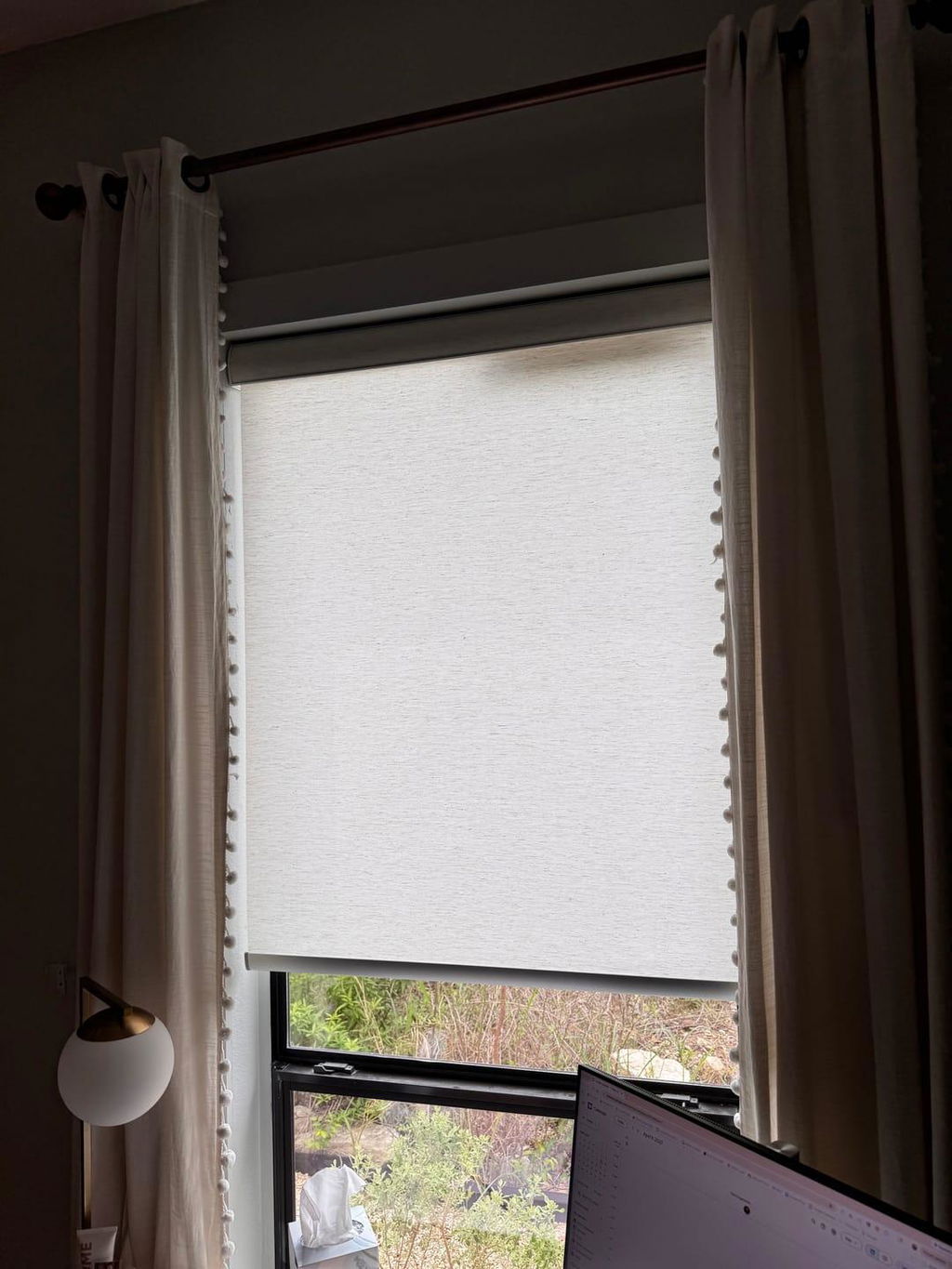
I also highly recommend using a metal fascia or a fabric-wrapped cornice box to hide the beefy 3-inch tube. A sleek aluminum fascia in matte black or brushed nickel gives the shade a finished, built-in look. If you want to soften the edges, layer the shade with stationary drapery panels. Even a 72 inch wide roller shade looks better with a bit of fabric at the margins, but at 108 inches, those side panels are essential for 'framing' the window and hiding the light gaps at the ends of the roller.
The Freight Reality Check
Before you get too excited about your 108-inch masterpiece, we need to talk about the delivery truck. Most standard couriers have a cutoff at 96 inches. Anything over that usually requires specialized freight shipping. This means the shade will arrive on a long pallet on a semi-truck, and you’ll need to be home to sign for it. It also means you cannot afford a measuring mistake. If you're unsure about your numbers, consult professional shade solutions experts to walk you through the deduction math for inside versus outside mounts. One wrong inch at this scale is an expensive mistake you can't just trim away with a hacksaw.
My 108-Inch Disaster Story
Early in my career, I ordered a 110-inch shade for a client in a high-rise. I went cheap on the hardware, thinking a 1.5-inch steel tube would be fine since the fabric was a 'lightweight' sheer. Within three days, the shade had developed a permanent crease down the middle because the tube was bowing so badly. I had to pay out of pocket to replace the entire unit with a 2.5-inch aluminum system. I learned the hard way: gravity always wins. Don't be me. Buy the bigger tube first.
Frequently Asked Questions
Can I install a 108-inch shade by myself?
No. Even if you're handy, the weight and length make it a two-person job. You need one person at each end to ensure the brackets are perfectly level; if you're even an eighth of an inch off, the fabric will 'telescope' and bunch up at one end.
Will a 108-inch shade fit inside a standard window frame?
Only if your window casing is deep enough. A large-diameter tube (2.5 to 3 inches) requires about 3.5 to 4 inches of mounting depth to sit flush. If your frames are shallow, you'll need to do an outside mount on the wall or trim.
Is there a maximum height for a shade this wide?
Yes. As the shade rolls up, the roll gets thicker. Eventually, it won't fit inside the brackets or fascia. For a 108-inch width, most manufacturers cap the height around 96 to 120 inches depending on the fabric thickness.