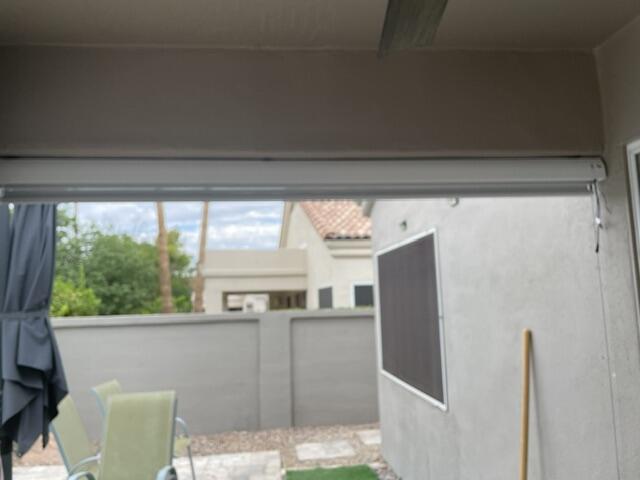
My Extra Wide Roller Shade Sagged Until I Learned This Tube Trick
I remember the first time I stood in front of my new 110-inch picture window. I wanted that seamless, minimalist look—one single, continuous span of fabric that would disappear into the ceiling when open. I ordered a custom extra wide roller shade from a budget-friendly site, thinking I had hacked the system. Three weeks later, the center of the shade was dipping like a tired hammock. It looked cheap, it looked broken, and honestly, it ruined the clean lines of the room. It was a classic case of the 'smiling shade,' and it taught me a very expensive lesson about the physics of window treatments.
- Standard 1-inch tubes are the enemy of wide windows and will always bow over time.
- 'Smiling' shades happen because gravity wins against insufficient aluminum thickness.
- Always upgrade to a 2.5-inch diameter tube for spans over 96 inches to ensure a level roll.
- Motorization isn't just for tech-lovers; it protects your hardware from the uneven stress of manual pulling.
- Plan for a 4-inch fascia or valance to hide the bulkier roll of heavy-duty hardware.
The 'Smiling Shade' Epidemic on Big Windows
If you have ever walked into a high-end hotel and noticed the window shades look like they were installed with a level and a prayer, only to see them dipping in the middle, you have witnessed the 'smiling shade.' This happens when an extra wide roller shade is built on a tube that is simply too thin for the span. Most big-box stores and entry-level custom sites use a standard 1-inch or 1.25-inch aluminum tube. While that works perfectly fine for a 30-inch bedroom window, it is a recipe for disaster on a picture window. The weight of the fabric, especially if you are using a 300 GSM blackout material, pulls the center of the tube downward. Over time, that slight dip becomes a permanent bend.
The visual impact is immediate and disappointing. Instead of a crisp, horizontal line that aligns with your window casing, you get a curve that draws the eye to the failure of the hardware. It makes even the most expensive linen fabric look like a DIY project gone wrong. When you are investing in architectural roller shades, you are paying for the engineering as much as the aesthetic. You want that fabric to hang perfectly flat, like a piece of gallery art. Standard hardware simply isn't built to handle the physics of a 100-plus inch span without structural reinforcement.
I have seen homeowners try to 'fix' this by adding extra brackets in the middle, but that doesn't work for a roller shade because the fabric needs to roll up. You can't put a support bracket where the fabric lives. The only real solution is to start with a tube that is rigid enough to resist gravity across the entire width. If you don't, you'll be replacing that shade within a year when the fabric starts to crease and 'telescope' off to the sides because the tube is no longer straight.
The Physics of a Roller Blind Large Enough for Picture Windows
Let's talk about torque and deflection. When you have a roller blind large enough to cover a sliding glass door or a massive living room window, you are dealing with a significant amount of weight. A 10-foot wide shade made of high-quality solar screen or blackout fabric can weigh upwards of 15 to 20 pounds. All of that weight is concentrated on a hollow aluminum cylinder. In physics terms, the longer the tube, the more leverage gravity has to pull the center down. This is called deflection, and every material has a limit. A 1-inch tube has very little resistance to this downward force.
When the tube bows, the fabric no longer rolls up evenly. You will notice the edges of the shade starting to fray or 'telescope'—where the fabric shifts to one side and starts hitting the brackets. This is often why people give up and end up ruining the view with split blinds. They install two or three smaller shades side-by-side because they are easier to find. But then you’re stuck with ugly 1-inch light gaps between each shade, which completely destroys the 'wall of glass' effect. It’s a compromise that usually leaves people feeling like they settled for second best.
To avoid this, you have to understand the relationship between width and tube diameter. As the width increases, the diameter of the tube must increase exponentially to maintain rigidity. It is not just about the thickness of the metal walls, but the overall circumference. A larger tube provides a much more stable platform for the fabric to wrap around. It ensures that every inch of the roller blind large span is supported equally from left to right. If you are spanning more than 8 feet, you are no longer in the realm of standard residential hardware; you are in the world of commercial-grade engineering.
The Secret is in the Upgraded Roller Tube
The industry secret that most budget retailers won't tell you is that you must upgrade the tube diameter based on your window's width. For extra long roller blinds, the standard 1-inch tube is a non-starter. If your window is between 60 and 84 inches, you should be looking at a 1.5-inch or 2-inch tube. Once you cross that 90-inch threshold, you absolutely need a 2.5-inch heavy-duty aluminum tube. This larger diameter is significantly more rigid and can handle the weight of a 10-foot drop without even a millimeter of sag.
I learned this the hard way when styling a sunroom with 12-foot ceilings. We used versatile day night shades, which feature two layers of fabric—one sheer and one blackout. The sheer weight of two full-sized shades on a single window was massive. We tried to get away with a 2-inch tube, and within forty-eight hours, the center was dipping. We had to swap the entire headrail system for a 2.5-inch reinforced tube. The difference was night and day. The shade operated smoothly, the fabric stayed perfectly flat, and the 'smile' disappeared instantly.
When you are ordering, don't just look at the fabric swatches. Ask about the hardware specs. If a company tells you they can do a 110-inch wide shade on a 1.5-inch tube, run away. They are selling you a product that is guaranteed to fail. A 2.5-inch tube might cost 20% more, but it is the difference between a window treatment that lasts ten years and one that looks like a mess in ten days. For extra long roller blinds, the structural integrity of the metal is the only thing standing between you and a sagging disappointment.
Why I Always Motorize Extra Long Roller Shades
Operating a massive window covering manually is a chore, but more importantly, it is hard on the hardware. When you pull a chain on a 10-foot wide shade, you are applying force to only one side of the tube. This creates uneven tension. Over time, this constant 'side-pull' can cause the brackets to loosen or the tube to shift in its housing. For extra long roller shades, I almost always recommend motorization. It’s not just about the 'cool factor' of using a remote or an app; it’s about the longevity of the shade.
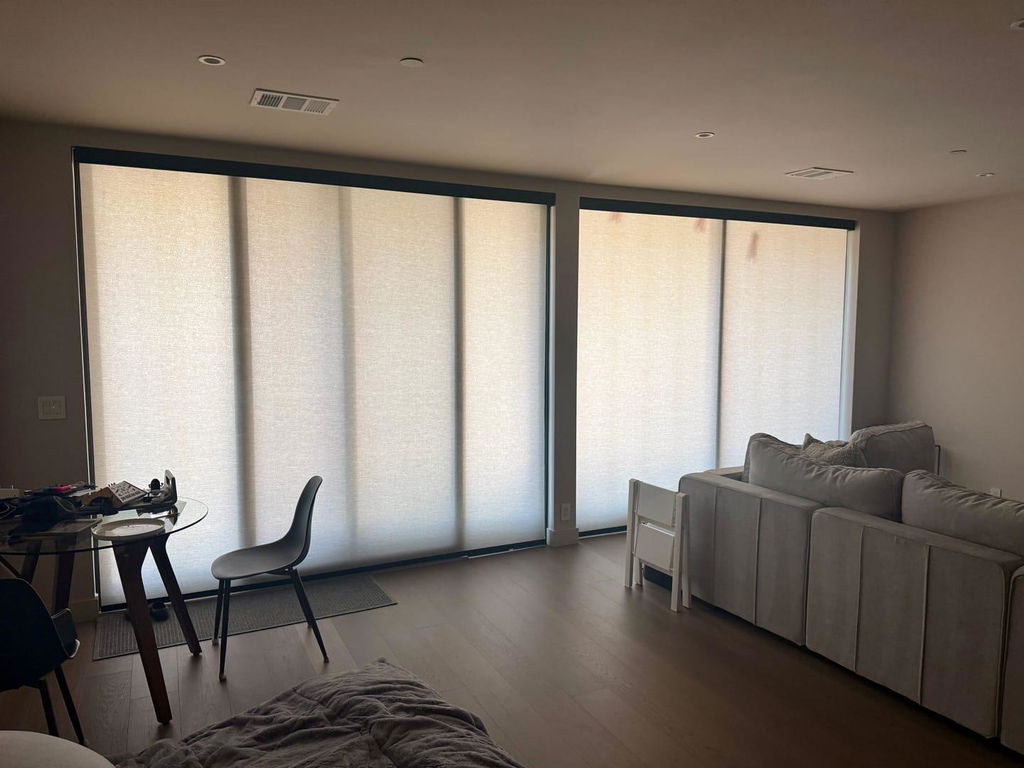
A motor applies torque evenly from the center or the end of the tube in a controlled, steady motion. There is no yanking, no tugging, and no uneven pressure. This ensures the fabric rolls up perfectly level every single time. I recently worked on a project using motorized dual roller shades for a wall of floor-to-ceiling windows. The client was hesitant about the cost, but after seeing how effortlessly the heavy blackout fabric glided up without any strain on the mounting points, they were sold. It eliminates the human error that often leads to crooked shades.
Furthermore, extra long roller shades often cover windows that are difficult to reach. If you have to climb over a sofa or reach across a deep kitchen counter to pull a chain, you are likely pulling at an angle. That angle is the enemy of a straight-rolling shade. Motorization removes that physical obstacle entirely. You get a perfectly balanced lift every morning, which keeps the fabric aligned and the tube straight for years to come. In my book, if the shade is wider than 90 inches, a motor is no longer an upgrade—it's a necessity.
Concealing the Beefed-Up Hardware
The only downside to using a 2.5-inch tube is that the hardware is, well, beefy. When you have 10 feet of fabric rolled around a 2.5-inch tube, the resulting roll can be 4 to 5 inches thick. This isn't the slim, low-profile look people usually expect from roller shades. If you leave that roll exposed, it can look a bit industrial—fine for a loft, but maybe not for a cozy transitional living room. The trick is to plan for concealment from the start.
My favorite way to handle this is with a matching metal fascia. Most high-end manufacturers offer a 4-inch or 5-inch squared-off cover that clips onto the brackets. It hides the tube, the motor, and the brackets, leaving you with a clean, architectural finish. If you are in the middle of a renovation, you can even have your contractor build a 'ceiling pocket'—a recessed channel in the drywall where the shade lives. When the shade is up, it completely disappears into the ceiling. It is the ultimate luxury look.
If a recessed pocket isn't an option, a custom wood valance painted the same color as your trim is a great designer workaround. I once used a simple 1x6 clear pine board, painted it in a soft eggshell white to match the casing, and mounted it just in front of the extra wide roller shade hardware. It cost about $30 in materials but made the heavy-duty hardware look like a built-in architectural feature. Don't let the size of the hardware scare you off; just make sure you have a plan to tuck it away so the focus stays on your view, not the mechanics.
Extra Wide Shade FAQ
How wide can a single roller shade actually go?
With a 2.5-inch or 3-inch reinforced tube, you can comfortably span up to 12 feet (144 inches). Anything wider than that usually requires a specialized 'coupled' system where two tubes are linked to one motor, though you will still have a small light gap between the fabric panels.
Can I fix a roller shade that has already started to sag?
Unfortunately, no. Once an aluminum tube has bowed or 'taken a set,' it cannot be easily straightened. The fabric will likely have stretched unevenly as well. Your best bet is to replace the internal tube with a larger diameter version and hope the fabric hasn't been permanently distorted.
Is an extra wide roller shade much more expensive?
Yes, but not just because of the fabric. The price jump usually comes from the heavy-duty hardware and the shipping. Shipping a 10-foot long tube requires a specialized freight carrier, which is why you see a significant price increase compared to shades that can fit in a standard UPS truck.