I Ruined a $200 Print Before Discovering Flat Front Roman Shades
I still remember the pit in my stomach when I unboxed those custom shades for a client’s breakfast nook. I’d spent six weeks hyping up this incredible $200-a-yard Schumacher floral—a sprawling, Chinoiserie-inspired masterpiece with herons and weeping willow branches. But when we pulled the cords, the birds were decapitated by the heavy, cascading folds. It didn't look like high-end design; it looked like a colorful car crash. That was the day I realized that flat front roman shades aren't just a style choice—they’re a preservation tactic for anyone who actually cares about their fabric.
Quick Takeaways
- Flat front shades offer an uninterrupted surface, perfect for large-scale patterns.
- Unlike hobbled styles, they don't 'stack' in a way that chops up your print.
- A linen flat roman shade provides the best balance of structure and softness.
- Inside mounting is the gold standard for a tailored, architectural look.
The Day I Butchered a Designer Floral Print
The mistake I made was ego-driven. I thought 'more is more,' so I ordered a traditional hobbled style with permanent folds that stay even when the shade is down. Big mistake. The 27-inch vertical repeat of that designer fabric was swallowed by the excess material. Instead of a graceful garden scene, I had a series of disjointed fabric lumps. It was a expensive lesson in visual clutter.
After that project, I abandoned hobbled folds for crisp flat roman shades for almost every patterned application. When you're dealing with a textile that has a story to tell, you need a flat surface. You want the window to look like a framed piece of art when the shade is lowered, not a messy accordion. It's the difference between a tailored suit and a baggy sweater—one shows off the quality of the material, the other just hides it.
Wait, What Actually Makes It a 'Flat Front'?
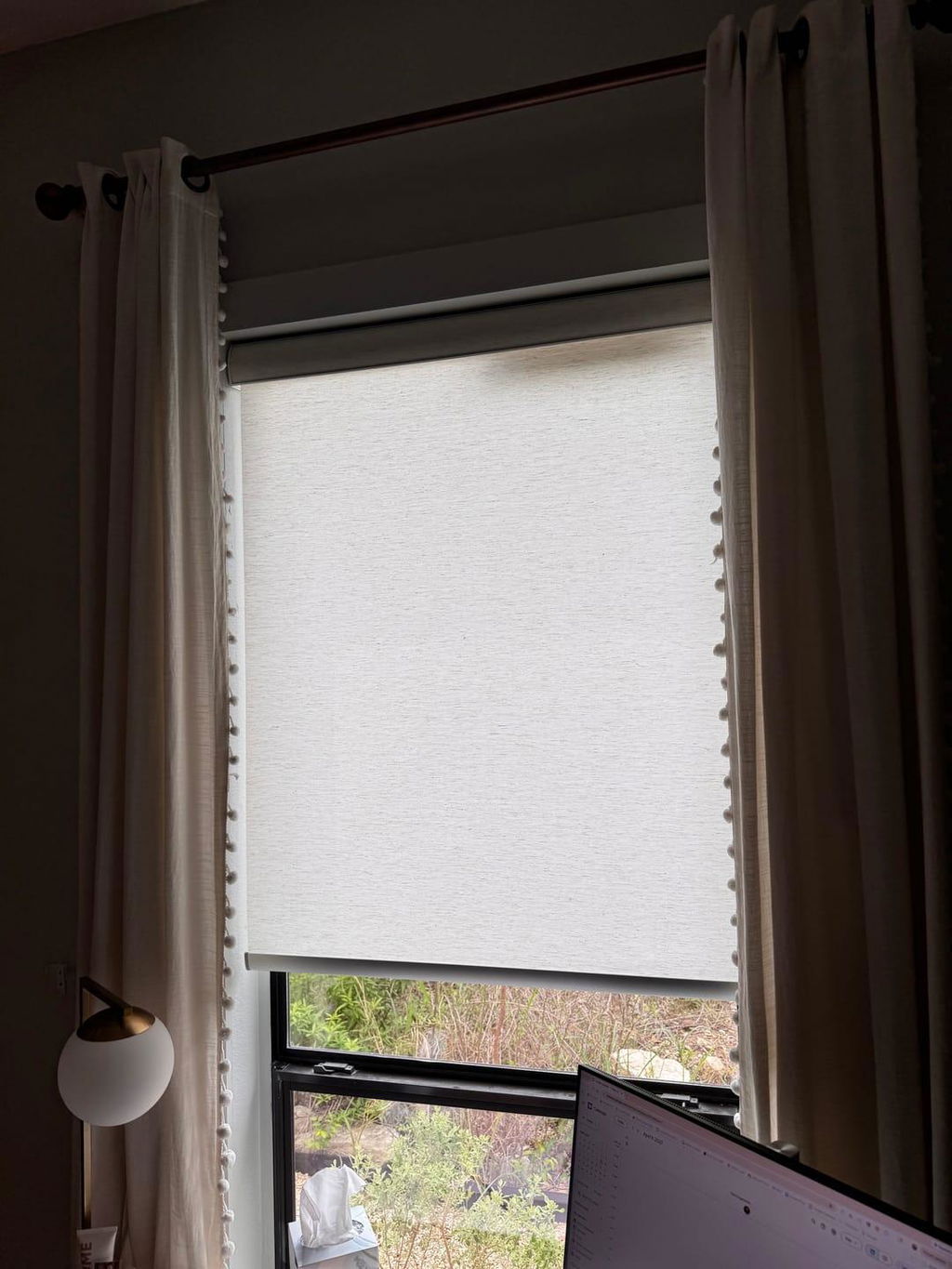
In the trade, we call these flat panel roman shades, and the anatomy is simple. When the shade is fully lowered, it is a single, smooth piece of fabric. There are no horizontal stays (the rods that create those sharp ribs) and no permanent 'hobbled' loops. The back of the shade has a series of rings and cords, but the face remains pristine.
When you raise them, they fold into a neat stack at the top. Because there are no internal ribs, the folds are 'soft,' meaning they have a slightly more organic, less mechanical look. It’s the ultimate 'quiet luxury' move for windows. It doesn't scream for attention; it just sits there looking expensive and intentional.
Why the 'Uninterrupted Canvas' is Mandatory for Patterns
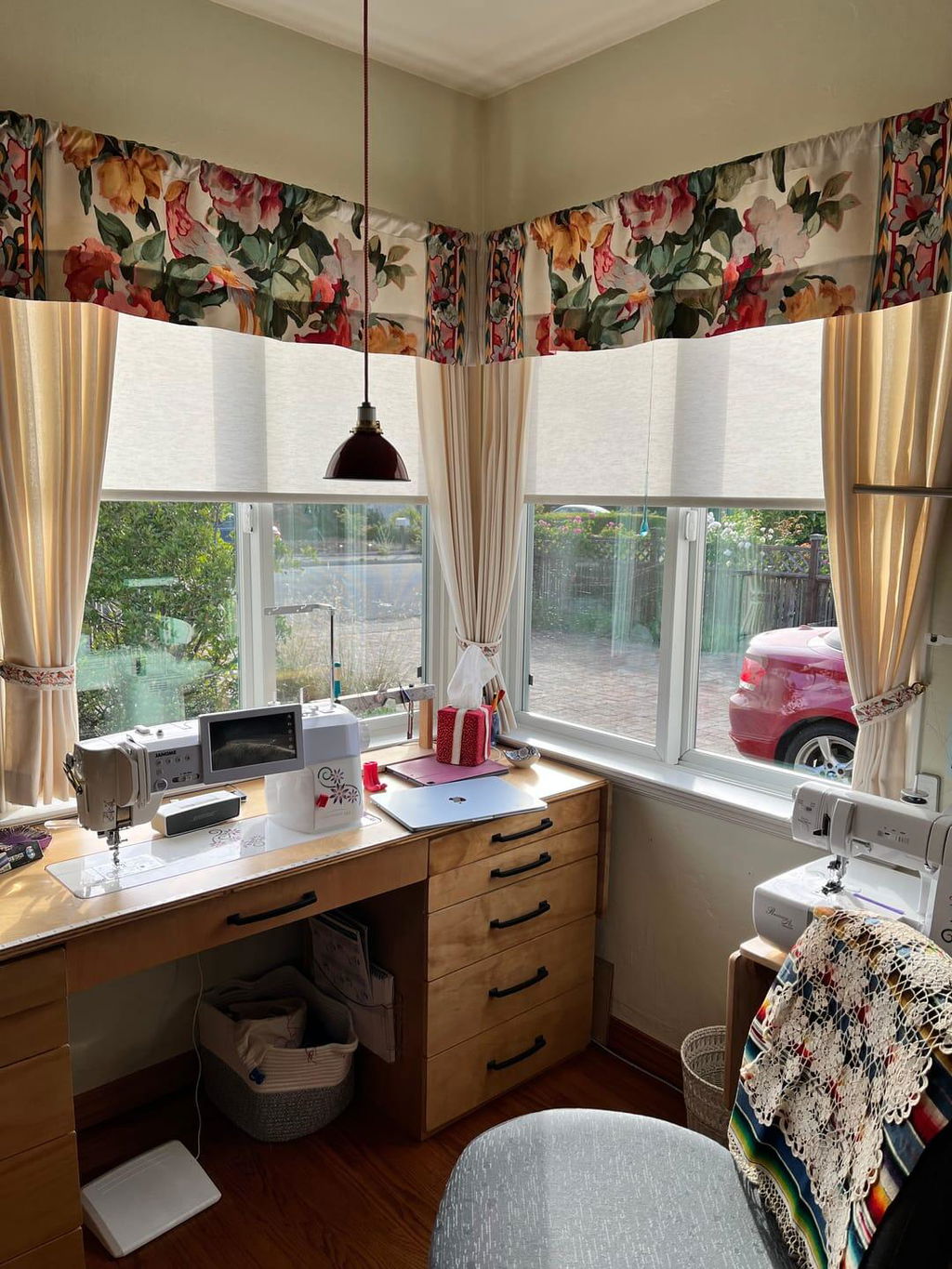
If you are dropping serious money on a large-scale floral, a geometric print, or a complex embroidery, you cannot afford to have it broken up by horizontal seams every six inches. A flat front shade acts as a continuous canvas. It allows the eye to follow a branch from the sill all the way to the header without interruption.
I’ve found this is especially true for 100% linen prints. Linen has a natural 'slub'—those tiny imperfections in the weave—that adds depth when light hits a flat surface. If you start folding and tucking that fabric into a waterfall style, you lose that beautiful light-play. You end up with shadows where you should have highlights.
The Linen Dilemma: Getting the Drape Just Right
Choosing the right fabric weight is where most people trip up. A linen flat roman shade needs to be substantial enough to hold its shape but not so heavy that it becomes a bulky mess when raised. I usually aim for a medium-weight linen, around 250 to 300 gsm. This weight allows the shade to hang straight without 'smiling' (that annoying sag in the middle) while still feeling airy.
The downside? Linen wrinkles. If you’re the type of person who needs every line to be laser-straight, you might find the natural 'memory' of linen frustrating. When you first install them, you’ll need to 'train' the folds by hand for a few days. It’s a bit of a chore, but once that linen settles into its stack, it looks incredibly sophisticated.
Custom Workrooms vs. Big Box Splurges
I’ve used everything from a high-end shade store flat roman shade to local boutique workrooms. The big box retailers are great for standard sizes and quick turnarounds, but if you have a pattern with a massive repeat, you might want to go custom. A local workroom will 'fussy cut' the fabric, ensuring that the most beautiful part of the print is centered exactly where you want it.
If you're looking for that high-end look without the four-month wait time, sourcing tailored roman shades from a specialist online vendor is often the sweet spot. You get the precision of custom measurements and better fabric choices than the 'off-the-shelf' options, but usually at a more palatable price point than a full-service interior designer would charge.
My 3 Golden Rules for Styling a Flat Shade
First, always go for an inside mount if your window depth allows it. It keeps the lines of the room clean and makes the shade feel like a part of the architecture. If you have shallow casings, an outside mount can work, but you’ll want to add 'returns' (fabric that covers the sides of the headrail) so it doesn't look like a piece of cardboard stuck to the wall.
Second, don't skimp on the lining. For patterns, a blackout lining is a must—not just for sleep, but to prevent the sun from 'washing out' the colors of your print. Without it, your beautiful navy floral will look like a muddy grey mess when the sun hits it at 2 PM. For rooms where you want the best of both worlds, consider day night shades which allow you to toggle between light-filtering and total privacy.
Third, keep the hardware simple. A flat shade is about the fabric. Don't distract from it with chunky cord locks or ornate pulls. A concealed cordless system is my personal favorite—it’s cleaner, safer for kids, and keeps the focus entirely on that beautiful, flat panel of fabric.
FAQ
Do flat roman shades look 'messy' when raised?
They have a 'soft' stack, so they won't look as sharp as a ribbed shade. However, if you 'train' the fabric folds when you first install them, they will stack neatly and consistently every time.
Are they better than drapes for small rooms?
Absolutely. Drapes take up physical and visual 'stack back' space on the walls. A flat roman shade stays within the window frame, making the room feel larger and less cluttered.
How do I clean a flat linen shade?
Vacuum them regularly with a brush attachment. For linen, I avoid spot cleaning with water as it can leave 'rings.' Professional dry cleaning is always the safest bet for high-end fabrics.