I Never Use Solid Fabrics Without a Front Slat Roman Shade
I remember the first time I ordered custom 100% linen shades for a client's breakfast nook. The fabric was a gorgeous, 12oz oatmeal weight—expensive, heavy, and soft to the touch. But when we finally installed them and lowered the panels against the 4 PM sun, my heart sank. Without any visible structure, those high-end linens looked like we had literally tacked up a set of wrinkled bedsheets. There was no depth, no architectural interest, just a flat, limp rectangle of fabric.
That was the day I realized that solid fabrics need help to look intentional. If you aren't using a pattern to create visual movement, you have to use the construction of the shade itself. This is why I almost exclusively specify a front slat roman shade when working with solids, subtle textures, or tone-on-tone weaves. It turns a utility item into a design choice.
- Front slats provide horizontal 'ribs' that create depth and shadows on solid fabrics.
- The built-in dowels ensure the shade stacks into perfect, crisp folds every single time.
- This style mimics the clean lines of modern architecture, preventing fabric from looking 'sloppy.'
- Avoid front slats for large-scale patterns, as the seams will cut through your design.
Why Your Solid Linen Looks Like a Bedsheet
When you look at a window, your eye craves a place to land. A large, flat expanse of solid white or beige fabric offers nothing but a void. Even if you spend $80 per yard on a premium Belgian linen, that quality is lost when the fabric is pulled taut. It lacks the 'high-low' contrast that makes a room feel finished.
The 'bedsheet effect' happens because flat-front shades rely entirely on the fabric's drape. In a world of perfectly square windows and drywall, a slightly sagging piece of fabric feels like a mistake. By adding a front slat, you are introducing a repetitive horizontal element that mimics the look of custom millwork. It tells the viewer that this shade was engineered, not just hung.
The Anatomy of a Front Slat Roman Shade (And Why It Works)
In a standard shade, the structural ribs (or dowels) are hidden in the back. With a front slat style, we flip the script. Small pockets are sewn directly into the face of the fabric to house the battens. This creates a visible, 1/4-inch tuck every 6 to 8 inches down the length of the shade. When you browse high-end Roman shades, you'll notice this detail in almost every designer's portfolio.
This construction breaks up the verticality of the window. On a standard 60-inch drop, you get a series of crisp, parallel lines that catch the light. It’s a subtle architectural detail that makes a 200 gsm cotton blend look twice as expensive as it actually is. It’s the difference between a t-shirt and a pleated dress shirt.
Why I Pick This Over a Flat Front for Modern Rooms
I love a minimalist aesthetic, but 'minimal' should never mean 'boring.' In modern homes with lots of glass and hard angles, you need window treatments that hold their shape. A flat-front shade can sometimes look a bit 'shabby chic' or farmhouse—too relaxed for a clean, contemporary space. The front slat provides the same rigid, horizontal precision you might expect from a designer roller blind, but with the tactile warmth of a woven textile.
There is also the functionality aspect. Because the battens are sewn into the face, they act as a guide. When you pull the cord, the fabric has no choice but to fold exactly where the slats are. You won't find yourself 'dressing' the shade (tucking the folds by hand) every time you want to let the light in. It’s a disciplined look for people who hate clutter.
Please Don't Put a Large Scale Print on This Style
As much as I advocate for the front slat, it is not a universal solution. If you’ve fallen in love with a massive Chinoiserie bird print or a 12-inch geometric trellis, stay away from front slats. Those horizontal seams will slice right through your pattern, creating a disjointed, 'glitchy' look that ruins the artist's intent.
If you are dead-set on a bold print, you should look at other window shade solutions like a plain flat-front or a relaxed 'smile' shade. Front slats are for the quiet achievers: the solids, the tweeds, the tiny herringbones, and the slubby linens. Let the structure be the star, not the print.
How I Layer These Under Drapes (Without the Stiffness)
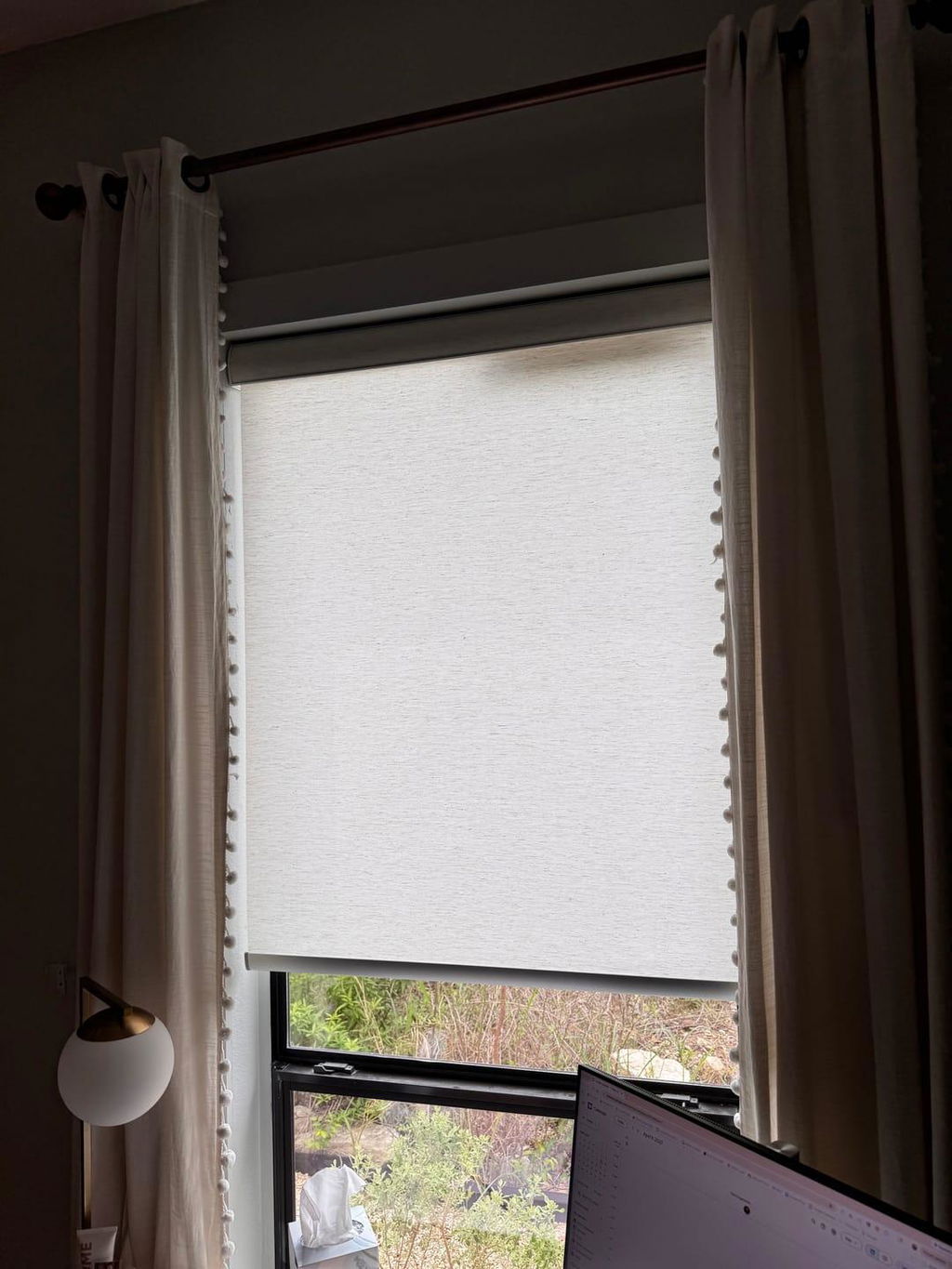
Some people worry that a front slat shade looks too rigid. The fix is simple: layer them. I love pairing the hard, horizontal lines of a slat shade with the soft, vertical volume of floor-to-ceiling drapes. I usually mount the shade inside the window frame and hang the drapes 4 inches above the trim, extending 8 to 10 inches past the frame on each side.
The contrast is delicious. You get the tailored, architectural 'blind' look from the shade, but the room stays cozy because of the fabric pooling at the floor. In my experience, this combination layers better under drapes than almost anything else because it provides a clean backdrop that doesn't compete with the curtain's pleats. It’s a masterclass in texture over pattern.
My Midnight Measurement Mistake
I’ll be honest: I once tried to 'hack' this look by sewing my own slats into a pair of ready-made shades at 2 AM before a photoshoot. I didn't account for the 'take-up'—the fabric used to create the slat pocket. I ended up with shades that were three inches too short for the window, leaving a glaring gap of light at the bottom. The lesson? Front slats require precise math. If you're ordering custom, ensure your maker accounts for that pocket fold, or you'll be left with high-water shades that look like they've outgrown their pants.
FAQ
Do front slats make the shade harder to clean?
Not really. Dust tends to settle on the top of the slats, but a quick pass with a vacuum brush attachment every few months keeps them looking sharp. Because the fabric is held taut, it actually wrinkles less than a relaxed shade.
Can I use front slats with sheer fabrics?
You can, but the dowels will be visible through the fabric when the sun shines through. Some people love this 'shoji screen' effect; others find it too industrial. I prefer it with opaque or light-filtering linings.
Are front slat shades more expensive?
Usually, yes. There is significantly more labor involved in sewing those individual pockets across the face of the shade compared to just slapping some rings on the back. But in my book, the architectural payoff is worth every penny.