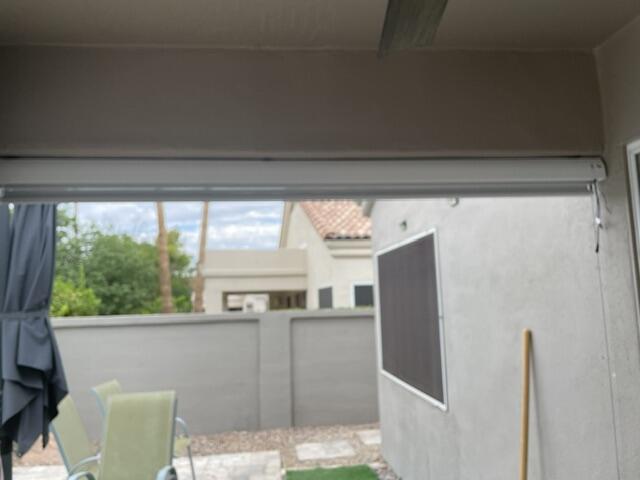
I Made a Budget Blinds Roller Shade Look Like a $2,000 Custom Treatment
There is a specific kind of dread that sets in around 5:00 PM in a room with naked windows. It is that 'fishbowl' feeling where the neighbors can see you eating pasta in your pajamas, and the setting sun turns your TV into a useless glare-fest. For years, I have oscillated between two extremes: the flimsy $40 DIY kits that snap if you look at them sideways, and the $2,500-per-window custom workroom quotes that make me want to sell a kidney. I needed a middle ground for my living room renovation.
I finally decided to test a budget blinds roller shade to see if a mid-tier franchise could bridge the gap. I wanted something that felt architectural and intentional, not like a temporary plastic sheet. After living with them for six months, I have realized that the 'custom' look is less about the brand name and more about the specific technical choices you make during the consultation. You can make affordable products look like a five-figure install if you know which boxes to check.
Quick Takeaways
- Go for the Fascia: Always hide the 'guts' of the roller with a matching metal or fabric-wrapped cassette.
- Opacity Matters: A 3% to 5% openness factor is the sweet spot for maintaining a view while killing glare.
- Layer or Bust: Roller shades are functional, but they need soft drapes to feel like 'decor.'
- Inside Mount is King: Unless your window depth is non-existent, an inside mount provides the cleanest lines.
Why I Finally Decided to Test the Franchise Route
I have spent a decade telling clients that you get what you pay for. Usually, that means if you buy a cheap shade, it will yell 'cheap' from across the room with its visible plastic brackets and jerky spring mechanism. But the gap between big-box retail and high-end designers has become a chasm. I wanted to see if budget blinds products could actually provide that satisfying, weighted 'thunk' of a high-end shade without the designer markup.
The franchise route is polarizing. Some designers scoff at it, but there is an undeniable benefit to having a human show up at your door with a laser measure. I have mismeasured enough windows in my life to know that being off by a quarter-inch is the difference between a sleek install and a light-leaking disaster. I wanted to see if their 'white glove' service could handle my 1920s windows, which are about as level as a bowl of soup.
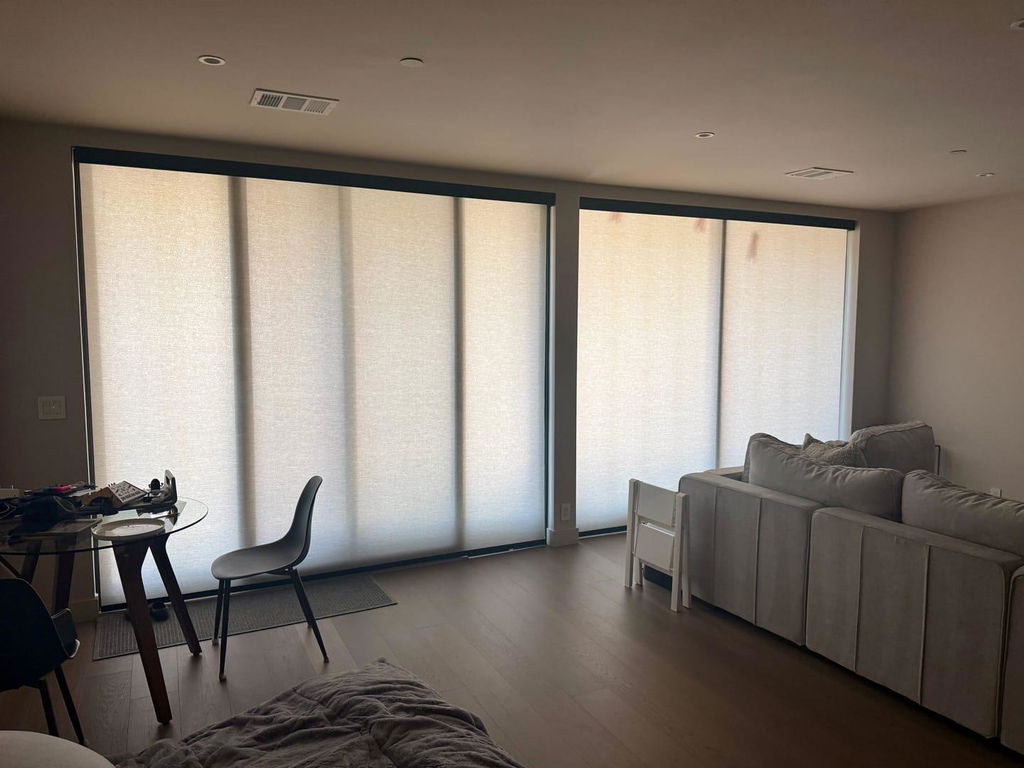
My living room has three massive windows facing West. Every afternoon, the room becomes a literal oven. I needed a solution that was functional enough to block the heat but chic enough to stay visible. I was tired of the 'all or nothing' approach of heavy curtains. I wanted a base layer that looked like part of the window's architecture, allowing the decorative elements to do the heavy lifting later.
Ordering My Budget Blinds Roller Shade: Exactly What I Spec'd
When the consultant arrived, I bypassed the basic vinyl options immediately. If you want your shades to look expensive, you have to look for texture. I chose a light-filtering fabric in a soft, greige-toned weave with a 5% openness factor. This allows enough light to filter through so the room doesn't feel like a cave, but it cuts the UV rays that fade my favorite velvet armchair. It feels more like a heavy linen-blend textile than a piece of plastic.
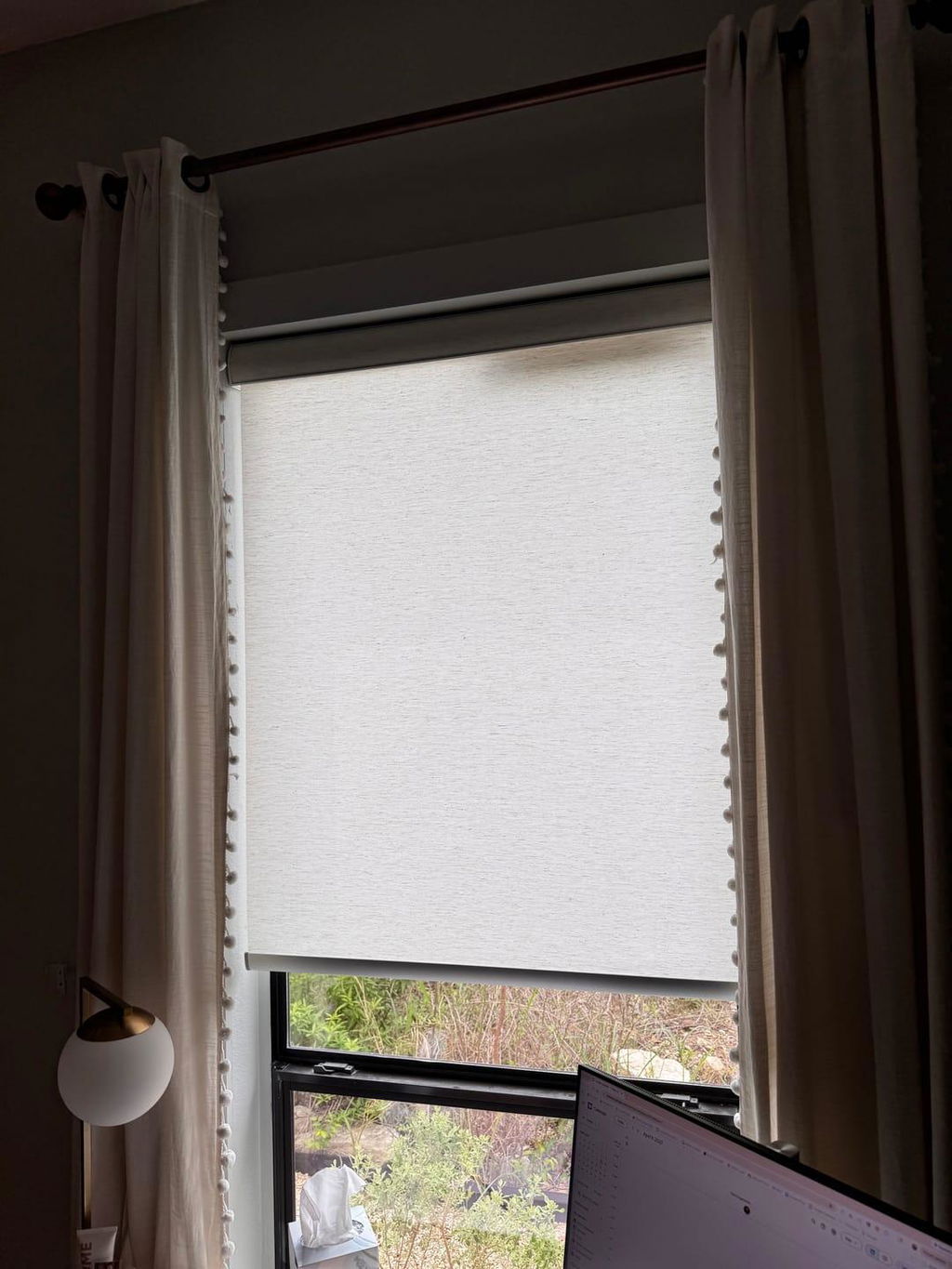
The real secret to making a budget blinds roller shade look high-end is the mounting hardware. I insisted on a square metal fascia in a matte black finish. This hides the roll of fabric at the top, creating a clean, crisp line that mimics a modern architectural detail. I also opted for a continuous cord loop with a metal chain. I know cordless is the trend, but in my experience, the tension on cordless shades eventually fails. A heavy-duty metal bead chain feels substantial and industrial in a good way.
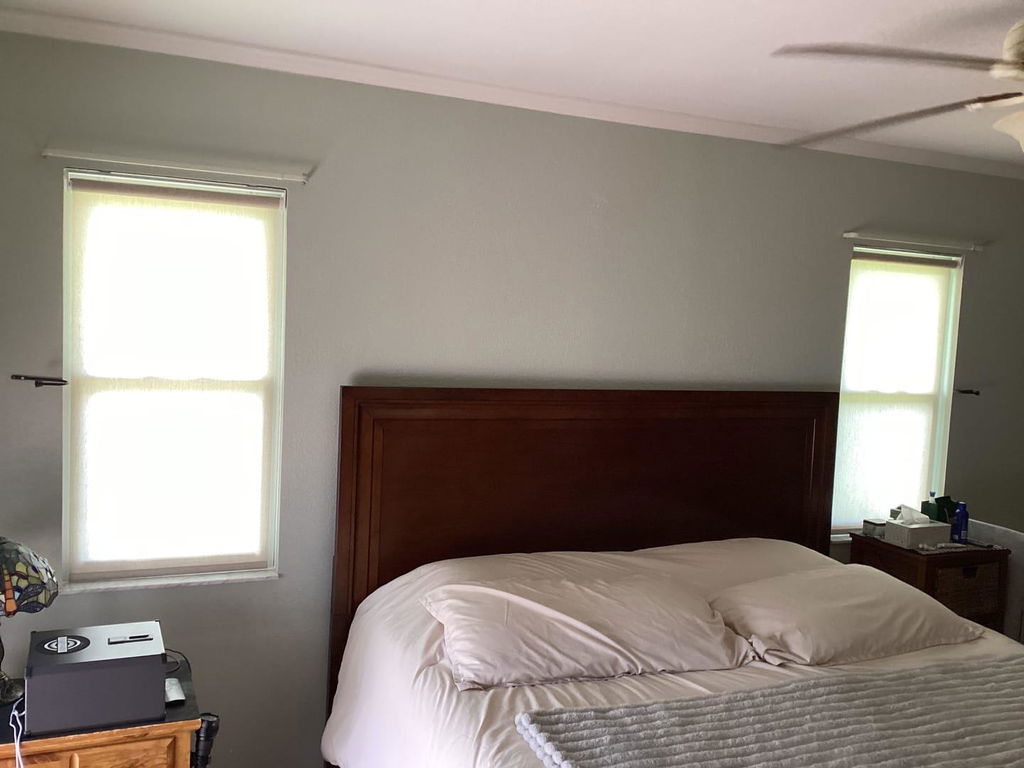
I also specified an inside mount. This requires the shade to be cut to within an eighth of an inch of the window frame. This is where the franchise professional earned their keep. My windows are slightly flared at the top, and they managed to fit the shade so tightly that there is virtually no light gap on the sides. That tight fit is what makes a shade look like it was built into the house rather than slapped on as an afterthought.
The Secret to Faking High-End? It's All in the Layering
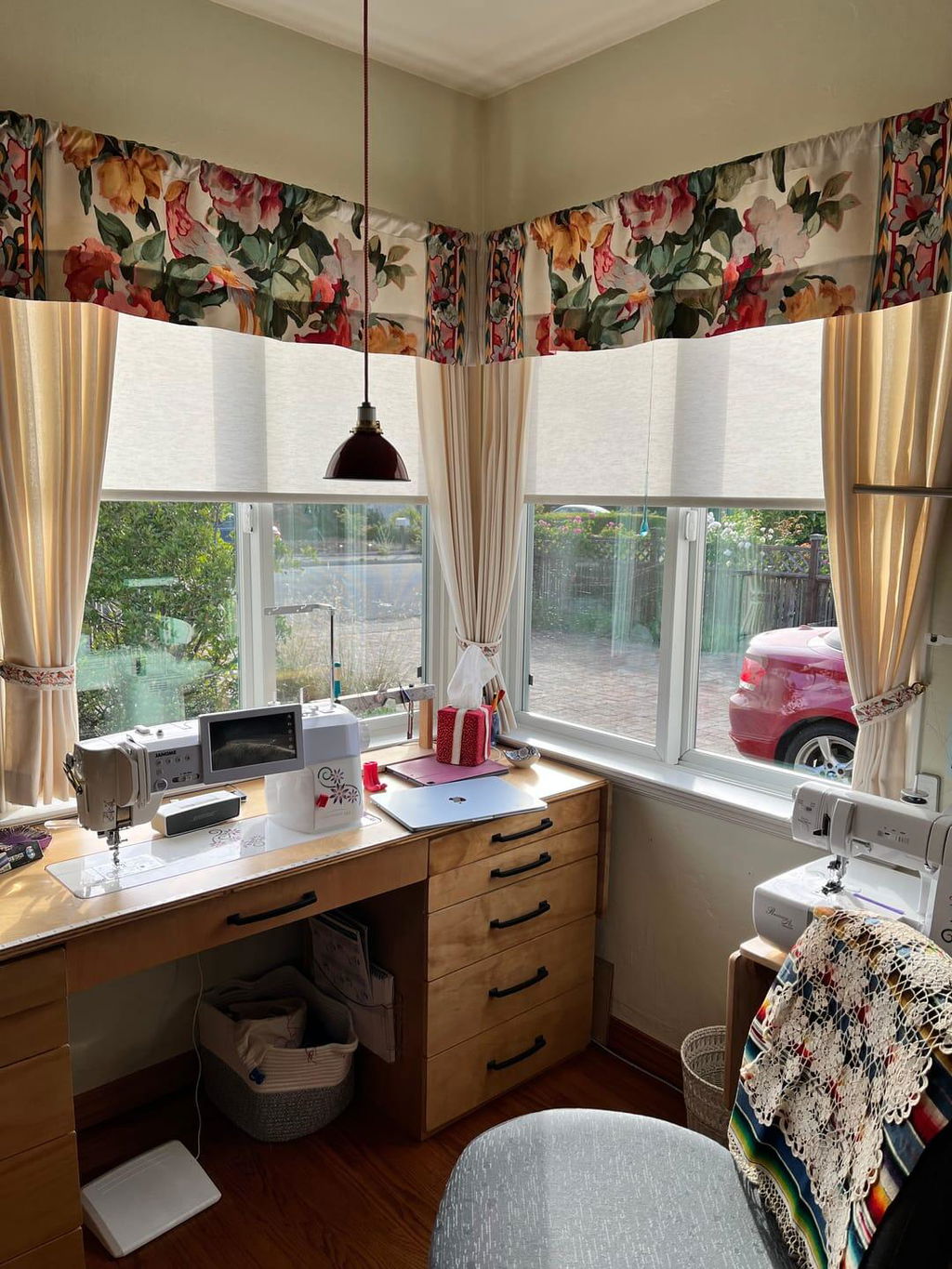
A roller shade standing alone can look a bit cold. It is a functional tool, not a focal point. To get that $2,000 designer look, I treated the shade as the 'undergarment' and added budget blinds drapes as the 'outfit.' By layering a hard treatment with a soft one, you hide the edges of the window and add much-needed acoustic dampening to the room. It stops the echo and makes the space feel finished.
I am a firm believer in mixing roller shades with custom drapes to create depth. For this room, I hung the drapery rods 6 inches above the window frame and extended them 10 inches past the sides. This 'trick' makes the windows look massive and ensures that when the drapes are open, they don't block any of the light. The roller shade sits tucked inside the frame, while the fabric panels frame the whole scene.
I chose a heavy-weight linen for the drapes with a 2.5x fullness. Fullness is where most people fail—if your drapes look like a flat sheet when closed, they look cheap. You want enough fabric so that even when they are pulled shut, there is still a beautiful, deep wave in the material. This combination of the crisp, technical roller shade and the soft, pooling linen creates a high-low contrast that looks incredibly sophisticated.
Should You Buy Budget Blinds Drapes Too?
The budget blinds & inspired drapes collection is surprisingly robust. While I usually source my own fabrics, I was impressed by their 'Inspired' line, specifically the French Pleat options. If you are already ordering shades, bundling your budget blinds curtains can save you a headache in terms of installation. Their installers will steam the panels for you, which is a task I would pay almost any amount of money to avoid doing myself.
However, if you want a truly 'one-of-a-kind' look, you might want to source your own hardware. While the budget blinds drapes are great, their rod selection can sometimes feel a bit standard. I often recommend using their high-quality custom panels but pairing them with a vintage brass rod or a custom-forged iron piece from a local maker. That mix of franchise reliability and artisanal hardware is the ultimate designer 'hack.'
Did It Actually Save Me Money? The Final Breakdown
Let's talk numbers. A fully custom workroom quote for these three windows—including the shades, the labor, and the designer's markup—came in at roughly $2,100. By using a budget blinds roller shade for the base and their mid-tier drapery line, I spent about $1,150 total. That is a 45% savings for a look that, to the untrained eye, is indistinguishable from the high-end version.
It is certainly more expensive than the $200 I would have spent at a big-box store, but the quality difference is night and day. I have tried hiding a cheap roller shade behind expensive drapes before, and it always eventually bites me. The cheap ones yellow in the sun, the edges fray, and the spring tension eventually gives up, leaving you with a crooked shade that won't stay up. Spending that middle-tier money on a franchise product gives you the warranty and the professional install that DIY lacks.
The real value came in the time saved. I didn't have to spend three weekends wrestling with a drill and a level, only to find out I hit a steel lintel and needed a different bit. The installers were in and out in 45 minutes, and they took all the packaging with them. For a busy professional, that is worth the extra couple hundred dollars over the DIY route.
My Final Verdict: Would I Spec This for a Client?
I would absolutely recommend this route for 'hard' window treatments like roller shades and blinds. The budget blinds products are durable, the color range is sophisticated, and the installation is precise. I would spec these for living rooms, home offices, and kitchens where you need daily functionality. The motorized options are also a great add-on if you have windows that are hard to reach behind a sofa.
Where I might hesitate is in a formal dining room or a primary suite where you want a very specific, rare silk or a hand-blocked print. In those cases, the franchise fabric library might feel a bit limited. But for 90% of homes, the combination of a high-quality roller shade and a well-hung drapery panel is the most cost-effective way to get a magazine-ready look without the designer price tag. Just remember: don't skip the fascia, and never skimp on the drapery fullness.
FAQ
Is the motorized roller shade worth it?
If the window is behind a large piece of furniture or is very tall, yes. It saves you from tugging on cords and keeps the fabric cleaner since you aren't touching it. For standard windows, the manual metal chain is perfectly fine and saves you about $150 per window.
How do I clean these shades?
Most of these synthetic blends are incredibly low maintenance. A quick pass with a vacuum brush attachment once a month keeps the dust from settling into the weave. For spots, a damp microfiber cloth usually does the trick without leaving a ring.
Can I install them myself to save more?
You can, but I wouldn't. The 'custom' look depends entirely on the fit. If you are off by even a tiny bit, you'll have light gaps that make the shade look like an ill-fitting suit. The professional installation is the best part of the service.