Are Blackout Blinds for Sliding Glass Doors Always a Clunky Nightmare?
I remember the first time I tried to turn my sun-drenched master bedroom into a sleep-friendly sanctuary. The 6 AM sun didn't just peek through the sliding glass door; it roared in, bouncing off my dresser and straight into my retinas. I rushed out and bought the first set of heavy vinyl verticals I could find, only to realize I'd turned my favorite room into something resembling a doctor's waiting room from 1994.
Finding blackout blinds for sliding glass door setups that actually work—and don't look like an industrial accident—is a specific kind of design challenge. It's about more than just blocking light; it's about managing a massive, heavy piece of hardware that you actually have to move several times a day.
Quick Takeaways
- Weight is your enemy: Large blackout shades can be incredibly heavy to lift manually.
- Mounting depth is key: Most sliders don't have the frame depth for an inside-mount blackout cassette.
- Light gaps are inevitable: Without side channels or layering, a 'halo' of light will always escape the edges.
- Split your shades: Treating a wide door as two or three smaller sections makes operation much easier.
The Giant Glowing Rectangle Problem
The fundamental issue with achieving a total sliding door blackout is the sheer scale of the glass. Unlike a standard window where you're covering a few square feet, a patio door is a structural void in your wall. You aren't just hanging a shade; you're trying to seal a gateway.
Standard fabrics that look great on a small window often fail here because they lack the structure to hang straight across an 80-inch span. When the sun hits that much surface area, even the tiniest pinhole or poor seam becomes a glaring spotlight. It's not just about the fabric opacity; it's about the geometry of the installation.
The Horizontal Door vs. Vertical Blind Clash
We are culturally conditioned to think of blinds as things that go up and down. But your door moves side to side. This mechanical mismatch is where most people lose their minds. If you install a heavy, single-span blackout shade for sliding glass door use, you have to crane that weight all the way to the ceiling just to let the dog out or grab a breath of fresh air.
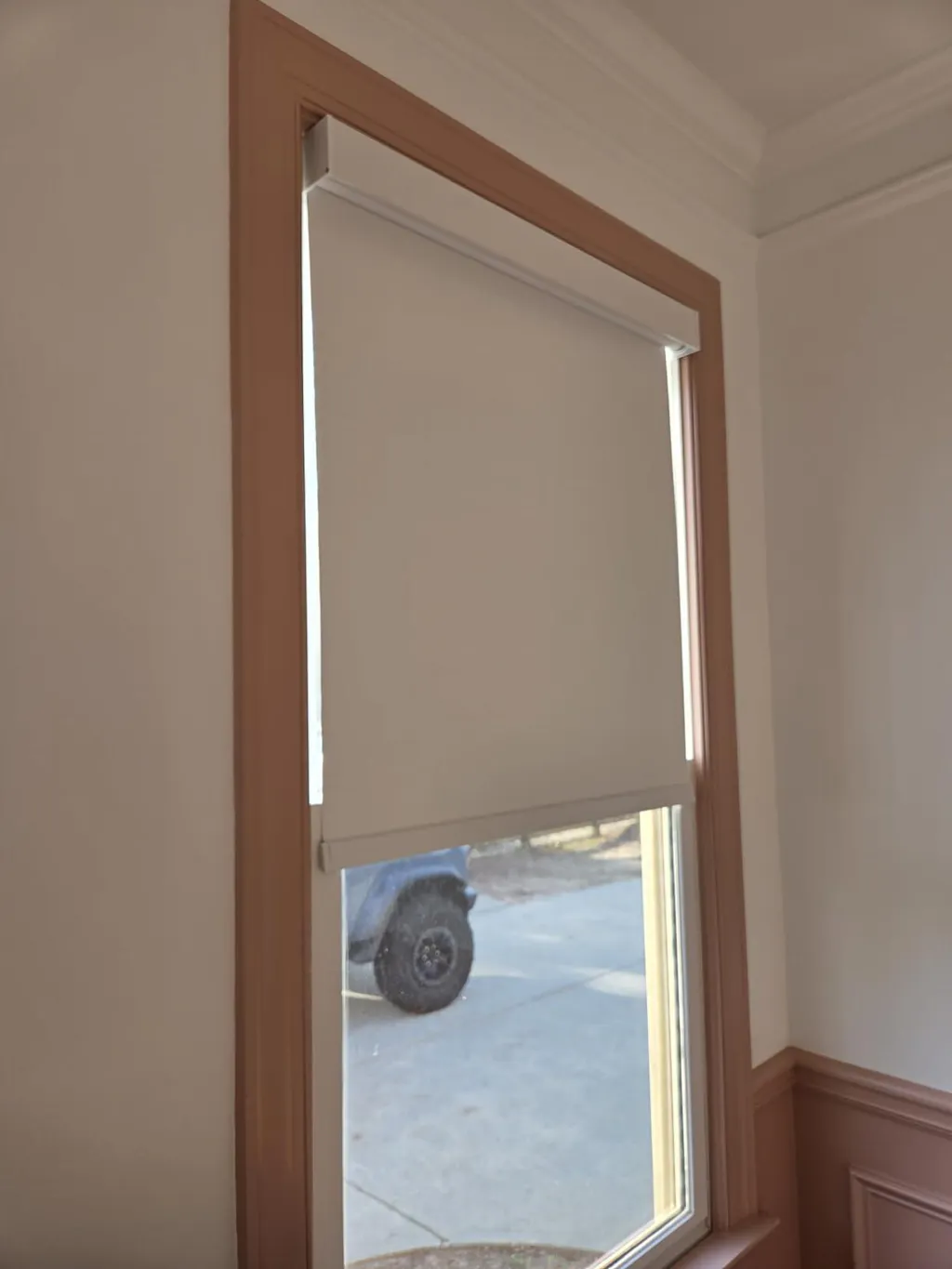
It ruins the flow of the room. You find yourself leaving the shade halfway up, which defeats the purpose of the blackout. I've seen people try to get around this with blackout roller blinds for patio doors, which can look incredibly sharp, but you still have to deal with the physical reality of the lift. If you go this route, I always suggest splitting the treatment into two rollers so you can open the 'door' side independently.
The Frame Depth Dilemma (And How to Cheat It)
Most sliding doors are built with very shallow trim. A high-quality blackout roller or cellular shade usually requires at least 2.5 to 3 inches of depth to sit flush. If you don't have that, the hardware will stick out into the room, creating a massive gap where light pours over the top like a waterfall.
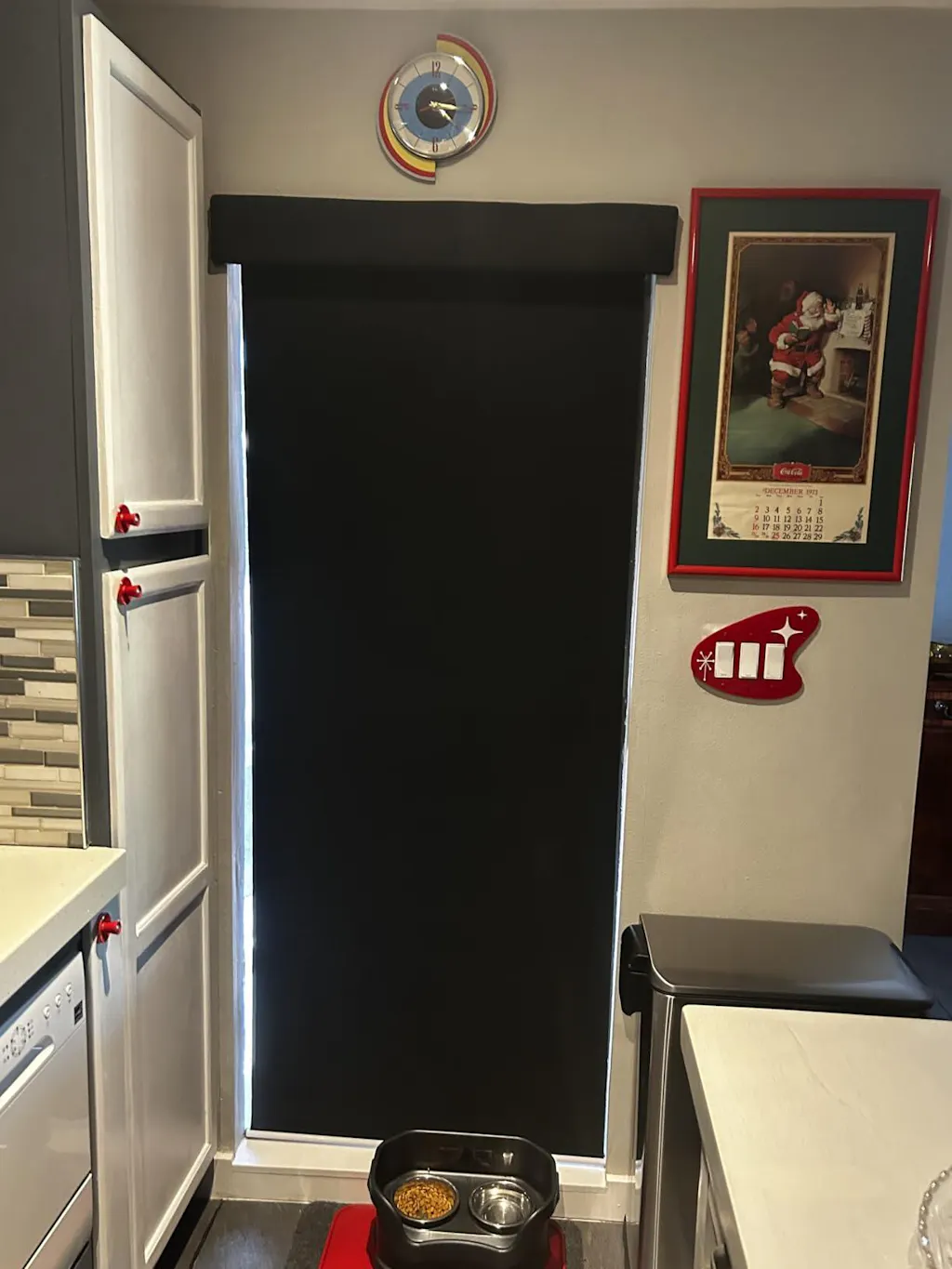
To fix this, you have to 'cheat' the mount. I often recommend mounting the hardware to the ceiling or several inches above the frame. This allows you to hang blackout door shades on a shallow frame while using the wall itself to help block those top-down light leaks. Covering the top with a simple, modern box valance can hide the brackets and make the whole unit look integrated into the architecture.
Roller vs. Cellular vs. Panel: Picking Your Fighter
If you want a minimalist look, rollers are the way to go. They offer a clean, architectural line, but they are heavy. If you're covering a 100-inch wide slider, do not try to do it with one manual cord. Your rotator cuff will thank you if you opt for motorized blackout zebra shades or standard motorized rollers. Automation isn't just a luxury here; it's a functional necessity for wide spans.
Cellular shades are the workhorses of the group. They provide excellent thermal insulation, which is vital if your slider is a drafty single-pane unit from the 70s. However, they can look a bit 'busy' with all those horizontal pleats. Sliding panels (or track blinds) are the most logical for a door because they move horizontally, but they require 'stack back' space on the wall next to the door, or they'll permanently block a third of your glass.
The Inevitable Light Gap Reality Check
Here is the hard truth: no single blackout shades for patio doors setup will give you 100% pitch-black darkness on its own. Because the shade has to clear the door handle and the floor, there will always be a 'halo effect' around the perimeter. Even if the fabric is total 100% blackout window treatments for sliding glass doors, light is like water—it finds the cracks.
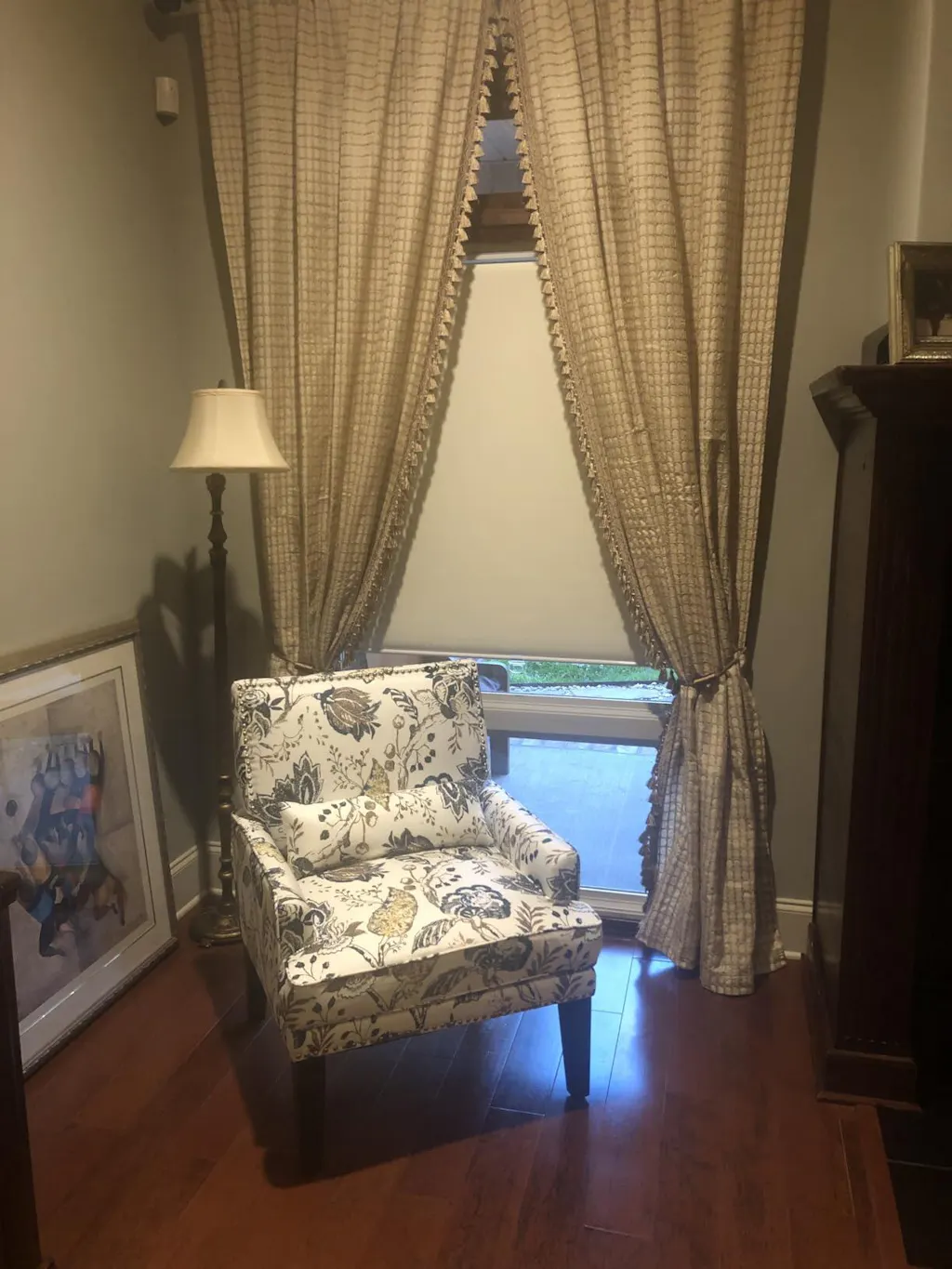
To achieve a true theater-grade blackout room darkening effect, you need to layer. I tell my clients to install the shade for the primary light blocking, then flank the door with heavy, 200 gsm linen-blend drapes. When you close those drapes over the edges of the blinds, you seal the light gaps and suddenly, that 2 PM nap feels like midnight.
My Go-To Setup for Total Darkness Without the Hassle
My personal favorite solution isn't a single product, but a system. I love a high-quality, motorized blackout roller shade mounted about 4 inches above the trim, paired with a custom traverse rod. This allows the shade to do the heavy lifting during movie nights or late mornings, while the drapes add the texture and side-sealing power that a hard blind just can't provide.
I once tried to save money on a rental by using a single, massive 120-inch blackout shade on a tension rod. About three weeks in, the whole thing came crashing down at 4 AM because the weight was too much for the friction mount. I spent the rest of the night with toggle bolts and a drill, learning the hard way that when it comes to sliders, you have to respect the physics of the opening. Secure your hardware, split your spans, and never underestimate the power of a good liner.
FAQ
Can I use vertical blinds for a blackout effect?
Technically yes, but they are rarely effective. The 'slats' tend to have small gaps between them that allow light to flicker through as they move with the air in the room. If you want total darkness, a solid surface like a roller or cellular shade is much better.
How do I handle the door handle?
This is the biggest hurdle for inside mounts. If your handle protrudes more than an inch, you'll likely need to outside-mount your shades so they can hang clear of the hardware without catching or tearing.
What is the best fabric for sliding door blackout?
Look for a high-quality polyester or linen blend with a dedicated blackout coating on the back. A 200-250 gsm weight is usually the sweet spot—heavy enough to hang straight and block light, but not so heavy that it puts undue stress on your mounting brackets.