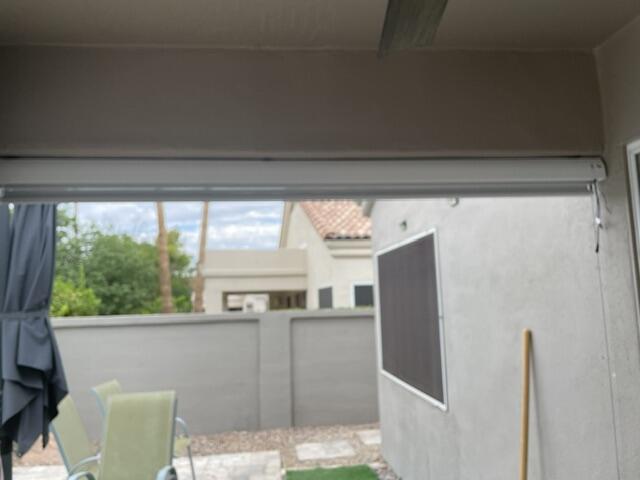
Why Your Outdoor Roller Shades Keep Turning Into Wind Sails
I remember sitting on my back porch with a glass of wine, feeling very smug about my new budget-friendly outdoor roller shades. Then a light July breeze picked up. Within seconds, my relaxing evening sounded like a high-altitude base camp in a blizzard, with 96 inches of polyester fabric slapping violently against my cedar posts.
We often treat the exterior of our homes as an afterthought, assuming the same rules for indoor drapes apply to the patio. They don't. Outside, physics is your primary decorator. If you don't account for wind load and fabric breathability, your beautiful patio roller shades will spend more time tangled in the rafters than shading your seat.
- Choose a 5% openness factor to balance UV protection with airflow.
- Always opt for stainless steel cable guides over cheap bungee tie-downs.
- For spans over 8 feet, heavy-duty aluminum roller tubes are non-negotiable to prevent sagging.
- Inside-mounting provides a cleaner look but requires perfectly square columns.
The Wind Tunnel Effect: What Happens When You Fight Mother Nature
The biggest mistake I see is homeowners choosing a solid, blackout-style roller blind outdoor. It seems logical—you want to block the sun, right? But a solid fabric is essentially a sail. When the wind hits it, that energy has nowhere to go but into the brackets and the hem bar.
Ignoring the sheer force of a 15-mph gust is a recipe for hardware failure. I've seen brackets ripped clean out of 4x4 posts because the fabric didn't breathe. This is exactly why your outdoor patio roller shades sound like a flapping tarp every time the weather turns. You aren't just fighting the sun; you are managing fluid dynamics.
Why 5% Openness is the Magic Number for Breezy Patios
When you are shopping for outdoor roll up shades, you will see a percentage rating. This is the 'openness factor.' A 1% weave is tight and great for privacy, but it catches wind like a kite. A 10% weave is very breezy but can feel like you aren't really blocking the glare.
In my experience, Outdoor Shades 5 Openness is the sweet spot. It uses a PVC-coated polyester or fiberglass yarn that diffuses the harsh 4 PM sun without completely cutting off the breeze. You can still see the silhouette of your garden, and more importantly, the air can pass through the fabric. This reduces the pressure on your exterior roller shades for patio use, keeping them hanging straight instead of billowing out like a parachute.
Tackling the 9 Foot Wide Outdoor Roller Shade Problem
Large porches are beautiful, but they present a structural nightmare. If you are trying to hang a 9 foot wide outdoor roller shade, you cannot use the same skinny roller tube found on a standard window shade. Gravity is a relentless critic; over time, a wide shade will develop a 'smile'—a dip in the center that causes the fabric to ripple and wave.
For these wide spans, you need a 2.5-inch or 3-inch reinforced aluminum tube and a weighted hem bar. I prefer a hem bar that weighs at least 2 pounds per linear foot. That extra heft keeps the roller shades for outdoor patio tensioned, which prevents the fabric from vibrating in the wind. If you go cheap on a wide span, you'll be replacing it by next season.
Tie-Downs vs. Cable Guides: Keeping Your Exterior Shade in Place
Most outdoor roll-up blinds come with those little plastic bungees. They are fine for a week, but the sun eats plastic for breakfast. Within a season, those bungees stretch out or snap, leaving your shade to swing wildly. I’ve had to climb a ladder at 10 PM in a rainstorm to zip-tie a flapping shade because a bungee failed.
If you want a professional look, stainless steel cable guides are the only way to go. These thin cables run vertically from the top bracket to the floor, threaded through the hem bar. They allow the exterior shade to travel up and down smoothly while keeping it locked on a track. Trust me, your deck deserves better than plastic outdoor patio roller shades that look like they belong on a temporary construction site.
Where Exactly Should You Mount Roller Blinds for Patio Beams?
The mounting location changes the entire vibe of the space. An inside mount—where the roller shades for patio sit between the columns—looks architectural and integrated. It’s my favorite look, but it’s unforgiving. If your porch beams are even a half-inch out of level (and they usually are), you’ll see gaps.
A face mount, where you install the roller blinds for patio across the front of the header beam, is much more forgiving. It covers the entire opening and creates a continuous wall of shade. When transitioning from interior roller shades to exterior versions, remember that the hardware needs to be rated for salt spray and moisture. Don't try to save $20 by using zinc-plated screws; they will bleed rust down your white columns the first time it rains.
What is the best material for outdoor shades?
Look for PVC-coated polyester or high-density polyethylene (HDPE). These materials are UV-stable and won't rot or grow mold when they get hit by a summer thunderstorm. I prefer a 350-400 gsm weight for durability.
Can I leave my outdoor roller shades down during a storm?
Absolutely not. Even with cable guides, a heavy storm can exert hundreds of pounds of pressure on your brackets. If the wind is sustained over 20 mph, roll them up. It takes thirty seconds and saves you a $500 replacement bill.
How do I clean my exterior shades?
Skip the power washer; it can distort the weave. Use a garden hose, a soft-bristle brush, and a mild soap like Dawn. Let them dry completely while fully extended before rolling them back into the cassette to prevent 'waffling' of the fabric.