The Counterintuitive Reason Black Mesh Window Shades Look Better Than White
I remember standing in my first real sunroom at 3 PM on a blistering Tuesday, squinting through the glare while my neighbor's brick wall glared back at me. I had originally hung white linen sheers, thinking they would keep the room feeling airy and light, but they just turned into a blinding, hazy wall of white light. That was the moment I realized that mesh window shades aren't just for commercial office buildings; they are the secret architectural weapon for anyone who wants to keep their view without sacrificing their retinas to the afternoon sun.
Quick Takeaways
- White mesh reflects light, creating an opaque 'glow' that blocks your view of the outdoors.
- Black or charcoal mesh absorbs light, allowing your eyes to focus past the fabric on the landscape beyond.
- The 'openness factor' (1% to 10%) determines the balance between UV protection and visibility.
- Layering mesh shades with soft drapery prevents the room from looking too industrial or corporate.
- Mesh shades provide excellent daytime privacy but require a secondary layer for nighttime security.
The Optical Illusion I Teach All My Clients
Most of my clients come to me with the same dilemma: they have a gorgeous view of the garden or the city skyline, but the heat gain is turning their living room into a sauna. They want a mesh window covering that disappears. Naturally, their instinct is to go with white or cream. They assume a light color will blend into the window frame and feel less 'heavy.'
I have to break the news gently: white is the most visible color you can put in a window if you actually want to see through it. Think about a screen door on a porch. Have you ever noticed they are almost always charcoal or black? There is a scientific reason for that. Dark colors absorb the light spectrum, while light colors reflect it. When you are trying to bridge the gap between architectural utility and home comfort, understanding this optical illusion is everything.
Why White Mesh Turns Into a Glowing Wall
When sunlight hits a white mesh, those tiny, pale threads catch every single photon and bounce them right back into the room. This creates a surface brightness that is often more intense than the sun itself. Instead of looking through the shade, your eye is forced to focus on the shade. It becomes a flat, glowing rectangle that completely obscures the trees or the street outside.
I see this mistake most often in sunrooms where people install light-colored roller shades hoping for a breezy look. Instead of a breezy vibe, they end up with a room that feels smaller because the visual boundary has moved from the horizon line to the window glass. The white fabric becomes a solid wall of glare, making it impossible to see the kids playing in the yard or the sunset over the hills.
The 'Screen Door' Magic of Black Mesh Window Shades
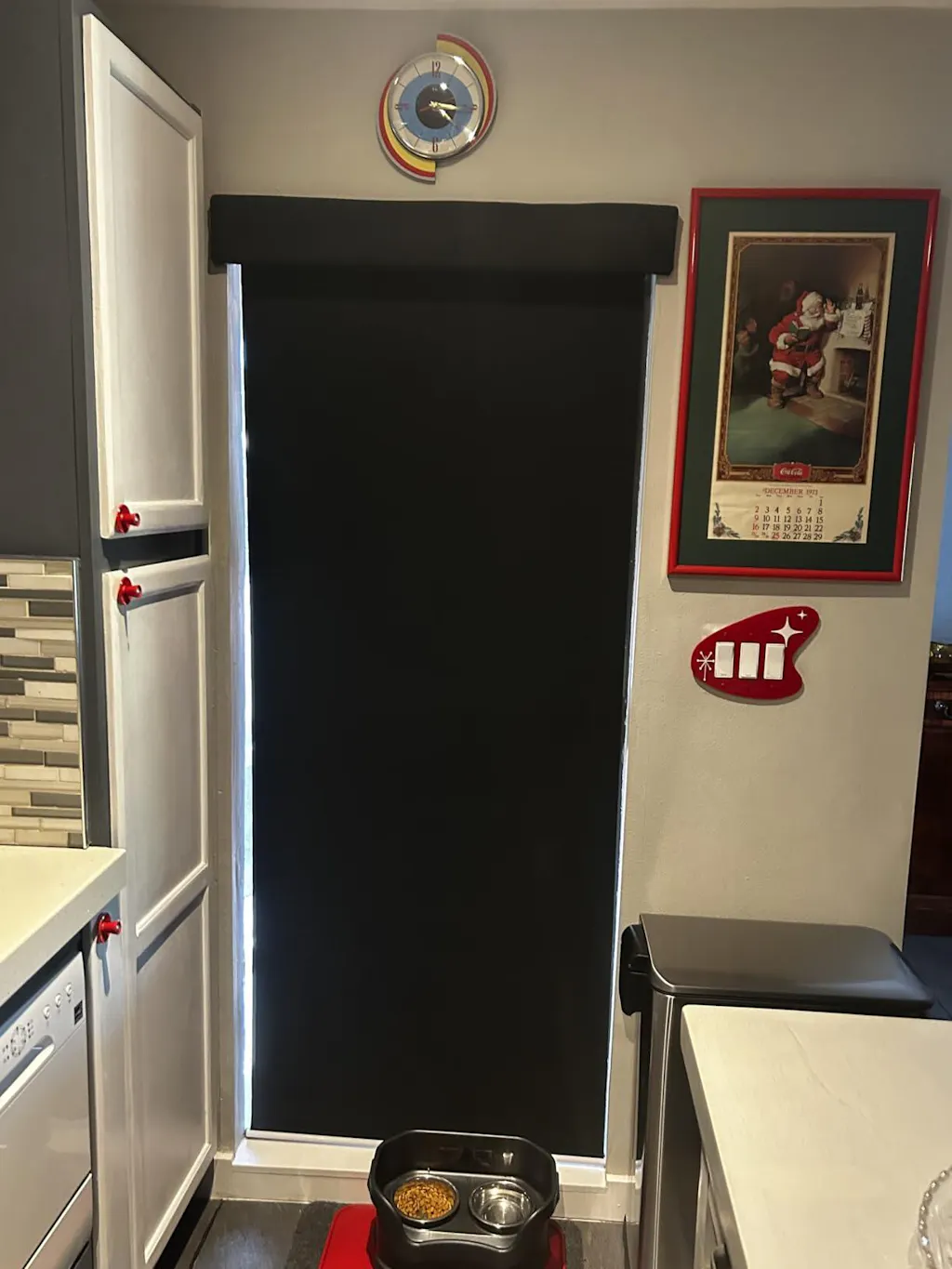
Now, let's talk about the magic of dark threads. Because dark colors absorb light rather than reflecting it, the human eye literally ignores the fabric. It is the same reason you can look through a black fly screen and barely notice it is there. When you install black mesh window shades, the fabric doesn't compete with the light from outside. It acts like a high-definition filter, cutting the glare and sharpening the contrast of the view beyond.
Beyond the optics, there is a serious aesthetic payoff. A dark mesh looks incredibly sophisticated and 'architectural.' It anchors the window. I always tell my clients to avoid the cheap, shiny plastic versions you see in discount bins. Investing in high-quality fabric pull down window shades ensures you get a matte, woven texture that feels like a design choice rather than a utility. I once used a deep bronze mesh in a mid-century modern living room, and the way it framed the outdoor greenery was better than any piece of art we could have hung.
Demystifying Openness: How Much View Do You Actually Need?
When shopping for mesh shades for windows, you will see a percentage called the 'openness factor.' This is simply the density of the weave. A 1% openness is very tight—great for a media room where you want to kill every bit of glare on the TV. A 10% openness is very loose, offering a clear view but less protection for your furniture.
For most of my projects, I find that outdoor shades with a 5% openness provide the ultimate sweet spot. It cuts 95% of the harmful UV rays—the stuff that bleaches your expensive rugs and cracks your leather sofa—while still letting you feel connected to the outside world. I learned this the hard way after installing a 1% weave in my own kitchen; I felt like I was living in a bunker. I eventually swapped them for a 5% charcoal mesh and finally stopped feeling claustrophobic while washing dishes.
How To Style Mesh Shades for Windows So They Don't Look Corporate
The biggest hurdle for most homeowners is the fear that solar mesh will make their home look like a dentist's office. The trick is all in the layering. I never let a mesh shade stand alone on a window. I recommend an inside-mount installation so the shade sits flush against the glass. Then, I frame the window with a pair of heavy, 200 gsm linen curtains. That contrast between the crisp, technical mesh and the soft, organic drape of the linen is pure design gold.
You also have to solve the 'fishbowl' problem. While mesh is great for daytime privacy, it works both ways. At night, when your lights are on inside, the mesh becomes transparent from the street. If you need total privacy at night, look for day night shades that feature a dual-roller system. You get the black mesh for the day and a solid blackout fabric for the night. It is the most functional setup I’ve ever used, and it saved me from many awkward moments with my neighbors after I realized they could see me in my bathrobe every evening at 8 PM.
Frequently Asked Questions
Can people see through mesh window shades at night?
Yes. If it is dark outside and your lights are on inside, people will be able to see into your home. Think of it like a screen door; the visibility always favors the side with less light. You should always pair mesh shades with drapes or a secondary blackout shade for nighttime privacy.
Do dark mesh shades make the room hotter?
Actually, high-quality solar mesh is designed to dissipate heat. While dark colors do absorb more heat than white, they are significantly better at reducing glare. Most modern solar fabrics are engineered to reflect heat back outside even in darker shades, keeping your cooling bills in check.
Are mesh shades hard to clean?
Not at all. Unlike heavy velvet or dry-clean-only silks, most mesh fabrics are a polyester-vinyl blend. You can usually just use a vacuum with a soft brush attachment to get the dust out of the weave. For a deeper clean, a damp cloth with a tiny bit of mild soap does the trick.