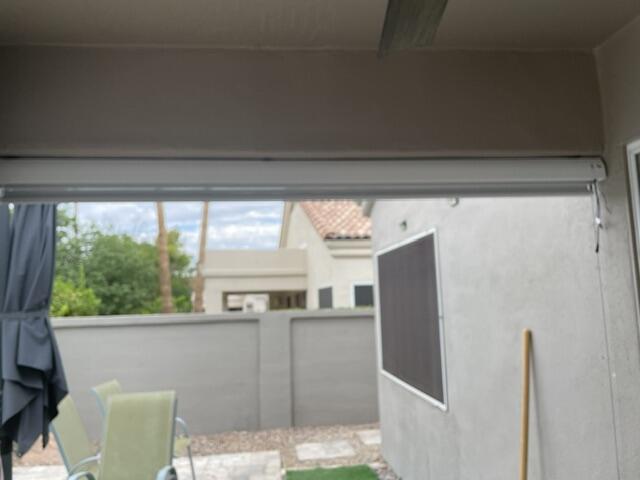
The Annoying Light Gap Fix: Sizing Up to a 9 Foot Outdoor Roller Shade
I remember sitting on my deck last July, trying to enjoy a chilled glass of Rosé, only to find myself squinting like I was staring directly into a solar eclipse. I had installed what I thought were perfectly fine 8-foot screens, but the 6-inch gap on either side was a total design fail. Investing in a 9 foot outdoor roller shade was the only way to stop the afternoon sun from turning my peaceful gazebo into a high-contrast interrogation room.
- Standard 8-foot shades leave massive 'glare gaps' on common 10-foot post spans.
- A 9-foot width provides the necessary overlap to truly block horizontal UV rays.
- A 5% openness factor is the 'Goldilocks' density for heat reduction and visibility.
- Always opt for cable guide systems to prevent the fabric from acting like a sail.
The 8-Foot Mistake (And the Blinding Sliver of Sun)
Most big-box stores stock 8-foot widths because they are easy to ship and fit in the back of a mid-sized SUV. But here is the reality: most modern pergolas and decks are built with 10-foot spans between the posts. If you center an 8-foot shade in a 10-foot opening, you are left with a foot of empty space on each side.
That 'sliver' of sun isn't just a minor annoyance; it is a tactical strike on your comfort. As the sun dips lower between 4 PM and 6 PM, it finds those gaps with surgical precision. It hits the table, bounces off your glassware, and makes it impossible to see the person sitting across from you. I spent one whole summer shifting my chair every fifteen minutes before I realized I didn't have a sun problem—I had a sizing problem.
Why a 9 Foot Outdoor Roller Shade is the Goldilocks Size
When you measure the 'clear opening' of a standard 10-foot bay, you aren't actually dealing with 120 inches. Once you account for the 6x6 pressure-treated posts, your actual interior span is usually closer to 108 or 110 inches. This is why a 108-inch, or 9-foot, span is the absolute sweet spot for an inside-mount installation.
A 9-foot shade allows the fabric to sit almost flush against the structural posts without rubbing. You want about a quarter-inch of 'breathing room' on either side of the mounting brackets. This prevents the hem bar from scraping the paint or stain off your wood every time a light breeze kicks up. It looks intentional, architectural, and—most importantly—seamless.
Ditching the Tarp Look: Choosing the Right Opacity
Please, I am begging you: do not buy those solid, heavy-duty plastic tarps that roll up. They look like you're trying to hide a construction site. They also trap heat, making the air under your gazebo feel stagnant and heavy. Instead, look for outdoor patio roller screens with a 5% openness factor.
This technical fabric is a weave of PVC-coated polyester or fiberglass. At 5%, it blocks 95% of the UV rays but maintains a 'screen door' effect. You can still see the hydrangeas and the pool, but the harsh glare is neutralized into a soft, manageable glow. It’s the difference between wearing a pair of high-end polarized sunglasses and wearing a blindfold.
Hardware That Doesn't Look Like a Loading Dock
One of my biggest pet peeves is 'industrial creep' in residential design. You don't want commercial outdoor blinds with massive, chunky steel brackets that look like they belong on a loading dock. For a home setting, you want a slim, powder-coated aluminum cassette or a simple open-roll system that can be tucked behind the header beam of your pergola.
When I installed my exterior roll up patio sun shade, I made the mistake of mounting it too low. I eventually moved the brackets up two inches so the entire roll was hidden behind the fascia board. This creates a much cleaner line when the shade is retracted. If you can't hide the roll, choose a hardware color that matches your trim—bronze for dark wood, or white for vinyl structures—to make it disappear visually.
How to Keep a Wide Shade from Becoming a Sail
A 108-inch wide fabric span is essentially a giant sail. If you live in a canyon or near the coast, an unsecured shade will flap, bang, and eventually rip itself out of the ceiling. This is where you need to be picky about the bottom rail. Look for Roller Shades that include a weighted hem bar and a cable guide system.
Cable guides use a thin stainless steel wire that runs from the top bracket to a small eye-bolt at the bottom of your post. The shade slides up and down on these wires, keeping it perfectly taut even in a 15 mph wind. If cables feel too 'high-tech' for your rustic deck, heavy-duty bungee tie-downs are a solid plan B. I once forgot to secure mine before a summer thunderstorm, and I woke up to a bent roller tube. Don't be me—tie it down.
Reclaiming Golden Hour on the Patio
The transformation was immediate. By closing those side gaps with a 9-foot span, the patio finally felt like a true outdoor room. We stopped squinting, stopped moving the furniture, and started actually using the space during the most beautiful part of the day. It’s a small measurement shift that makes a massive functional difference. When the light hits that 5% weave at 7 PM, the whole patio turns a soft, amber hue that makes everyone look like they’re in a movie. That’s the power of the right fit.
FAQ
Can I cut a 10-foot shade down to 9 feet?
I wouldn't recommend it. Most outdoor shades use a heat-sealed edge to prevent fraying. If you cut it with household shears, the edges will unravel within a month of exposure to the elements. Buy the size you actually need.
How do I clean the fabric?
Forget the pressure washer—it’s too aggressive. Use a garden hose, a bucket of warm water with a drop of Dawn dish soap, and a soft-bristled brush. Scrub lightly, rinse, and let it air dry completely before you roll it back up to avoid mildew.
Will a 9-foot shade sag in the middle?
Only if the roller tube is too thin. For a 108-inch span, you want a tube that is at least 2 inches in diameter. Anything smaller will 'smile' in the middle, causing the fabric to wrinkle and track poorly.