Stop Forcing 48-Inch Blinds: Why You Need a True 46 Roller Shade
I remember staring at the window in my first 'grown-up' apartment—a beautiful 46-inch wide frame that I absolutely butchered with a cheap, oversized blind. I bought a 48-inch stock shade because it was thirty bucks and available, thinking those extra two inches wouldn't matter. I was wrong. The mount sat awkwardly on the trim, the proportions were off, and every time the October sun hit, I saw the shadows of my poor choices. Getting a true 46 roller shade isn't about being picky; it's about architectural integrity and not letting your window treatments look like a temporary fix.
Quick Takeaways
- Standard 48-inch blinds usually require an outside mount that hides your beautiful trim.
- A 46-inch window is the 'dead zone' for big-box retailers but perfect for custom fits.
- Inside mounts provide a cleaner, integrated look that makes a room feel larger.
- Hardware quality matters at this width to prevent the 'smile' (sagging) in the middle of the tube.
The Awkward Middle Child of Window Sizes
Windows around 46 inches wide are the teenagers of the interior world. They aren't narrow enough to be standard 36-inch accents, but they aren't wide enough to justify the massive, heavy-duty hardware you'd see on a 72-inch picture window. Most big-box stores jump from 36 straight to 48 inches. If you have a 46-inch opening, you’re left in a design no-man's-land. You end up trying to make it work with a size that was never meant for your home, which usually leads to a messy installation.
I’ve seen it a hundred times: a homeowner buys the 48-inch version and tries to 'center' it over the 46-inch opening. It never looks right. The extra inch of overhang on each side creates a visual 'lip' that catches dust and ruins the clean lines of your casing. When you’re dealing with mid-sized windows, that precision matters because the eye naturally looks for symmetry. A shade that is even half an inch off looks like a mistake, not a choice.
Choosing a custom-cut size isn't just about the fabric; it's about the hardware footprint. A 46-inch window is wide enough that you want the brackets to disappear into the frame. When you force a size, you end up with brackets that stick out or require awkward shims. It’s the difference between a tailored suit and one you grabbed off a clearance rack—they both cover your body, but only one makes you look like you have your life together.
Why Sizing Up to 48 Inches is a Design Mistake
When you force a 48-inch blind onto a 46-inch frame, you’re almost always committed to an outside mount. This means the hardware sits directly on the face of your window casing. It swallows the wood or plaster detail you probably loved when you bought the place. It creates a bulky profile that sticks out three inches from the wall, casting weird shadows and making the window look like a plastic afterthought. Investing in custom roller shades ensures the fabric sits inside the frame, where it belongs.
The visual weight of an outside mount on a mid-sized window is surprisingly heavy. It breaks the vertical line of your walls and can make a ceiling feel lower than it actually is. By forcing a 48-inch shade, you’re essentially adding a giant horizontal bar to your wall that shouldn't be there. I’ve had clients insist on this route to save a few dollars, only to call me back three months later because the room feels 'cluttered' despite having minimal furniture.
There’s also the light issue. An outside mount 48-inch shade over a 46-inch window doesn't actually block more light; it just moves the light leak. Instead of a clean vertical sliver of light inside the frame, you get a halo effect around the entire window. This halo reflects off the ceiling and the side walls, which is particularly annoying in a bedroom where you’re trying to achieve a true blackout environment. It looks accidental, and in design, 'accidental' is rarely a compliment.
Nailing the Inside Mount for a 46 Roller Shade
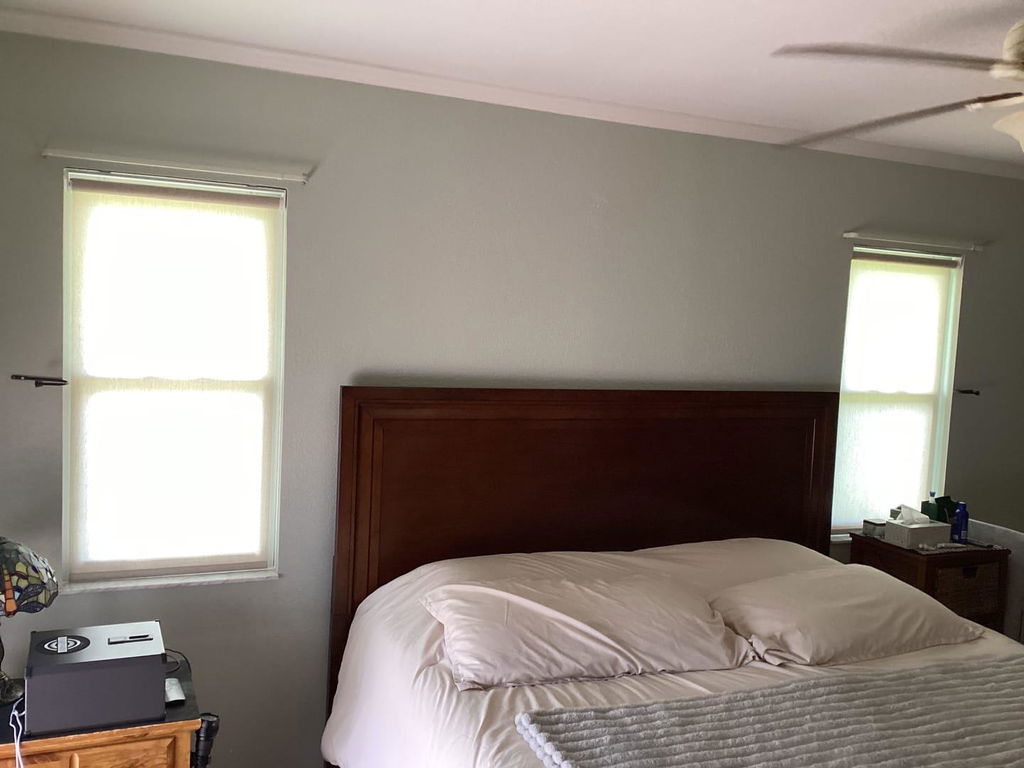
For an inside mount on a 46-inch opening, precision is your best friend. I always measure the top, middle, and bottom of the frame because old houses are never truly square. In my experience, a window might be 46 inches at the sill but 45.75 inches at the top. A real 46"roller shade will come with a factory deduction—usually about 1/8th to 1/4 of an inch—to ensure the brackets fit without you having to hammer them into the drywall. This tight fit is the only way to minimize the dreaded light gap.
If you have window cranks or those annoying brass latches, check your depth before you order. You need at least 2.5 inches of flat space for the roller to clear the hardware. I once worked on a 1920s Tudor with original crank handles that stuck out three inches. We had to use a 'reverse roll'—where the fabric comes off the front of the tube instead of the back—to clear the hardware. It kept the 46-inch profile clean while respecting the history of the house.
Don't forget the 'light gap' is a feature of the hardware, not a flaw in the measurement. Because the fabric has to be narrower than the tube to allow for the brackets and the chain mechanism, you will always have about a 3/4-inch gap on the control side. A true 46-inch shade ensures this gap is symmetrical and intentional. When you try to hack a larger shade, these gaps become uneven, which is a total headache for anyone with even a hint of perfectionism.
Will a 46-Inch Span Sag? (The Hardware Truth)
While 46 inches isn't a massive architectural span, it’s wide enough that physics starts to matter. If you’re choosing a heavy 400 gsm blackout fabric or a thick woven texture, a cheap 1-inch aluminum tube will eventually 'smile'—that annoying dip in the center that makes your shade look like it's melting. I usually recommend a 1.5-inch or 2-inch reinforced tube for this width to keep the header perfectly straight over time.
The weight of the fabric pulls on the internal spring or motor. If the tube is too flimsy, the fabric won't track straight, and you'll end up with frayed edges as the material rubs against the brackets. If you’re going for a high-end look, motorized dual roller shades provide the structural beefiness needed to handle the weight of both a sheer and a blackout layer. The dual bracket system is much sturdier than a single plastic mount, which is crucial for a 46-inch span.
I’ve also found that at this width, cordless 'spring-loaded' mechanisms can be hit or miss if they aren't high quality. A 46-inch shade has enough surface area that the tension needs to be perfectly calibrated. Too much tension and it flies up like a cartoon; too little and it hangs limp at the bottom. Investing in a motorized or high-end clutch system ensures that when you pull the shade to the 50% mark, it actually stays there.
How to Layer Drapery Over a Mid-Size Shade
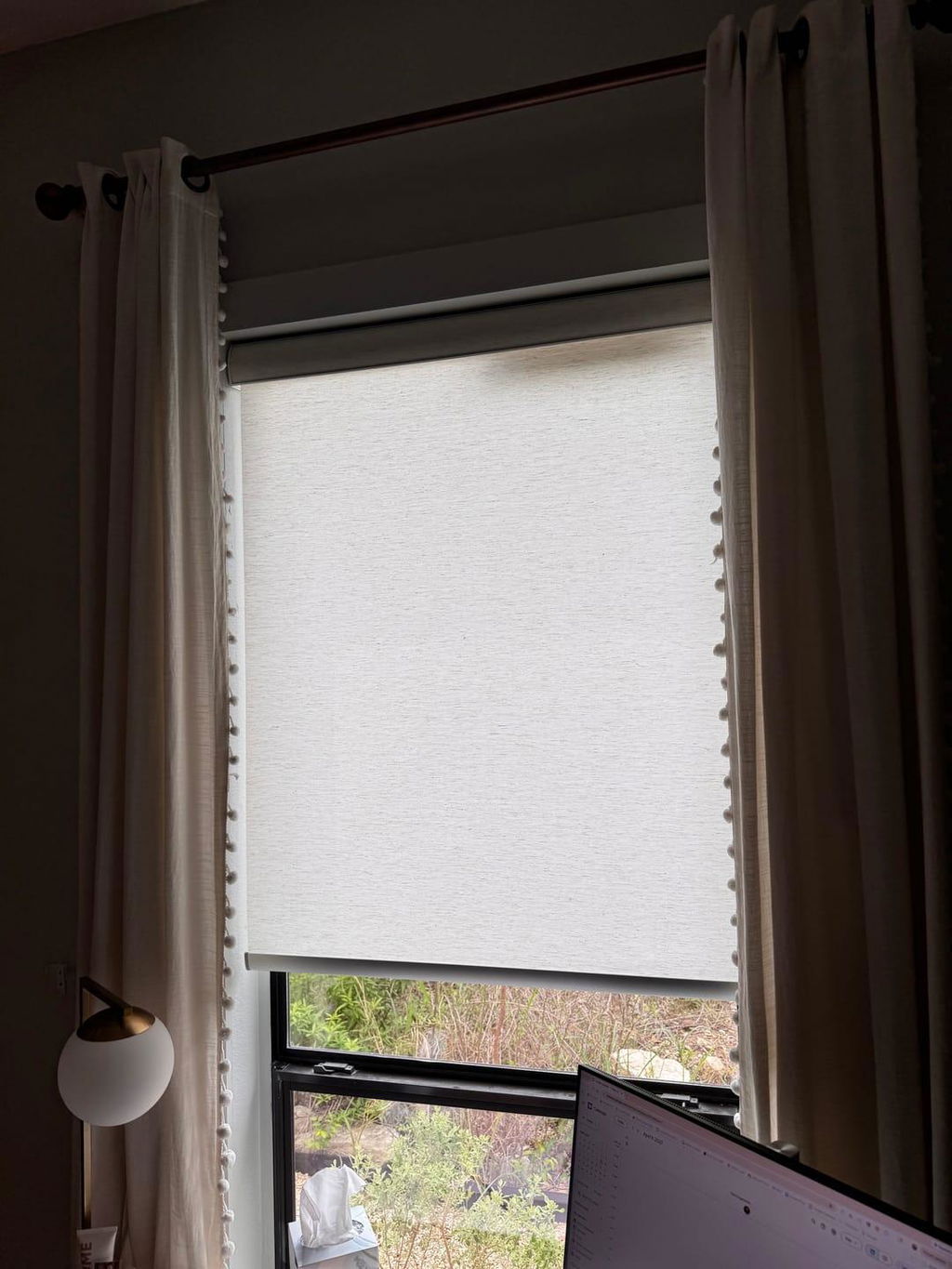
A roller shade alone can feel a bit clinical, especially in a living room or primary suite. I like to frame a 46-inch window with linen-blend drapery to soften the edges. My rule of thumb: mount your rod 4 to 6 inches above the window frame (or just below the crown molding) and let the rod extend 8 to 10 inches on either side. This makes the 46-inch window feel like a 60-inch architectural feature and allows the fabric to stack on the wall, not the glass.
For the fabric, I love a 200 gsm linen blend with 2.5x fullness. For a 46-inch window plus the overhang, you’re looking at about 120 inches of total fabric width. This ensures the curtains look lush and expensive rather than like two sad strips of fabric hanging on the ends. Let them kiss the floor or give them a 1-inch puddle for a relaxed, lived-in vibe. The contrast between the crisp, functional roller shade and the soft, pooling linen is a classic design move.
Color-wise, if your 46-inch shade is a neutral oatmeal or cool grey, try a drapery color that is two shades darker or lighter. This creates depth without making the window feel like a black hole in the wall. I once paired a matte black roller shade with heavy forest green velvet drapes for a client’s library. The 46-inch span was the perfect size for that bold contrast—large enough to be a focal point, but small enough that the dark colors didn't overwhelm the room.
Stop Compromising on Your Window Measurements
Measure to the eighth of an inch. Don't round up. Don't round down. Taking five extra minutes with a steel tape measure—never a soft sewing tape!—changes everything. I know it's tempting to just grab whatever is in stock at the local hardware store when you're in the middle of a weekend renovation, but you’ll regret it every time you try to close those blinds and they catch on the trim.
You deserve a home where the light hits the floor exactly where you planned it to. If you're tired of the 'close enough' mentality that leaves you with light leaks and clunky outside mounts, it's time to do it right. If you're ready to fix those awkward mid-sized openings, explore all your shade solutions and get the size your windows actually demand. Your future self, drinking coffee in a perfectly shaded room, will thank you.
Personal Experience
I once tried to trim a 'cut-to-size' 48-inch shade down to 46 inches with a utility knife in a client's guest room. It was a total disaster. The fabric frayed immediately, the cut was slightly diagonal despite my best efforts with a straight edge, and the internal spring lost tension the moment I messed with the end cap. I ended up buying the custom 46-inch shade anyway, out of my own pocket, because I couldn't stand looking at that frayed edge every time I walked past. It taught me that some things simply can't be faked—precision is worth the lead time.
FAQ
Can I use a 48-inch shade on a 46-inch window?
Only if you mount it on the wall above the window (outside mount). It will cover your trim and look bulkier, but it works if you have no depth inside the frame. For a clean look, always go custom.
How much light gap should I expect with an inside mount?
With a 46-inch inside mount, expect about 1/2 to 3/4 of an inch of total gap between the fabric and the frame. This is necessary to allow for the brackets and the chain. If you want zero light, you'll need side channels or layered drapes.
Is a 46-inch shade too heavy for a tension rod?
Yes. At this width, the weight of the roller and the fabric is too much for a simple tension fit. Always use screw-in brackets. Tension rods will eventually slip, especially with daily use, and they'll likely take your paint with them when they fall.