How to Hang Extra Wide Blinds for Windows Without the Garage Door Effect
I remember staring at a 120-inch picture window in my first 'grown-up' apartment. It was a sun-drenched dream until the summer heat hit, and I realized covering that massive span meant finding extra wide blinds for windows that didn't look like they belonged on a loading dock. I made the classic mistake: I bought three separate, budget-friendly faux wood blinds and hung them side-by-side. The result was a clunky, cord-heavy mess that made my living room feel like a storage unit.
- Avoid the 'split' look by choosing a single, continuous shade for spans under 120 inches.
- Ditch heavy horizontal slats; they create too much visual noise and 'weight' on a large wall.
- Prioritize lightweight fabrics like polyester-linen blends to prevent headrail bowing.
- Consider motorization for wide spans to avoid the physical strain of manual cords.
The 'Garage Door' Effect (And Why Massive Windows Suffer)
We’ve all seen it. You walk into a beautiful room with floor-to-ceiling glass, but instead of seeing the view, you’re staring at a massive, heavy-duty set of white slats. When you use rigid materials like wood or thick PVC across a huge width, the window stops looking like an architectural feature and starts looking like a garage door. It’s heavy, it’s industrial, and it kills the 'home' vibe.
The problem is scale. A standard 24-inch window looks fine with slats, but when you multiply that by five, the sheer volume of horizontal lines becomes overwhelming. It creates a 'stutter' in your interior design. Instead of your eyes gliding across the room, they get stuck on the repetitive, aggressive rhythm of the blinds.
Why Slats Are the Enemy of Extra Wide Blinds for Windows
Horizontal slats are essentially a series of tiny shelves that collect dust and break up your vertical height. When you force these across a massive span, you’re adding hundreds of dark shadows into the room. If you’re trying to achieve a clean look, you’re much better off with extra wide blackout shades that offer a single, unbroken plane of color.
Designers hate the 'stack.' When you pull up a massive set of slatted blinds, the bundle of material at the top can be 10 or 12 inches thick. It blocks your view even when the blinds are 'open.' A continuous fabric shade, however, rolls up into a tiny 3-inch profile, letting the architecture do the talking.
The Physics of Sagging (And Why Weight Matters)
Gravity is a cruel mistress when you’re dealing with blinds extra long and wide. A standard faux-wood blind can weigh 15 to 20 pounds once you get past the 72-inch mark. Over time, that weight pulls on the center of the headrail. Even with center support brackets, you’ll often see a depressing 'smile' shape form in the middle of the unit.
This is why I always preach the gospel of aluminum or high-grade reinforced headers. My blinds for long horizontal windows always feature a heavy-duty internal housing to keep that top line laser-straight. If the headrail sags even a quarter of an inch, the entire installation looks amateur.
The Materials That Actually Work for Huge Spans
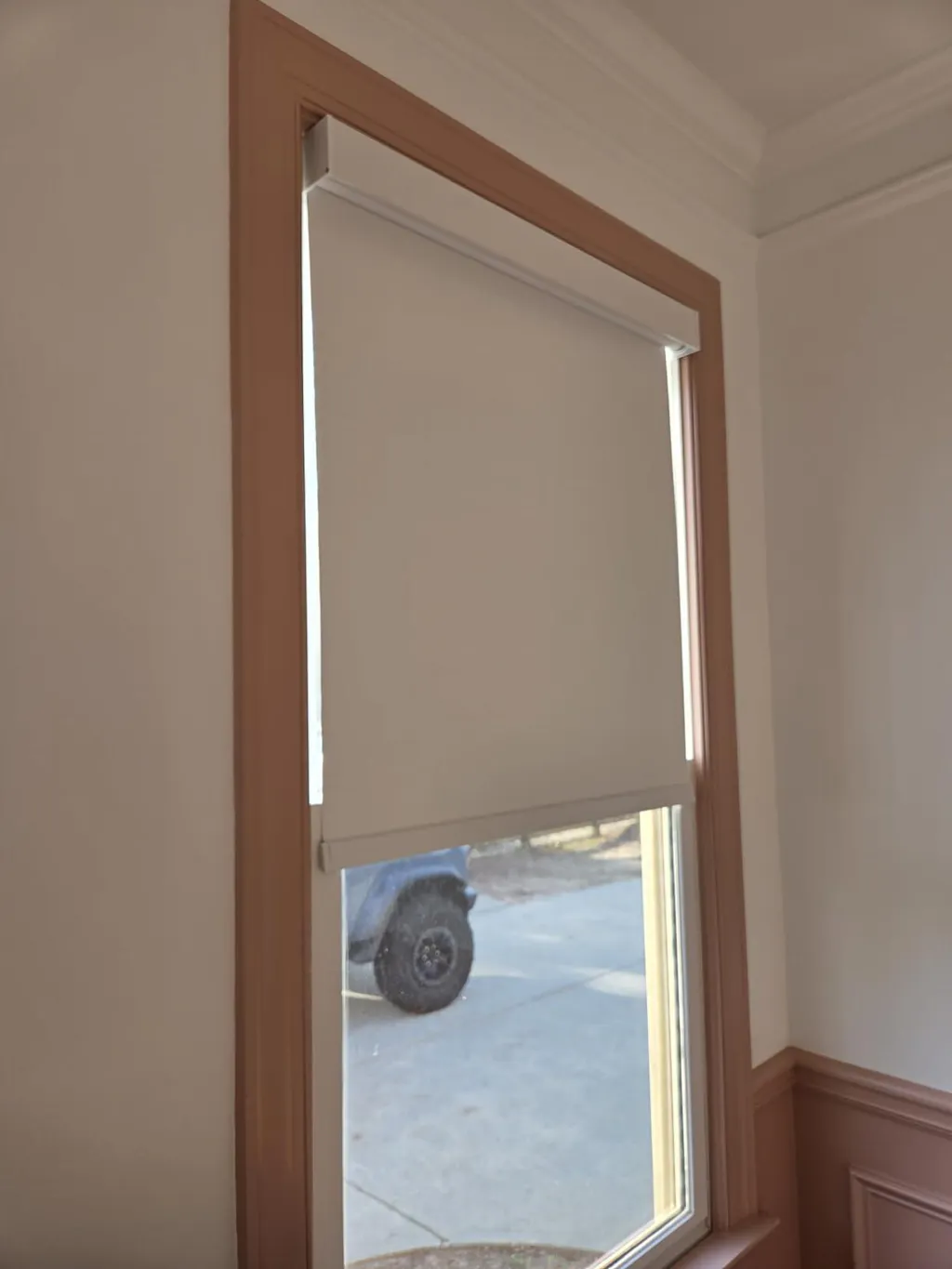
If you want to cover a huge window without the bulk, you need to look at modern roller shades. I’m talking about high-performance solar fabrics or 300 gsm weaves that have enough 'body' to hang straight but aren't so heavy they'll rip the screws out of your drywall. A soft grey or a bone-white fabric with a 3% openness level is my go-to; it cuts the glare but keeps the soul of the room intact.
For the ultimate luxury (and to save your rotator cuff), motorized dual roller shades are the only real answer for massive spans. Trying to manually hoist a 90-inch wide shade every morning is a workout you didn't ask for. A motorized system handles the weight of the fabric effortlessly and ensures the shade raises perfectly level every single time.
The Trick to Measuring Extra Long Window Blinds
When ordering extra long window blinds, the biggest mistake is not accounting for 'fabric deduction.' If you’re doing an inside mount, the fabric is always narrower than the bracket-to-bracket measurement. On a wide window, a 1-inch light gap on the sides looks like a glaring mistake. I always recommend an outside mount for extra wide windows—mount the brackets 3 inches above the frame and 4 inches past the sides to completely eliminate light leakage.
Measure your width at the top, middle, and bottom. Houses settle, and a window that is 96 inches at the top might be 95.5 at the bottom. If you don't catch that, your extra-wide shade will scrape the frame the whole way down, fraying the edges of your expensive fabric within a month.
My Personal Lesson in Scale
I once installed a massive 110-inch bamboo woven wood shade in a client's sunroom. It looked stunning for exactly three days. Then, the natural fibers started to stretch under their own weight. By day seven, the bottom hem was lopsided, and the middle was bowing so badly it looked like a hammock. I had to eat the cost and replace it with a structured roller shade. Natural materials are beautiful, but for massive widths, you need the stability of engineered fabrics.
FAQ
Can I use one blind for a 120-inch window?
Technically yes, but only if you choose a roller or solar shade. Slatted blinds (wood/faux wood) usually max out at 96 inches because the weight becomes too dangerous for standard residential hardware.
How do I stop my wide blinds from bowing?
Use an aluminum headrail and ensure you have a center support bracket every 30 inches. Never skip the center bracket on a wide span, even if it feels sturdy during the initial hold-up.
Are vertical blinds better for wide windows?
They handle the width well, but they often feel dated or 'office-like.' If you hate the garage door look of horizontal slats, you'll likely find the 'clack-clack' of vertical vanes just as annoying. Stick to a large-format roller shade for a cleaner aesthetic.