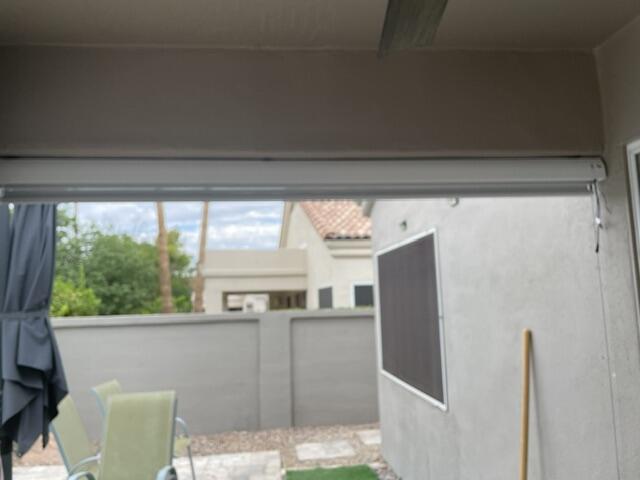
Fix Your Heavy Duty Semi-Sheer Outdoor Roller Shade Symple Stuff Width
I remember standing on my back porch with a drill in one hand and a cold cup of coffee in the other, staring at a gap so wide I could fit my forearm through it. I’d spent weeks picking the perfect weave, only to realize I’d measured for the fabric coverage I wanted, not the hardware I actually had to install. Getting your heavy duty semi-sheer outdoor roller shade symple stuff width right is the difference between a breezy, private sanctuary and a frustrating DIY fail that ends in a return shipping label.
Outdoor shades are a different beast than indoor curtains. You aren't just dealing with aesthetics; you're fighting wind, UV degradation, and the literal architecture of your home. If you miss the mark by even a half-inch, that beautiful semi-sheer fabric will either bunch up against your columns or leave a glaring stripe of sun that hits you right in the eyes during cocktail hour.
- Always measure the opening at the top, middle, and bottom.
- The 'ordered width' is the tip-to-tip measurement of the hardware, not the fabric.
- Expect a 1 to 1.5-inch light gap on the sides for inside mounts.
- Outside mounts should overlap the opening by at least 2 inches on each side.
The 'Bracket vs. Fabric' Measurement Trap
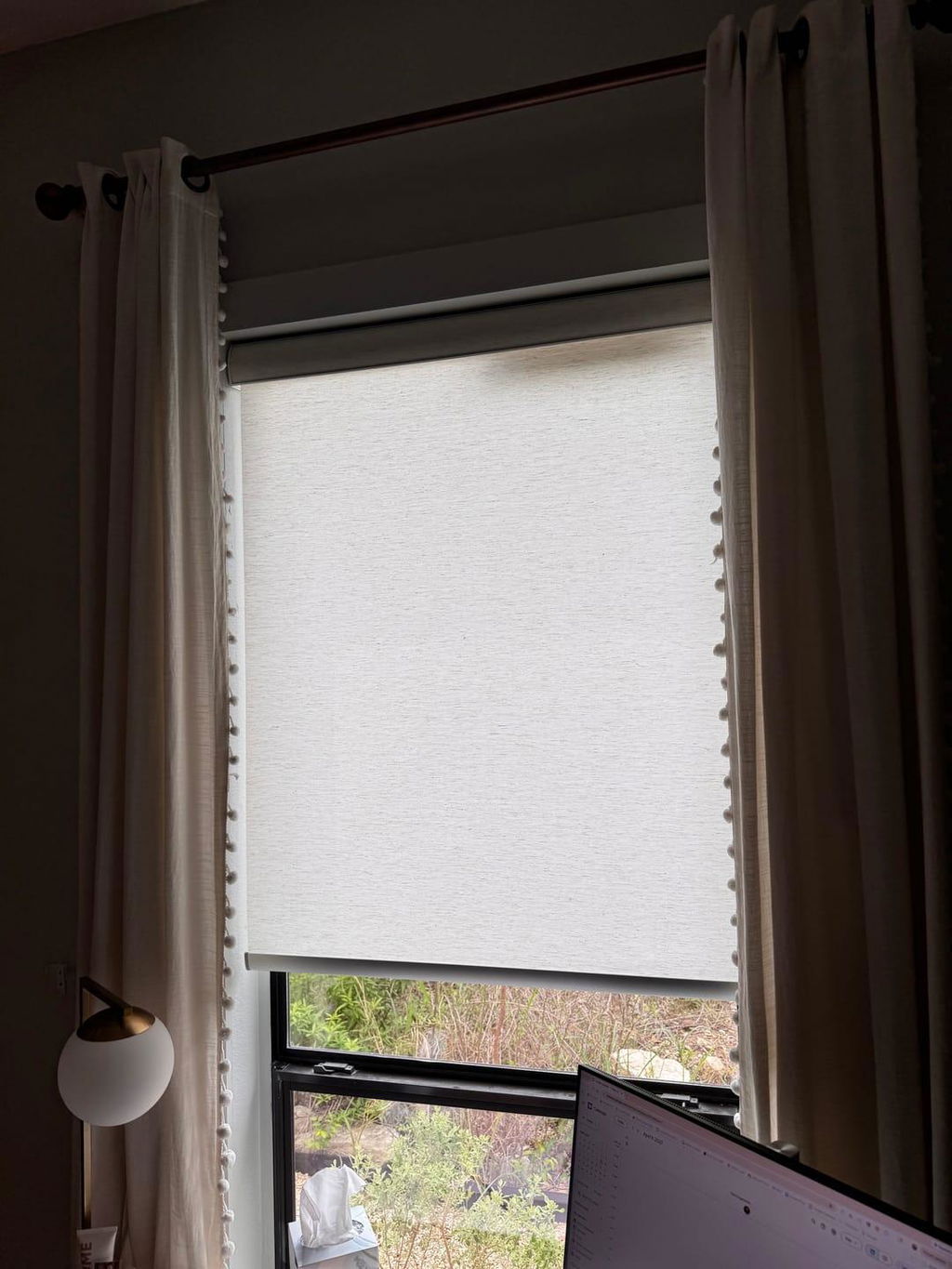
The biggest mistake I see homeowners make—and I’ve made it myself—is assuming that if you order a 72-inch shade, you are getting 72 inches of fabric. That is almost never the case. In the world of exterior shades, the width you select refers to the 'tip-to-tip' measurement. This includes the end caps, the mounting brackets, and the crank mechanism. The actual fabric width is usually about 1.25 to 1.5 inches narrower than the total width. This is why Roller Shades, whether inside or out, often have those annoying light gaps on the sides.
When you are mounting between two posts, that gap is inevitable. You need room for the brackets to actually spin and for the fabric to roll up without rubbing against your house. If you try to force a fabric-width measurement into a bracket-width space, you’ll end up with a shade that won't even fit between the columns. I’ve seen people try to shave down their porch posts to make a shade fit—don't be that person. Understand that the hardware needs its own real estate.
Why This Specific Brand Requires Exact Math
When you're dealing with a semi-sheer outdoor roller shade symple stuff blind, you’re often working with a heavy-duty crank-wand system. This isn't a flimsy plastic bead chain. These mechanisms are built to withstand a stiff breeze, which means the housing is bulkier than your standard indoor shade. The crank side usually requires a bit more clearance than the idle side. You have to account for the 'swing' of the wand too. If you mount it too tight against a wall, you won't be able to turn the handle without scraping your knuckles every single time you want to lower the shade.
Precision matters here because the weight of the 330 gsm fabric (or whatever heavy-duty density you’ve chosen) puts significant tension on those brackets. If your width is off and the brackets are skewed even slightly inward, the roller tube will bind. You'll hear a nasty grinding sound, and eventually, the fabric will start to fray at the edges. I often get asked, Does Heavy Duty Semi Sheer Outdoor Roller Shade Symple Stuff Width Matter? My answer is always a resounding yes—not just for the look, but for the life of the motor or crank mechanism.
Inside Mount on Porch Columns: What to Deduct
If you want that sleek, tucked-in look, you’re doing an inside mount. First, measure the width at the top where the brackets will actually sit. Then, measure the middle and the bottom. Why? Because wood columns warp. Your 96-inch opening might be 96 inches at the top but 95.5 inches in the middle. Always use the smallest measurement. For this brand, I typically deduct a quarter-inch from the narrowest width to ensure the headrail slides in without damaging the paint. It’s better to have a tiny bit of wiggle room than to have to hammer a metal bracket into a space that’s too small.
Outside Mount: Faking a Custom Built-In Look
If the idea of light gaps makes you twitchy, go for an outside mount. This is my favorite 'designer trick' for making budget-friendly shades look like custom architectural features. Instead of mounting between the columns, mount the shade onto the face of the trim or the beam above. I recommend adding at least 2 or 3 inches to the width on each side. This completely covers the opening and hides the brackets from view. For a truly substantial look, I suggest using Outdoor Shades 5 Openness. The tighter weave provides better sun protection and looks much more 'expensive' when it overlaps the frame, giving you a clean, seamless wall of fabric.
How to Handle Awkward Gaps Without Sending It Back
So, you measured wrong. Or maybe your columns are just weirdly spaced. Before you box that shade back up, there are a few styling tricks to hide the gaps. One of my favorite fixes is 'the shim block.' You can cut a small piece of 1x2 cedar, paint it to match your columns, and mount it behind the bracket to bring the shade inward. It looks intentional, like a decorative mounting block. Another option is to flank the roller shade with outdoor drapery panels. A pair of quick-dry navy or charcoal panels can hide the hardware and the light gaps, while adding a bit of softness to the hard lines of the patio.
If you're more of a 'plant person,' a strategically placed climbing vine on a trellis can mask the hardware gaps beautifully. I once used a pair of potted jasmine plants to hide the fact that my DIY shade was two inches too narrow for the space. By the time the vines hit the top of the column, the gap was invisible, and the porch smelled incredible. Design is often just the art of hiding your mistakes with something prettier.
I learned this the hard way when I installed three shades on a cedar pergola. I assumed the 72-inch width meant 72 inches of shade. It didn't. I ended up with a two-inch gap between every single panel. Every afternoon at 4 PM, a laser beam of sunlight would hit me right in the face while I was trying to read. I eventually had to take them all down, add decorative trim boards to the columns to 'shrink' the opening, and re-mount them. It was a weekend of work that could have been avoided with a tape measure and a little more skepticism toward the box labels.
FAQ
Should I measure in inches or centimeters?
Stick to inches and round down to the nearest eighth of an inch. Most US-based retailers for these brands process orders in imperial, and rounding up is the fastest way to ensure your shade won't fit the opening.
What if my porch columns are round?
Round columns are a nightmare for inside mounts. In 99% of cases, you should switch to an outside mount on the header beam above the columns. Trying to mount a flat bracket to a curved surface requires custom blocking that rarely looks good.
Does the fabric stretch over time?
Heavy-duty outdoor fabrics are designed to be dimensionally stable, so they won't stretch in width. However, they can develop a 'smile' (a slight sag in the middle) if the roller tube is too thin for the width of the span. Always check the tube diameter for widths over 96 inches.