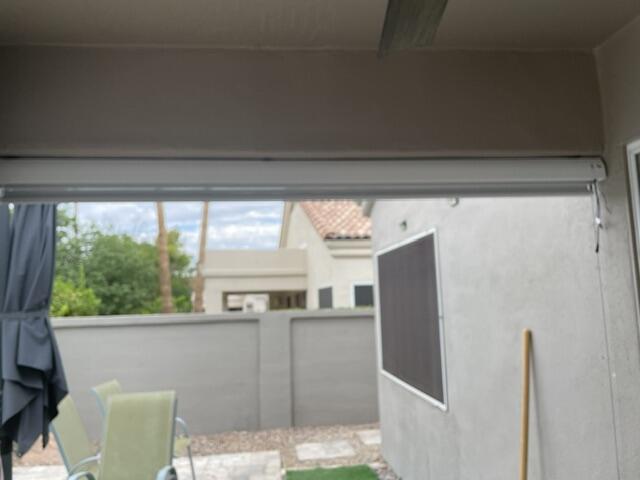
Door Panel Shade vs. Vertical Blinds: Which Actually Looks Better?
I remember standing in the middle of my first 'grown-up' apartment, staring at a six-foot-wide sliding glass door that felt like a giant, unblinking eye. I tried heavy velvet drapes, but they just looked like a theater curtain that had given up on life. Then I found the door panel shade and realized I had been overcomplicating the most high-traffic spot in my home.
Quick Takeaways
- Panel tracks offer a flat, architectural look that avoids the 'medical office' vibe of vertical blinds.
- Choose a 3% to 5% openness factor to block UV rays without losing your backyard view.
- Mount the track 4-6 inches above the door frame to trick the eye into seeing taller ceilings.
- Natural woven materials like jute-inspired polyesters provide texture without the warping of real wood.
The Problem With Traditional Sliding Door Treatments
Vertical blinds are the beige cubicles of the interior design world. They clatter every time the AC kicks on, the plastic slats eventually yellow like old teeth, and heaven help you if a pet decides to run through them. They feel clinical and temporary, even when they are brand new.
On the other hand, heavy drapes often become dirt magnets. In high-traffic zones, the bottom six inches of a curtain will eventually look like a dust bunny graveyard. If you have ever fixed my French door privacy issue with a simple roller, you know the relief of a treatment that stays within its own footprint. For large sliders, you need that same discipline but on a much larger scale.
What Exactly Is a Door Panel Shade?
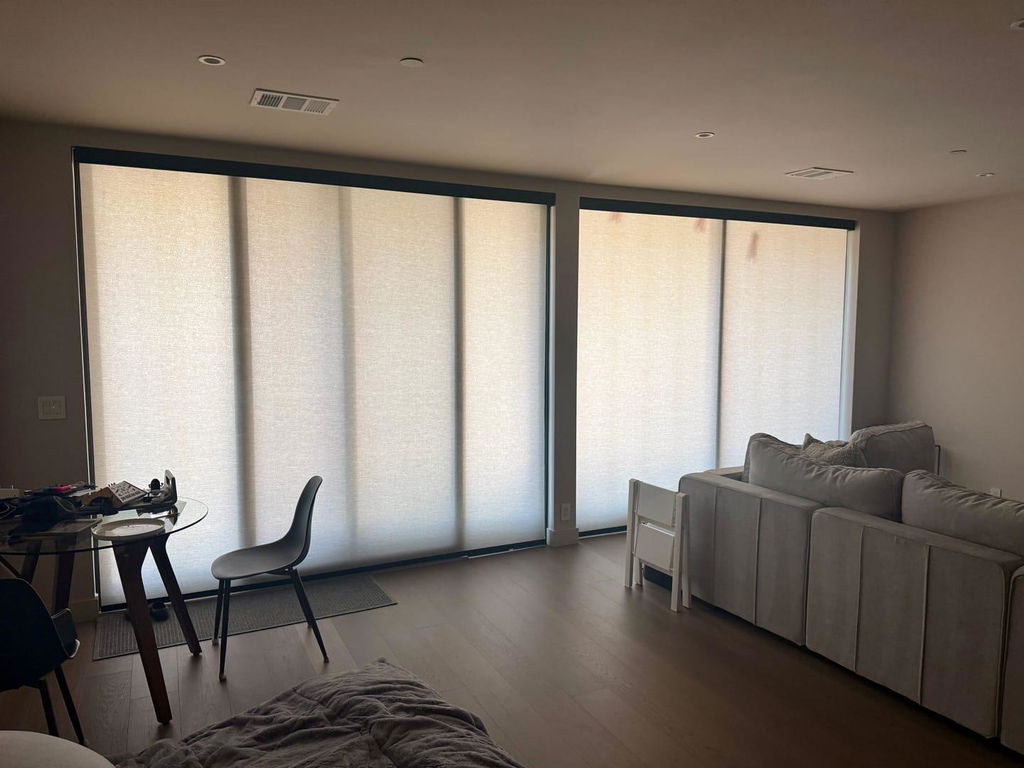
Think of a panel track system as a sliding wall of fabric. Instead of fifty tiny slats, you have four or five wide, flat panels—usually 11 to 17 inches each—that glide seamlessly on a multi-channel track. It is the sophisticated cousin of the roller shade, designed specifically for the massive expanses of glass that define modern living rooms.
When you explore all your shade solutions, the panel track stands out because it does not bunch up. It stacks. This means when the door is open, the fabric sits neatly behind a single stationary panel, leaving your walkway completely clear and your view unobstructed.
How the Stack Completely Changes Your Room's Proportions
Vertical blinds bunch into a thick, messy accordion that eats up about 10% of your window even when 'open.' A panel shade uses a flat stack. This architectural line mimics the geometry of the door itself, which makes the room feel more organized and intentional.
I always recommend a 'one-way draw' for smaller rooms. By stacking all the panels to the side that doesn't open, you maximize every square inch of light. It creates a vertical line that draws the eye upward, making a standard 8-foot ceiling feel significantly loftier.
Finding the Right Sun Shade for Glass Door Glare
If your living room faces west, you know the 4 PM struggle. The sun hits the glass and turns your TV into a mirror. A high-quality sun shade for glass door setups needs to handle this without turning your home into a cave. I look for solar fabrics with a tight weave that still allows for 'view-through'—you want to see the trees, not the glare.
For rooms that serve as both a home office and a movie room, you might need more versatility. I often suggest day night shades as a conceptual alternative, but with panels, you can achieve a similar effect by layering a sheer solar panel with a light-filtering linen. It is about controlling the light, not just blocking it.
My Go-To Fabrics for a Glass Door Sun Shade
I am a sucker for a 200 gsm linen-poly blend. Pure linen is beautiful but it's a nightmare for sliding doors because it stretches and shrinks with humidity. A synthetic blend gives you that organic, slubby texture while staying perfectly crisp on the track. If you are looking for a glass door sun shade that survives kids and pets, a 5% openness solar screen in a charcoal or bronze tone is practically indestructible and hides fingerprints beautifully.
Installation Quirks You Need to Know Before Buying
Measurement is everything. I once installed a beautiful set of panels only to realize the bulky handle on the sliding door made the fabric bulge out like a sore thumb. You need to check your 'clearance depth.' If your handle sticks out more than two inches, you will need to use spacer blocks or a ceiling mount to bring the track forward.
Also, consider the floor gap. I aim for exactly a half-inch of clearance. Anything more looks like high-water pants; anything less means the weighted bottom bars will scrape against your floor every time you let the dog out. If you are comparing this to a 2 in 1 shade or other dual systems, remember that panel tracks require a deeper mounting surface—usually at least 3 to 4 inches for a four-channel track.
Personal Experience: The 2 AM Hemming Session
A few years ago, I convinced a friend to install a 118-inch wide panel system in her sunroom. We decided to 'puddle' the fabric for a romantic look. It was a disaster. Within a week, the bottom of the white fabric was gray from the patio dust, and the sliding mechanism kept getting jammed because the fabric was being sucked into the track. I ended up staying over until 2 AM with a roll of iron-on hem tape, shortening them to a crisp, hovering edge. Learn from my ego: sliding doors are functional zones. Keep your hems off the floor and your fabrics high-performance.
FAQ
Can I mix and match fabric panels on one track?
Absolutely. I love doing two textured outer panels and two sheer inner panels. It creates a framed look that feels more like custom drapery than a standard store-bought blind.
How do I clean a door panel shade?
Most are made from stiffened fabrics that don't love the washing machine. Use a vacuum attachment once a month to keep dust from settling into the weave. For spots, a damp microfiber cloth with a tiny drop of clear dish soap usually does the trick.
Are they loud when you slide them?
Not if you get a high-quality aluminum track. Unlike vertical blinds that rattle like a skeleton in a closet, a good panel system should glide with a quiet, satisfying 'swoosh.'