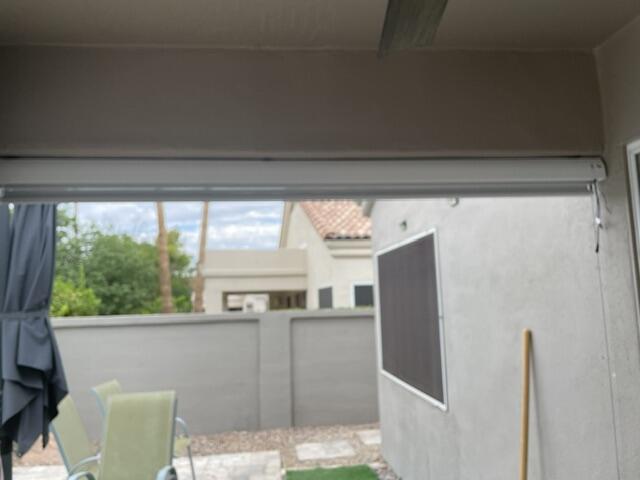
Are Up-and-Down Blinds for Sliding Door Glass Actually a Mistake?
I remember the first night in my old place, staring at a massive 8-foot sliding glass door that felt like a giant, unblinking eye looking into my living room. I rushed out to a big-box store and bought the first set of blinds for sliding door glass I could find. I spent three hours drilling into the header, only to realize by the next morning that I’d built a physical wall between myself and my morning coffee on the patio. Every time I wanted to step outside, I had to haul up seven feet of heavy material, wait for it to clear the frame, and then squeeze past.
Quick Takeaways
- Horizontal doors and vertical blinds are a functional mismatch that causes daily friction.
- Single, wide blinds are too heavy for manual cords and lead to mechanical failure.
- Always align your blind splits with the door’s vertical mullions to maintain access.
- Handle clearance is the most common measurement mistake in DIY patio setups.
- Sometimes, moving sideways is the only way to save your sanity.
Why Your Door and Your Blinds Are Fighting Each Other
The core issue is a simple geometry fail. Your sliding door moves on a horizontal plane—gliding left to right. Most window blinds for sliding doors, however, move on a vertical plane—lifting up and down. This creates a constant architectural conflict. When you want to use the door, you have to wait for the treatment to clear the entire height of the glass. It sounds minor until you’re carrying a tray of grilled chicken and trying to kick a heavy shade out of the way with your foot.
Installing standard sliding glass door blinds that lift from the bottom often means you leave them halfway up all day just to avoid the hassle. This ruins your privacy and leaves your room looking unfinished. We often try to treat these doors like giant windows, but they are high-traffic thoroughfares. If the treatment doesn't move with the flow of the room, you'll eventually start resenting the very glass that brings in all that beautiful light.
Please Stop Trying to Lift an 8-Foot Blind Every Time You Go Outside
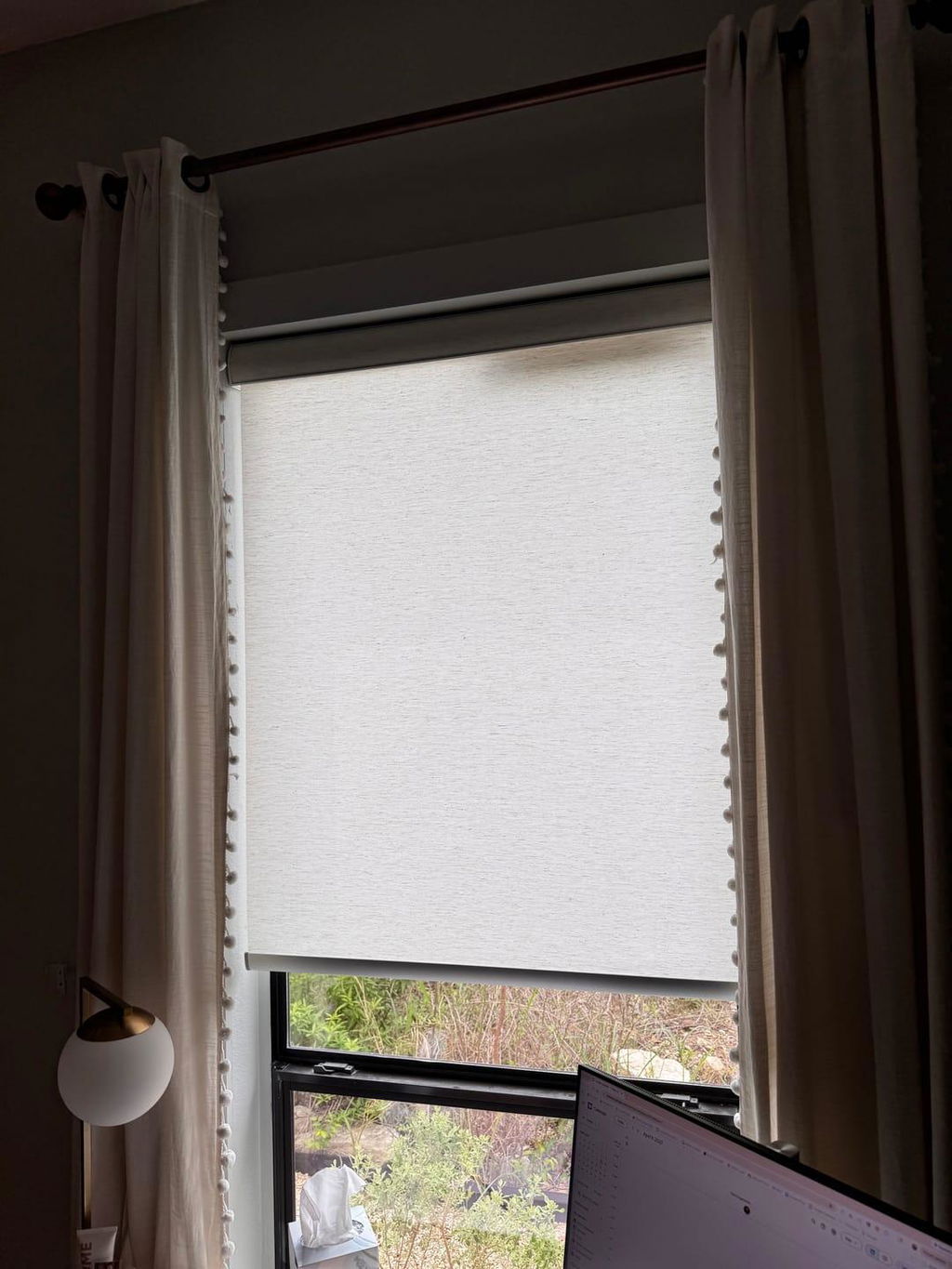
The 'one big blind' approach is the most common mistake I see in patio window blinds. If you are looking at blinds for 8 foot sliding glass door setups, the sheer weight of the material is a gear-killer. A single 96-inch wide roller or honeycomb shade puts immense strain on the internal springs and cords. After six months of daily use, you’ll notice the shade starting to hang crooked or the cordless mechanism losing its tension.
If you absolutely insist on a horizontal lift for a wide span, you have to go electric. Using motorized dual roller shades is the only way to handle that kind of weight without snapping a cord or throwing out your shoulder. For single blinds for sliding doors, motorization allows you to hit a button while you’re still in the kitchen, so the glass is clear by the time you reach the handle. Without it, you’re just performing a daily weightlifting routine you didn't sign up for.
The 3 Non-Negotiable Rules for Patio Blinds
When you’re choosing window blinds for sliding glass doors, you have to think about the 'stack'—the amount of space the blind occupies when it’s fully open. If your blinds are too thick, they’ll block the door from opening fully, or worse, they’ll get caught in the track. I always recommend an outside mount, installed at least 4 inches above the trim, to give the fabric somewhere to go.
Noise is the other silent killer of a good design. Metal or thin plastic slats will rattle every time the HVAC kicks on or someone walks past. I spent weeks hunting for blinds for a sliding door that don't clack, and the answer is almost always soft goods: high-quality fabrics, woven woods, or cellular structures that absorb sound rather than creating it. You want sliding patio door blinds that feel like part of the wall, not a percussion instrument.
Clear the Handle (Or Ruin Your Shades)
The handle on a sliding door usually sticks out 2 to 3 inches from the frame. If you mount your shades for sliding patio doors too close to the glass, the bottom rail will hit that handle every single time you lower it. Over time, this creates a permanent dent or a frayed patch in your fabric. Measure the projection of your handle and ensure your mounting brackets are deep enough to clear it. If they aren't, you'll need spacer blocks to push the headrail further into the room.
Match the Split to the Door Frame
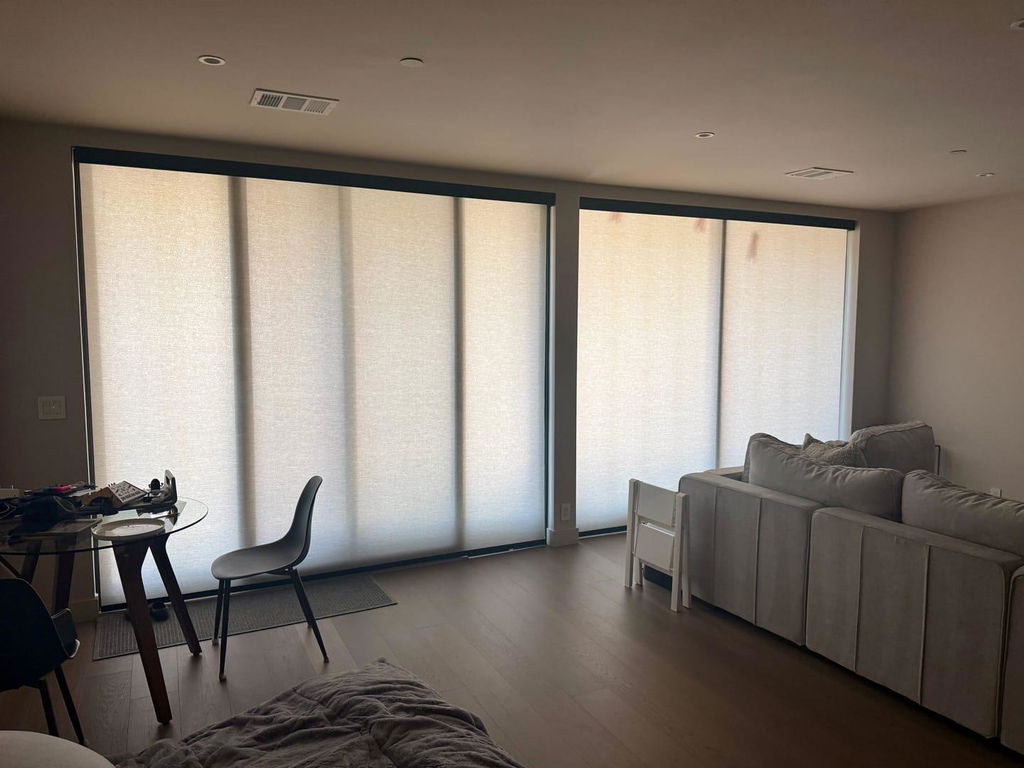
Never buy a single, wide blind that doesn't align with where your doors meet. If your door is a 'two-panel' style where one side is fixed and the other slides, you need two separate blinds on one headrail. This allows you to keep the shade down over the fixed glass while the 'active' side is raised for traffic. Don't just search for sliding door blinds nearby and grab a standard width; you need a custom split that aligns perfectly with the vertical mullion. If the split is off by even an inch, it looks like a DIY disaster.
The Unique Nightmare of Kitchen Sliders
Kitchens are high-moisture, high-grease zones. If your kitchen sliding glass door blinds are made of a porous fabric or a heavy weave, they will act like a giant sponge for cooking odors and aerosolized oil. I’ve seen beautiful linen shades turn yellow near the top because of the vent hood's inability to catch everything. For these areas, you need sliding door privacy blinds that are wipeable.
I usually steer clients toward sleek roller shades in a high-performance synthetic. They have a slim profile that doesn't collect dust like horizontal slats do, and they can be wiped down with a damp microfiber cloth. You get the privacy you need without the maintenance headache of a traditional venetian or a heavy drapery panel that requires professional dry cleaning every time you sear a steak.
When to Stop Fighting the Vertical Glide
Sometimes, the best blinds for sliding doors aren't actually 'blinds' in the traditional sense. We’ve all been conditioned to hate the plastic vertical slats of the 1990s, but the industry has evolved. If you’re struggling with venetian blinds for sliding glass doors that keep getting tangled or hit the floor, it might be time to look at modern vertical solutions like fabric vanes or sliding panels.
I finally gave in to vertical blinds when I realized that moving the treatment in the same direction as the door is the only way to achieve true 'frictionless' living. Modern track systems are silent, and the fabrics available now—think 300 gsm heathered greys and sheer linens—look nothing like the doctor’s office vibes of yesteryear. When the treatment moves with the door, the whole room feels larger and more functional.
Personal Experience: The Frayed Bamboo Lesson
I once installed a gorgeous, heavy-weave bamboo Roman shade over a slider in a sunroom. It looked incredible—until I actually had to live with it. I ignored the handle clearance and mounted it flush to the frame. Within three months, the constant rubbing against the locking latch had shredded the edge of the bamboo. Every time I opened the door, the shade would sway and 'clack' against the glass. I eventually had to pull the whole thing down and start over with a split-panel setup. It was a $500 lesson in why 'pretty' doesn't always mean 'practical.'
FAQ
Can I use Roman shades on a sliding door?
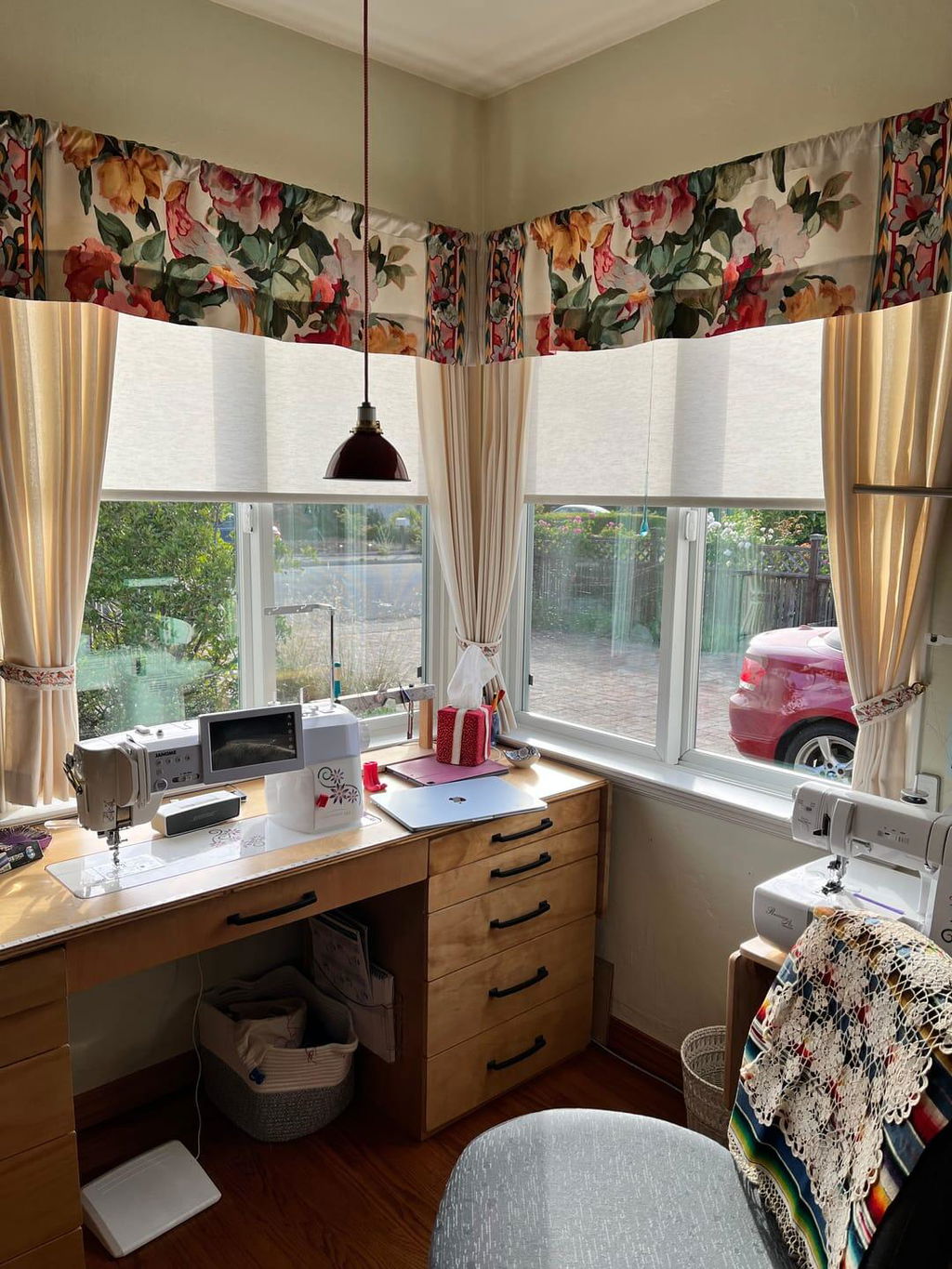
Yes, but only if you have enough 'stacking' space above the door. A Roman shade can be 8-12 inches thick when raised. If you don't mount it high enough, tall guests will be ducking under the fabric every time they go outside.
What is a 'two-on-one' headrail?
It is a single mounting track that holds two separate blinds. This is the gold standard for sliding doors because it looks like one cohesive unit but allows you to operate the left and right sides independently.
Are cordless blinds safe for heavy patio doors?
They are safe, but they can be difficult to reach if you are shorter or if the door is very tall. For 8-foot doors, a continuous cord loop with a wall-mounted tensioner or full motorization is often more ergonomic than a standard cordless lift.