Are Blackout Blinds and Curtains Together Just Too Much Fabric?
I remember standing in my first 'real' bedroom at 2 AM, squinting at the streetlights through a gap in my cheap blinds. I was so desperate for sleep that the next morning I went out and bought the heaviest, most rubber-backed drapes I could find. I threw them over the existing shades and, sure, the room was dark—but it also looked like a high-security vault. The windows felt claustrophobic, and the air seemed to stop moving entirely. Finding the right balance with blackout blinds and curtains is a lesson in tension; you want the darkness of a cave without the visual weight of a lead blanket.
Quick Takeaways for Better Sleep
- Never pair two 'stiff' fabrics; if the blind is structured, the curtain must flow.
- Always inside-mount the blind to keep the profile slim against the glass.
- Use the 'Workhorse Rule': Choose one layer to do the heavy lifting for light-blocking.
- Hang your curtain rod 4-6 inches above the frame and 8-10 inches wide to let the window breathe.
The 'Padded Cell' Effect (And Why It Happens)
The biggest mistake I see—and I’ve made it myself—is pairing a heavy, 4-pass blackout roller shade with a thick, polyester-lined blackout drape. When you have two layers of rubberized coating competing for space, the fabric doesn't 'drape' so much as it 'clumps.' It creates a stiff, unyielding block of material that makes a standard 12x12 bedroom feel like a shoebox.
This happens because both treatments are fighting to occupy the same visual plane. Instead of the window feeling like an architectural feature, it becomes a protruding mass of fabric. If you walk into a room and the first thing you notice is the physical thickness of the window treatments rather than the light or the view, you've officially entered 'padded cell' territory. You want 100% light blockage, but you don't want the room to look like it's wearing a winter coat in July.
If You Need Total Darkness, One Layer Must Be the Workhorse
To avoid the bulk, you have to assign roles. I like to pick a 'workhorse'—the layer that actually stops the sun—and a 'softener'—the layer that makes the room look finished. If you choose a high-performance blind, your curtains can be a beautiful, unlined 200 gsm linen or a light cotton blend. They don't need to be heavy because they aren't doing the job of blackout room darkening alone.
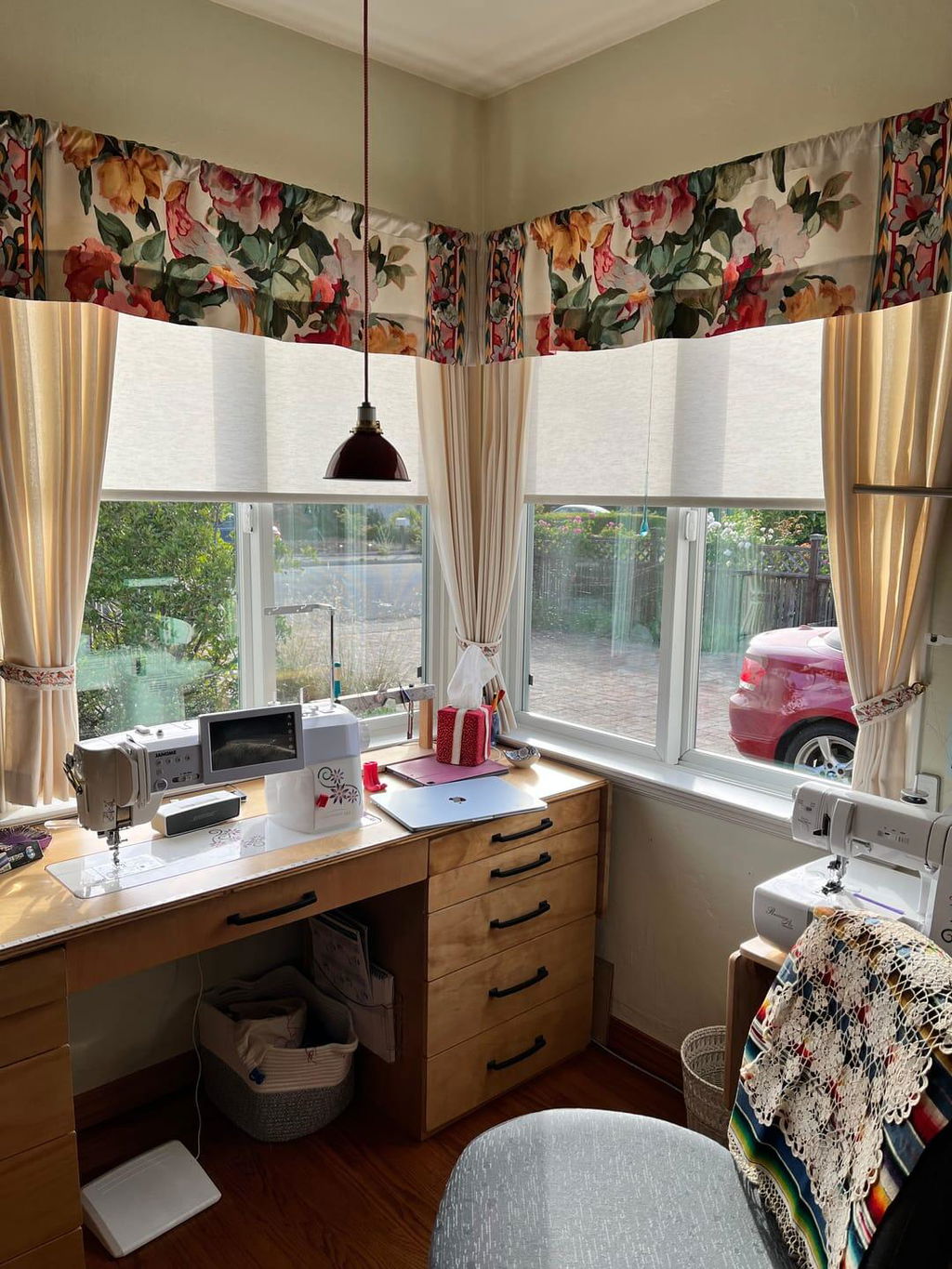
Conversely, if you've fallen in love with a heavy velvet drape that has a built-in light-blocking lining, your blind should be almost invisible. Think of a sheer solar shade or a very thin slat wood blind. The contrast in opacities is what keeps the window from looking like a monolith. You get the function of a dark room with the aesthetic of a thoughtfully styled home.
The Inside Mount Rule for Blackout Blinds and Curtains
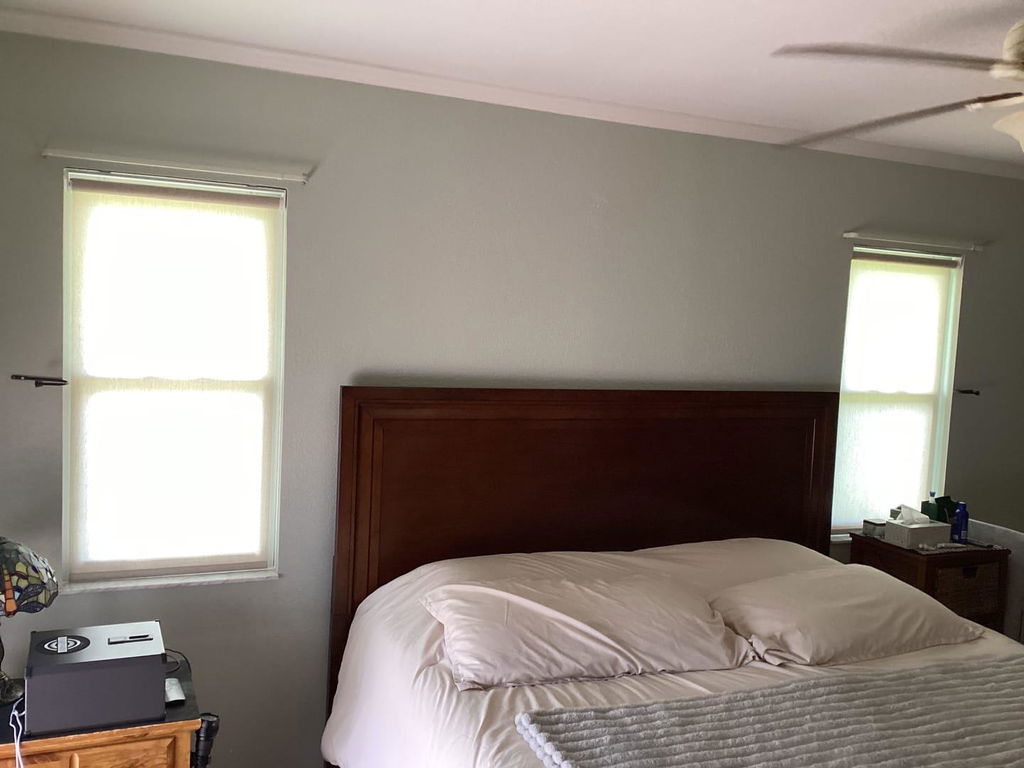
If you take nothing else away from my trial-and-error history, let it be this: if you are layering, that blind must be an inside mount. I’ve tried the alternative, mounting a blackout roller shade on the outside of the trim and then trying to fit a curtain rod over it. It’s a hardware nightmare. The curtains end up projecting six inches into the room just to clear the blind, creating a massive light gap at the top that defeats the whole purpose.
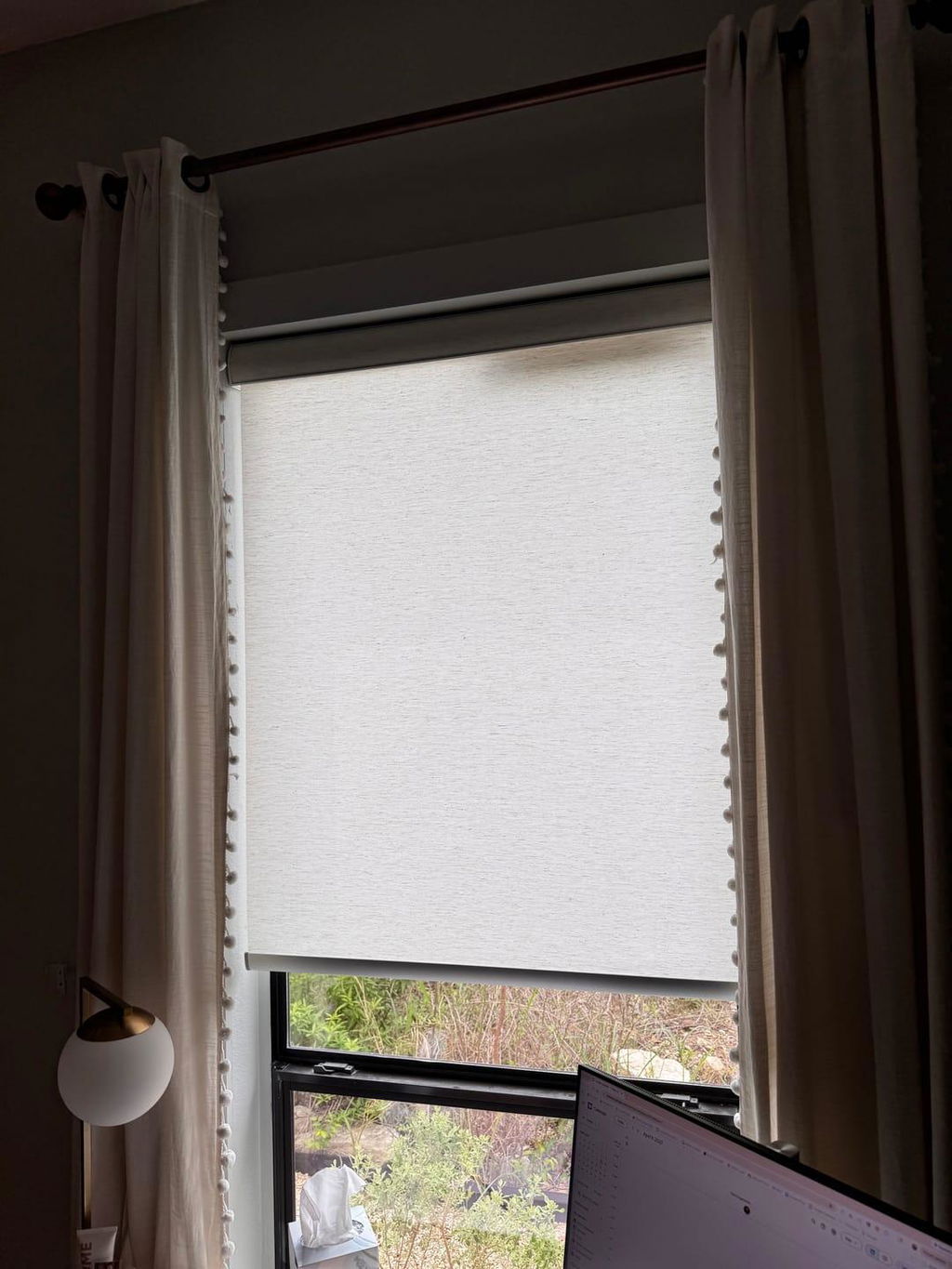
An inside-mounted blind sits flush within the window casing, allowing the curtain rod to sit tight against the wall. This creates a 'seal' that traps light much more effectively. Plus, it hides the 'ugly' functional parts of the blind. When the curtains are open during the day, you see the clean lines of the window frame, not a bulky roll of plastic hanging off the drywall.
My Two Favorite Ways to Layer Them Without Looking Stiff
When I’m styling a client’s bedroom, I usually lean toward one of two combinations. The first is what I call the 'Invisible Shield.' I hid blackout cellular blinds behind linen drapes in my own guest room, and it was a revelation. The cellular shades disappear when raised, but provide incredible insulation and darkness when lowered, leaving the linen to look airy and expensive.
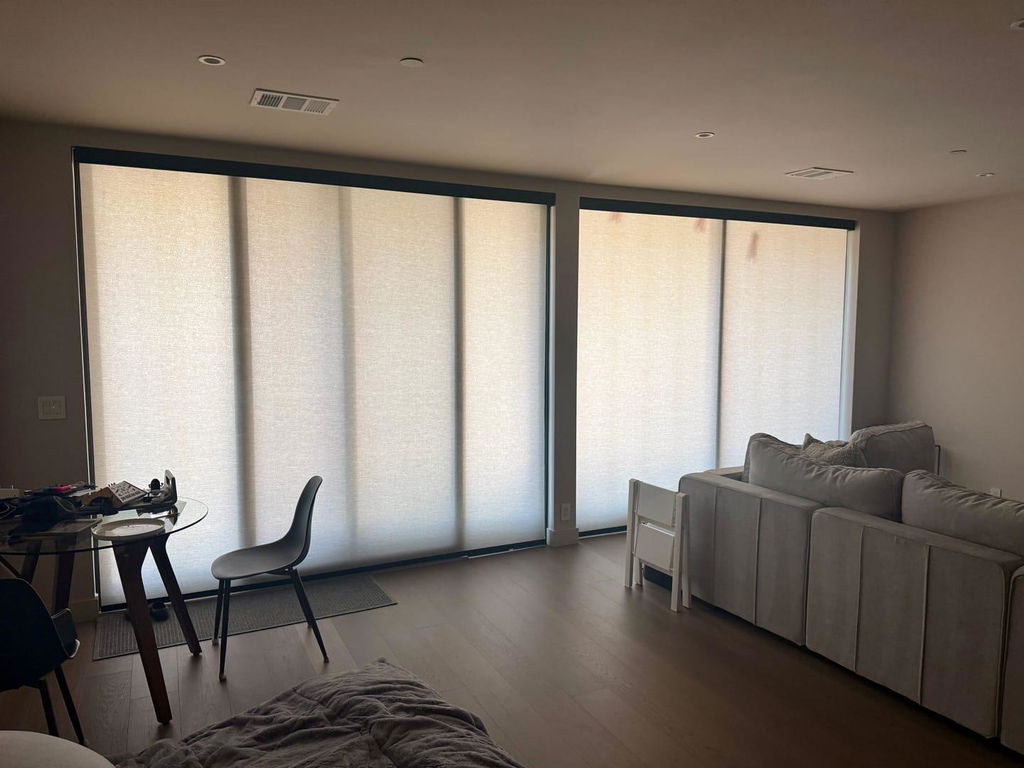
The second option is for more modern spaces where you want a bit of tech. I’ve used motorized zebra shades 85 blackout breeze tucked behind a simple black iron rod with grommet-top panels. The zebra shade gives you light control during the day, and the curtains provide the 'hug' the room needs at night. It’s a clean look that doesn't feel like you're trying too hard.
The Lazy (But Genius) Alternative to Traditional Layers
Sometimes, the window depth just isn't there. If your casing is too shallow for an inside mount, or if you’re a renter who doesn't want to drill eight different holes for two sets of hardware, don't force it. There is a reason I often tell people to use double roller blinds sheer and blackout instead. It’s one bracket, two fabrics, and zero bulk.
This 'all-in-one' approach gives you the layered look—a sheer layer for daytime privacy and a blackout layer for sleep—without the heavy footprint of drapes. It’s especially great for smaller rooms where a floor-to-ceiling curtain might overwhelm the furniture. It’s the minimalist’s way to get a dark room without the fabric drama.
Personal Experience: The 96-Inch Disaster
I once spent a small fortune on custom 96-inch velvet blackout panels for a south-facing bedroom. I was so focused on the light-blocking aspect that I ignored the weight. When I finally hung them on a standard tension rod (lesson learned: never use tension rods for blackout drapes), the whole thing came crashing down at 3 AM, taking a chunk of plaster with it. I ended up switching to a lighter linen-look curtain and adding a slim blackout honeycomb shade inside the frame. It was darker, safer, and infinitely more stylish. Don't let your quest for sleep ruin your walls.
Frequently Asked Questions
Do I need a double curtain rod for this look?
Not necessarily. If you use an inside-mount blind, you only need a single curtain rod for your outer layer. Double rods are really only for layering two sets of curtains, like sheers under drapes.
How do I stop light from leaking out the sides?
The 'wrap-around' or French-return curtain rod is your best friend here. It curves back to the wall, allowing the fabric to cover the side gap where light usually sneaks in. Pair that with an inside-mount blind and you’re in total darkness.
Is it okay to mix different colors?
Absolutely. I actually prefer it. A charcoal gray blind behind a soft cream curtain adds depth. Matching them exactly often looks a bit 'hotel-ish' and flat.